Custom Stickers Factory for Your Brand – Guides, Materials & Customization Hacks

Custom Stickers Factory for Your Brand – Guides, Materials & Customization Hacks
 Xinyin
 Oct 05,2026

If you're sourcing custom 3D stickers for your brand, you've probably noticed that pricing can vary dramatically from one supplier to the next. When brands start developing custom 3D stickers, one of the first questions is usually: How much will they cost?
Unlike standard flat stickers, 3D stickers can involve additional tooling, molded structures, multiple materials, resin filling, special surface finishes and more complex production steps that directly change pricing tiers. As a result, there is no single standard price for a custom 3D sticker.
For B2B buyers, understanding the main 3D sticker cost factors makes it easier to compare supplier quotations, optimize product specifications and control the total manufacturing cost. In this guide, we break down the key cost factors so you can make smarter sourcing decisions for your next custom sticker project.
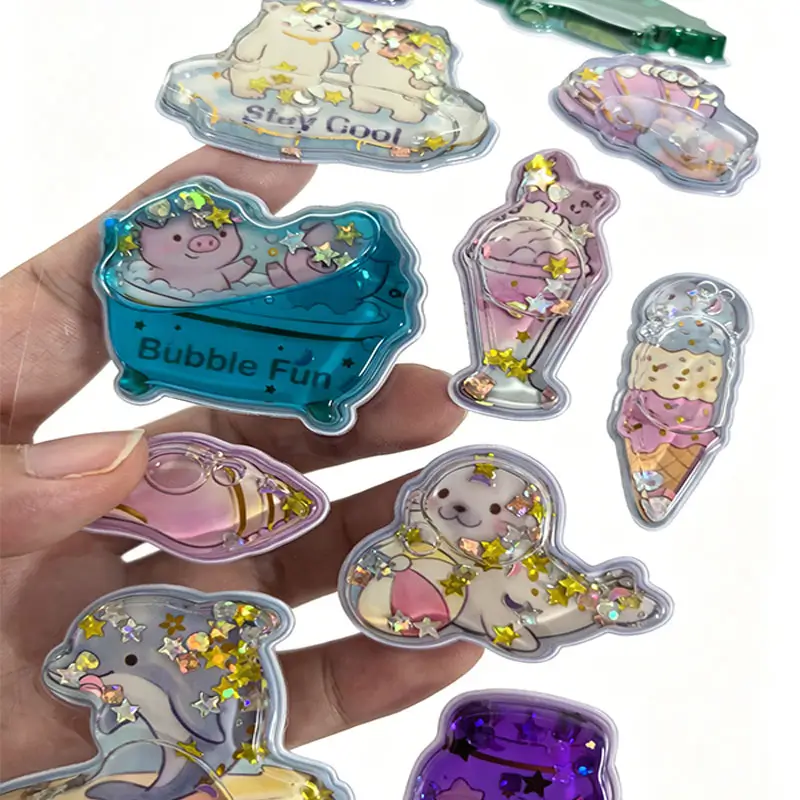
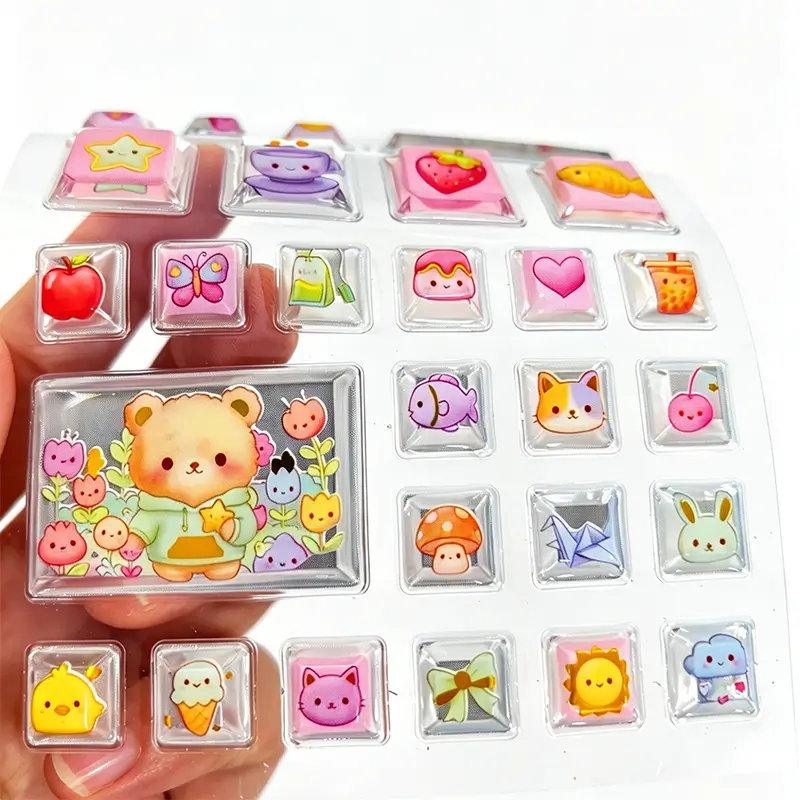
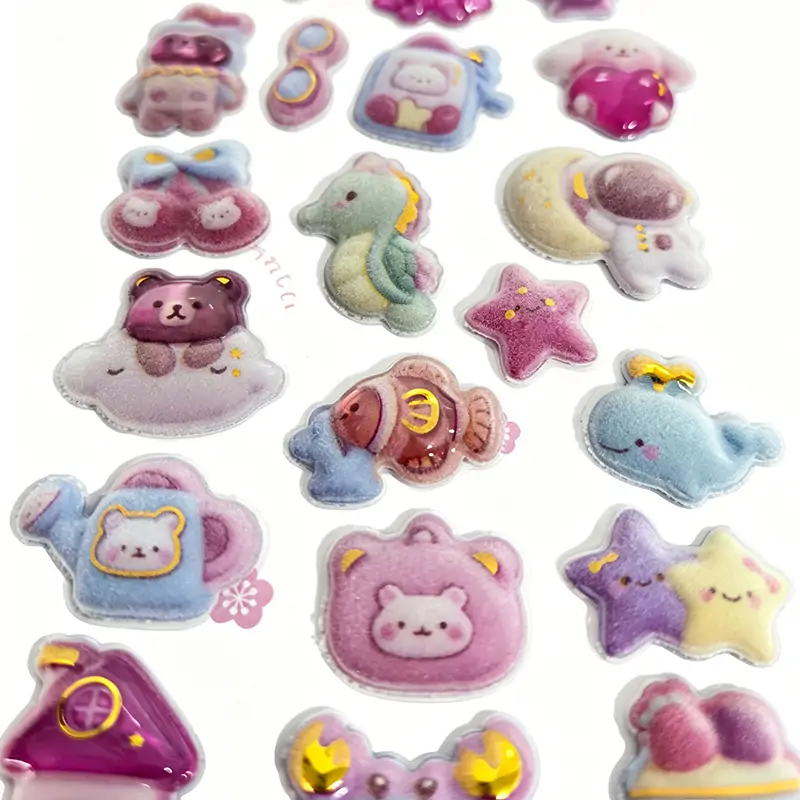
For many custom 3D stickers, tooling is one of the most important cost considerations. This is the single biggest cost factor for custom 3D crystal puffy stickers and the one most often underestimated by first-time buyers. A custom mold or forming tool may be required to create the desired three-dimensional shape. The tooling requirement depends on the product construction, shape and manufacturing process. This is one reason why a custom 3D bubble sticker quote may include a tooling or mold-development cost in addition to the unit price.
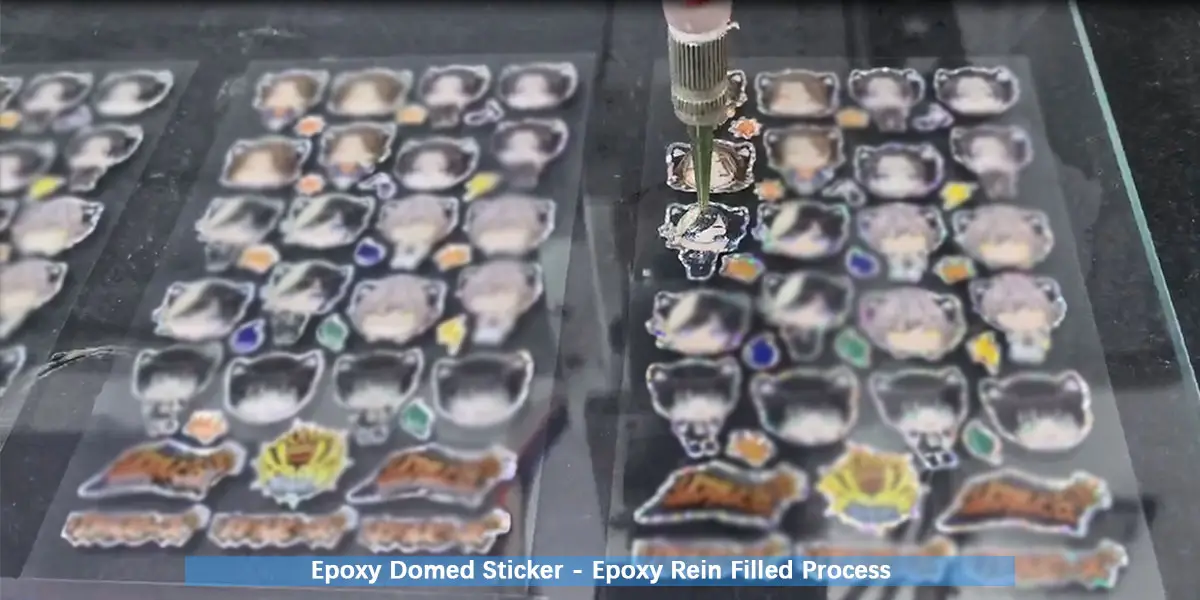
Unlike flat printed stickers, 3D puffy stickers / 3D embossed stickers require a precision-machined mold to create the raised dimensional effect. The mold defines the shape, depth, and edges of your design. For vacuum thermoformed puffy stickers, a custom mold is essential; for epoxy dome stickers, a die-cutting mold is needed to ensure resin stays within the sticker boundary.
Mold fees are fixed costs. A steel mold lasts approximately 50,000 impressions, but the setup cost is amortized across your entire order. For a small batch of 500 units, mold and setup can account for roughly 35% of total cost. For a bulk run of 5,000+ units, that drops to about 5%.
Cost-Saving Tip: Choosing standard shapes (circle, square, rectangle) allows you to share existing die molds, eliminating custom tooling fees entirely. For small batch customized 3D stickers, digital die-cutting (laser or knife-wheel) can also avoid tooling costs.
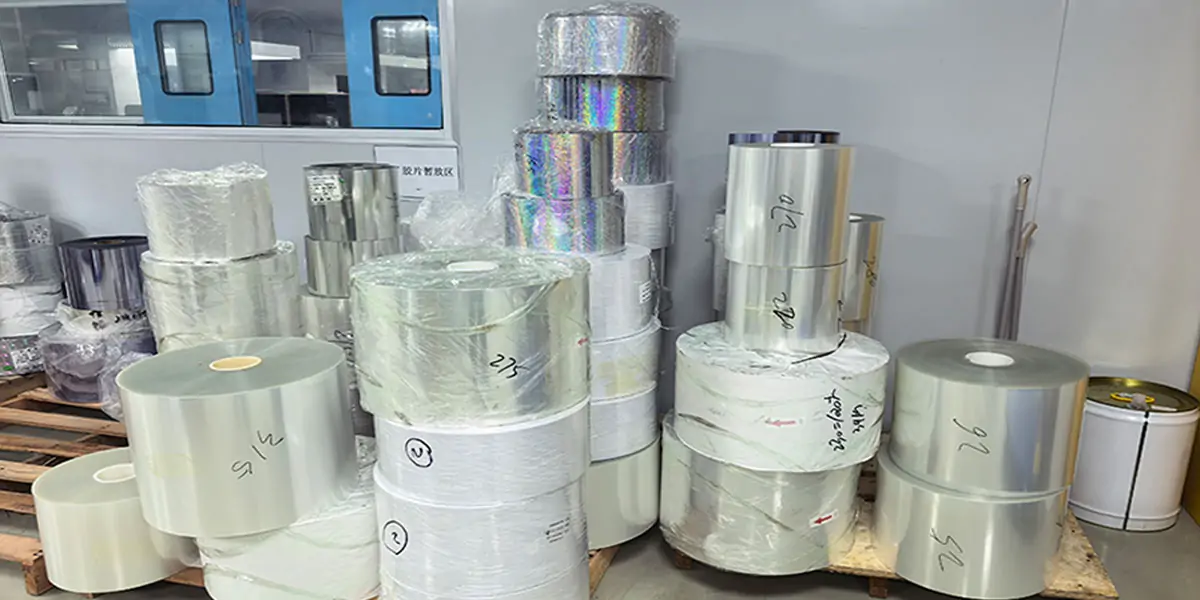
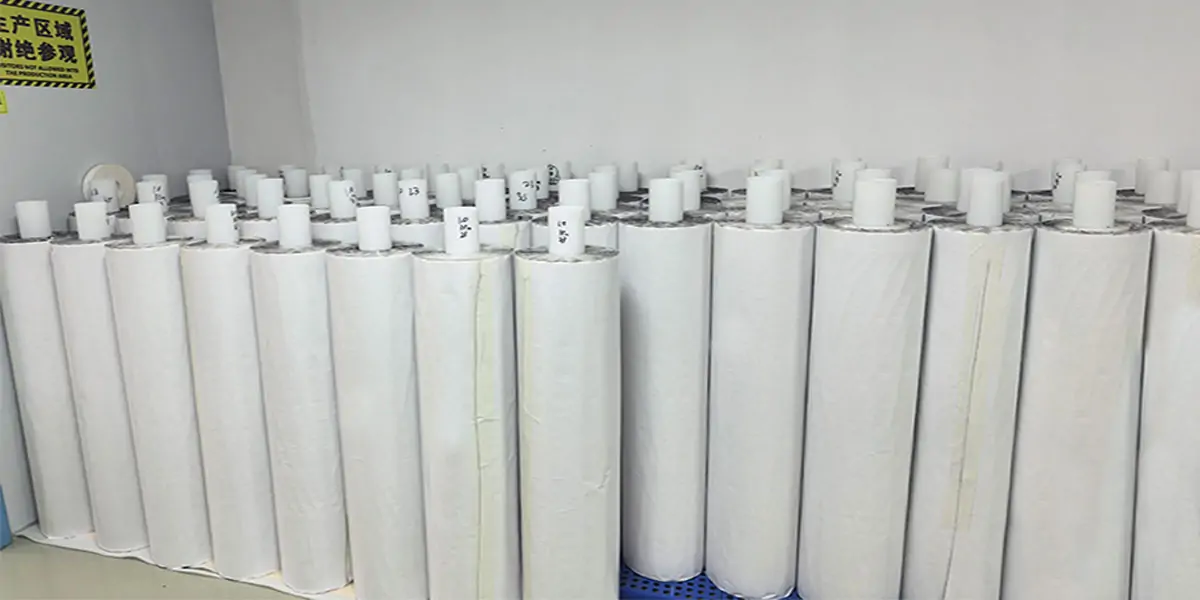
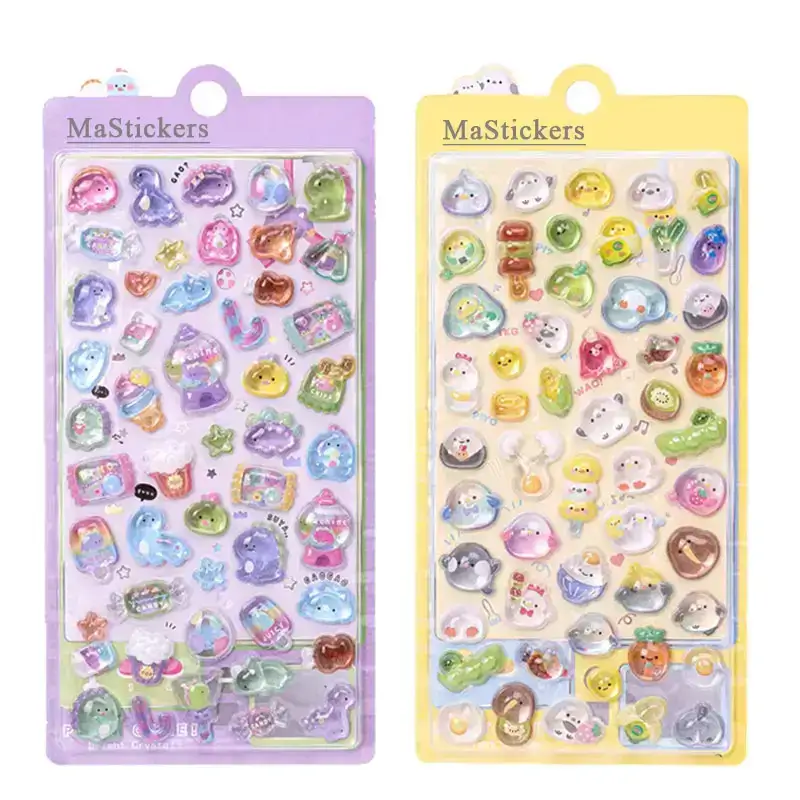
Material choice is the biggest variable for custom wholesale 3D stickers pricing, as different substrates and surface treatments deliver distinct textures and durability, with obvious cost gaps. Different 3D sticker products can use different combinations of substrates, resin, adhesive and surface materials. For example, MaStickers' 3D crystal puffy sticker construction uses a vacuum-formed transparent layer, transparent epoxy resin and an adhesive backing.
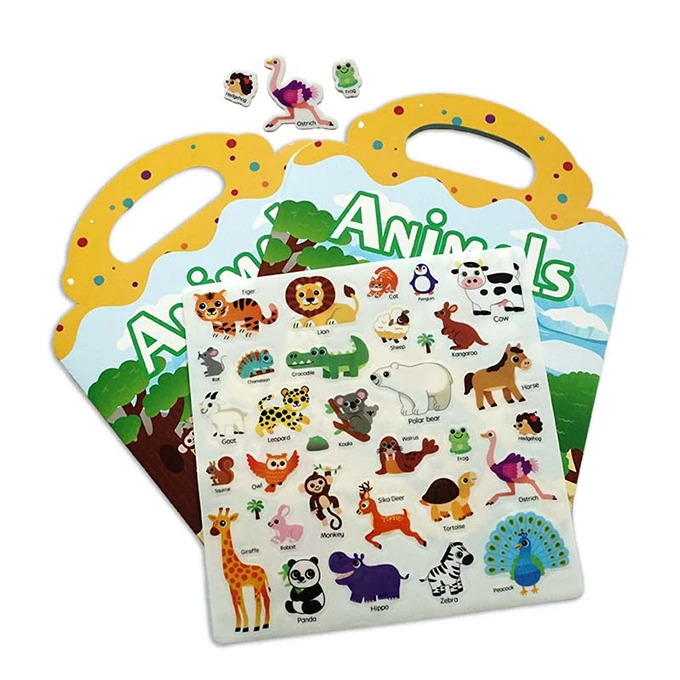
Basic foam-based 3D stickers use lightweight EVA foam and regular vinyl adhesive, which is cost-effective for daily craft and kids sticker products. In contrast, our best-selling 3D flocked puffy stickers adopt high-density flocked coating + epoxy reisn filled + thickened base + residue-free adhesive, bringing a soft fuzzy plush texture that ordinary foam stickers cannot achieve.
High-quality flocked materials and eco-friendly non-toxic coatings meet international toy and stationery safety standards, naturally raising raw material costs . Additionally, waterproof PET substrates and gold/silver foil finishing further increase production expenses for high-end custom orders.
Changing the material or layer structure can therefore change both the appearance and the manufacturing cost. When comparing custom 3D sticker manufacturers, buyers should make sure they are comparing the same specifications rather than comparing unit prices alone. A quotation based on a different material structure may not be directly comparable.
Artwork also affects the manufacturing process. Simple shapes with clear details may be easier to convert into a 3D structure. Designs containing many small details, narrow sections, complex contours or multiple raised areas may require more engineering consideration.
For custom puffy stickers and 3D character stickers, manufacturers may need to evaluate how the artwork can be translated into: 2D artwork → 3D structure → surface treatment → die-cut shape.
This is particularly important for character-based products, where facial details, accessories and irregular outlines need to remain visually clear after forming and finishing. Providing production-ready artwork can also make the quotation and sampling process more efficient.
A conventional flat sticker has a relatively simple construction. A 3D puffy sticker, however, may require a raised structure, additional materials and specialized forming processes. For example, MaStickers' 3D crystal puffy stickers use a formed three-dimensional structure that is filled with transparent epoxy resin before sealing and adhesive application. This multi-step construction is different from a conventional flat printed sticker.
Other specialty formats, such as flocked 3D stickers, shaker stickers and foam stickers, have different manufacturing requirements and therefore different cost structures.
However, custom kawaii 3D bonbon drop style stickers with multi-layer patterns, gradient colors, delicate gold foil accents, and irregular die-cut shapes require semi-manual trimming and precise layered molding.
Complex 3D relief modeling and flocked surface finishing demand stricter quality control and longer production cycles, which moderately increase manufacturing costs. For brand clients with exclusive OEM artwork, customized pattern development and color matching also add one-time setup fees.
The more specialized the construction, the more important it is to evaluate the complete production process rather than compare prices by sticker size alone.
Sticker size directly affects the amount of material required. Sticker pricing is often calculated on a per-square-inch basis. Larger stickers require more material, more resin, and longer curing times. A 2mm increase in emboss height can adjust the base cost by up to 15% due to additional CNC machining time and material displacement.
Therefore, when requesting a custom 3D sticker quote, buyers should provide both:
A manufacturer can then evaluate the construction more accurately.
Order quantity is another major factor in custom sticker pricing. Bulk order volume is the most controllable factor to reduce unit prices for custom 3D puffy stickers. Like most printing and custom craft products, 3D sticker production involves fixed machine setup and mold opening costs . Small-batch orders bear higher average fixed costs, resulting in a higher per-unit price. This is a common principle in custom sticker manufacturing and other manufactured products: bulk production can reduce the impact of setup costs on the unit price.
For this reason, B2B buyers should request quotations based on their realistic purchasing plans, such as: 1,000 pieces; 5,000 pieces; 10,000+ pieces. Instead of asking only for the lowest possible unit price, comparing several quantity levels can help determine the most suitable production volume.
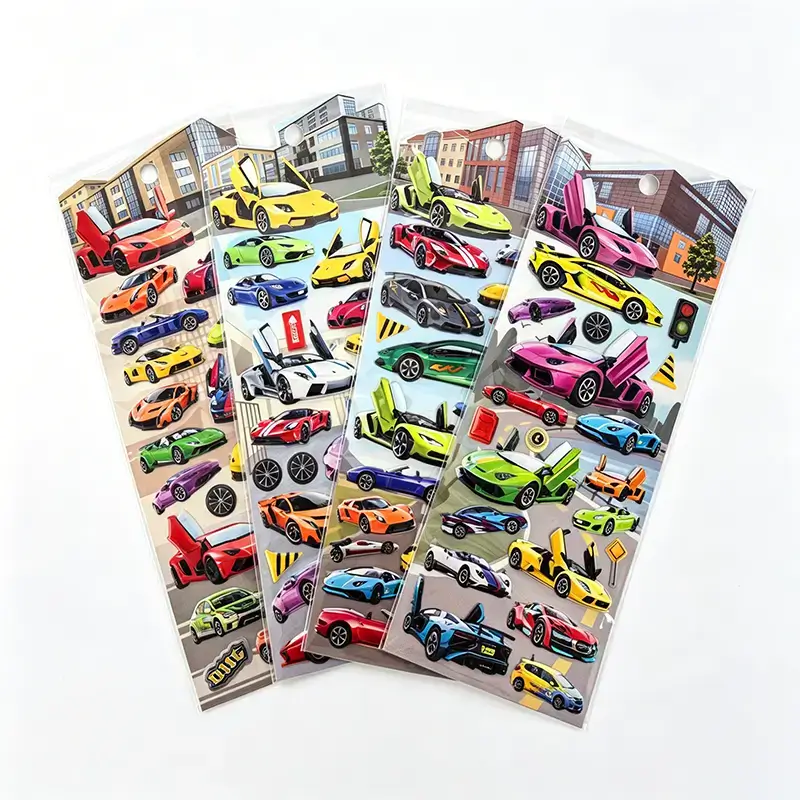
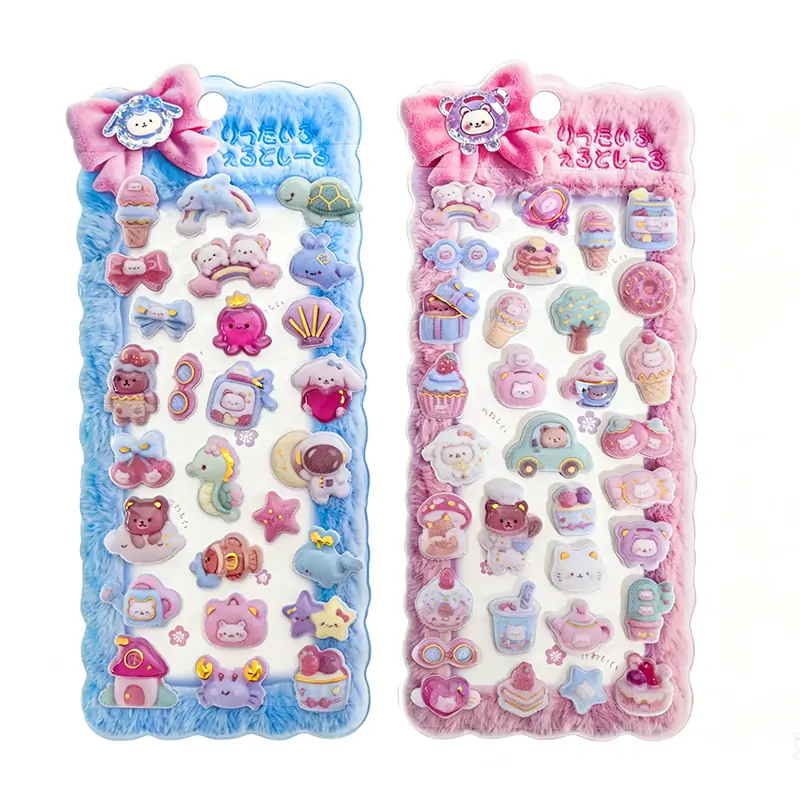
Additional surface effects can also increase production complexity. Standard 3D stickers include the raised dimension. Premium finishes add cost:
For example, a flocked puffy sticker adds a soft, fuzzy surface treatment to a raised 3D structure. This creates a different appearance and tactile experience from a conventional smooth 3D sticker. Similarly, 3D shaker stickers require a raised structure, liquid filling and decorative fillers such as glitter or sequins, creating a different manufacturing process from standard puffy stickers.
Moreover, special finishing requirements including scratch-resistant coating, waterproof treatment, and repeated adhesive optimization will further adjust the final quotation, suitable for high-end retail and gift set matching products. Therefore, specialty effects should be specified before requesting a final quotation.
7. Adhesive and Backing Requirements
The adhesive is easy to overlook when comparing sticker quotations. The backing adhesive may seem like a minor component, but it affects both cost and performance.
Different applications may require different adhesive characteristics. The suitable adhesive can depend on the intended application surface, sticker construction and expected use conditions. A quotation should therefore clearly identify the adhesive specification rather than simply stating "self-adhesive."
In humid climates, standard acrylic adhesive viscosity drops by 15–20% at temperatures above 30°C, risking peel-off during transit. Upgrading to a high-tack, permanent acrylic formula can effectively prevent this problem. This can be achieved for a small additional fee.
For B2B buyers, it is useful to discuss:
These details can help the manufacturer recommend a suitable construction rather than simply selecting the lowest-cost adhesive.
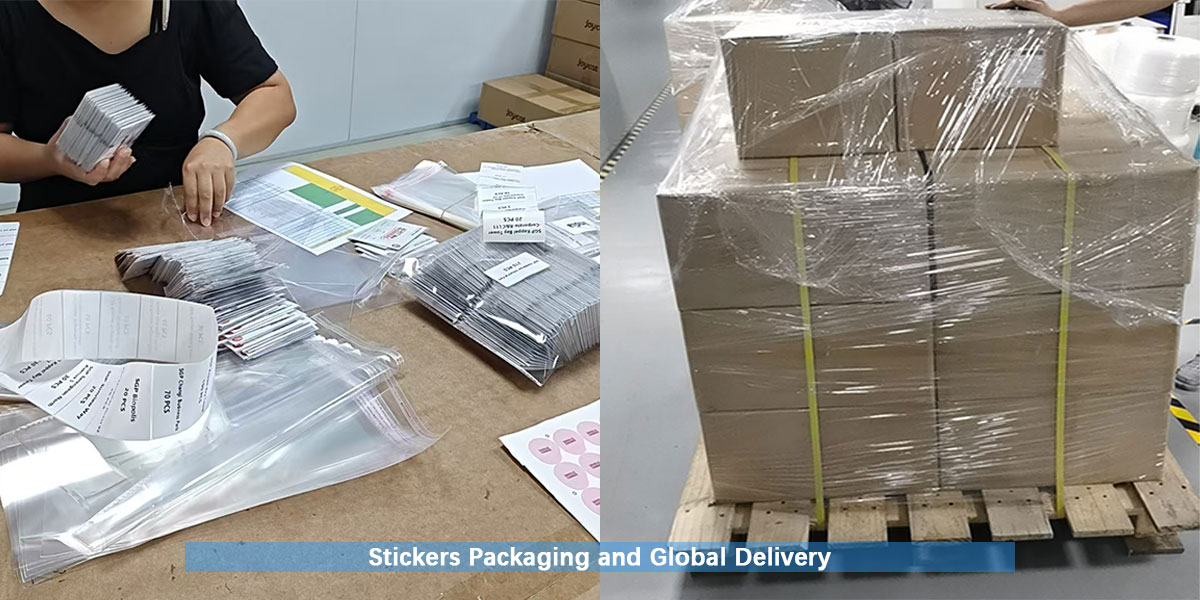
Packaging is another cost component that B2B buyers should consider. Standard bulk packaging for 3D stickers uses ordinary OPP bags, with no extra packaging cost. While customized display packaging, such as plush border backing cards, color printed card sheets, and blister packaging, will increase overall costs.
For stationery brands, packaging can be developed together with the sticker collection so that the finished product is ready for wholesale or retail distribution. MaStickers' current 3D puffy sticker offering includes customized packaging options as part of its OEM/ODM service.
For kids safe 3D fluffy stickers used in children‘s crafts, party favors, and educational stationery, products must comply with non-toxic material safety standards . Qualified raw material procurement, regular product testing, and quality inspection processes increase factory operating costs, but ensure product safety and avoid market risks for buyers.
Total order cost also includes logistics, packaging, and after-sales support . Different shipping methods (express, sea freight, air freight) and destination countries lead to different freight costs. The final landed cost is not always the same as the factory unit price.
For international B2B orders, buyers may also need to consider:
These factors are separate from the manufacturing cost itself, but they can affect the total cost of getting the finished stickers to the buyer. For this reason, it is useful to distinguish between factory unit price and total landed cost when comparing suppliers.
The sticker with the lowest headline price isn't always the cheapest. Watch for these common add-ons:
| Hidden Fee |
Typical Cost |
How to Avoid |
| Artwork optimization |
About $150+ | Provide print-ready vector files (AI, EPS, PDF/X-1a) with fonts converted |
| Color calibration surcharge |
About $80+ | Submit accurate Pantone references; request digital proof before production |
| Rush production |
20–50% premium |
Plan ahead; standard lead time is 3–7 business days |
| Remote area delivery |
Abolut $60+ | Confirm shipping terms (FOB, DDP) upfront |
| Import duty & handling |
Varies |
Clarify Incoterms and customs clearance responsibility before ordering |
Reducing cost does not necessarily mean choosing cheaper materials. Instead, brands can optimize the product specification before mass production. Consider the following:
Optimize the 3D structure. Provide print-ready artwork. Avoid unnecessary complexity where it does not improve the visual effect. Vector files with 2mm bleed and fonts converted to outlines prevent costly "artwork optimization" fees.
Simplify unnecessary craftsmanship: Retain core 3D stereo effects and properly reduce over-complicated foil stamping and multi-layer cutting for cost control.
Confirm the size early. Reducing unnecessary material usage can help control manufacturing costs. Choose standard shapes when possible. Circle, square, and rectangle dies are often shared across orders, eliminating tooling fees.
Plan the order quantity. A realistic bulk order can distribute tooling and setup costs across more units.
Ask about ganging. Some factories combine multiple customers' designs on one print sheet, reducing MOQs and eliminating individual tooling costs.
Request tiered pricing. Ask for quotes at 5,000, 10,000, and 50,000+ units to see exactly how unit costs scale.
Discuss the complete construction with the manufacturer. Instead of requesting a price for "3D stickers," provide the material, size, 3D structure, finish, quantity and packaging requirements. This gives the manufacturer enough information to prepare a more accurate quotation.
Confirm tooling ownership. If you pay for custom dies or molds, get written confirmation that you own them and can transfer them to another factory if needed.
To receive a more accurate custom 3D sticker quotation, B2B buyers should ideally provide:
The more complete the specification, the easier it is for a custom sticker manufacturer to evaluate the production process and provide a meaningful quotation.
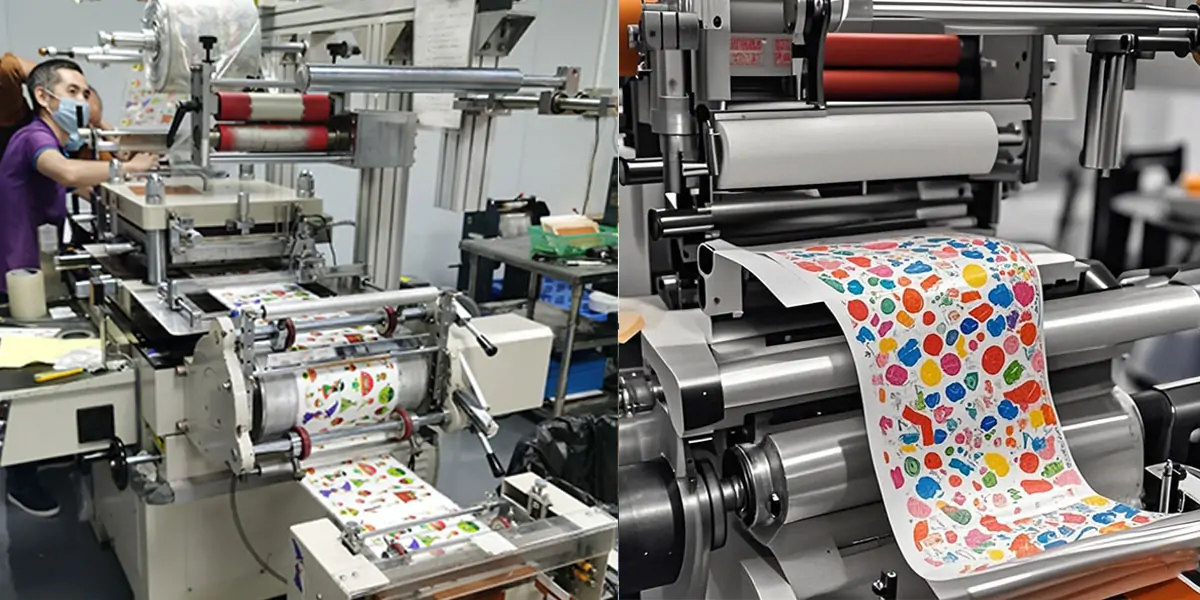
Two suppliers may quote different prices for what appears to be the same 3D sticker. However, the difference may come from the actual construction, tooling, materials, finishing process, quality requirements or packaging specifications. A lower quotation is therefore not automatically the better option.
For B2B buyers, the better approach is to compare Material + Tooling + Manufacturing Process + Quality Requirements + Packaging + Quantity, rather than comparing only the final unit price.
MaStickers (Xinyin) provides OEM/ODM custom sticker manufacturing and produces specialty formats including 3D puffy stickers and other customized sticker constructions. Its current 3D puffy product information describes customized shapes, artwork, molding, resin filling, die cutting and adhesive application as part of the manufacturing process.
Developing a custom 3D sticker is more than choosing a shape and printing an image. Tooling, materials, size, quantity, 3D structure, surface finish, adhesive, die cutting and packaging can all influence the final cost. If you are developing custom 3D puffy stickers, flocked 3D stickers, epoxy stickers or other specialty sticker products, MaStickers can evaluate your artwork and product requirements for OEM/ODM production.
At Mastickers, we believe in transparent pricing for custom 3D stickers. No hidden fees. No surprise surcharges. Just clear, factory-direct quotes based on your exact specifications.
3D puffy stickers: vacuum thermoformed with resin filling, in standard and flocked (velvet) finishes
Epoxy dome stickers: crystal-clear polyurethane resin with 3M adhesive backing
Custom embossed labels: precision molds for consistent 3D relief
Full customization: any shape, size, material, or finish
Our team helps brands of all sizes navigate the cost factors above, so you get the right sticker at the right price.
Ready to get a transparent quote for your custom 3D sticker project? Contact Mastickers today and let's bring your design to life.
 You May Also Like
No 410, Laoyi Village, Niuhu Community, Guanlan Street, Longhua District, Shenzhen City

MaStickers
Custom Stickers Manufacturer

No 410, Laoyi Village, Niuhu Community, Guanlan Street, Longhua District, Shenzhen City
Product
Get in touch and find out how we canmake your next shipment easier.


Copyright © 2026 Shenzhen Xinyin Environment Rubber Product Co., Ltd



 Home
Home