Custom Stickers Factory for Your Brand – Guides, Materials & Customization Hacks

Custom Stickers Factory for Your Brand – Guides, Materials & Customization Hacks
 Xinyin
 Aug 08,2026

3D stickers have become increasingly popular in branding, promotional products, packaging, toys, electronics accessories, and collectible products because of their raised surface, premium appearance, and unique tactile experience.
Unlike traditional flat printed stickers, 3D stickers are produced through a specialized manufacturing process that creates depth, texture, and three-dimensional effects. These dimensional adhesives, also known as Ecodomes 3D stickers, 3D puffy stickers, pop-up stickers, bonbon drop stickers or bubble stickers, which deliver a tactile and visual impact that flat labels simply cannot match.
Behind every custom 3D sticker lies a precise, multi-stage manufacturing process that transforms a flat design into a sculpted emblem. But what exactly goes into making them? Many wholesale buyers and brand partners wonder how professional 3D silicone stickers take shape inside a certified sticker factory.
As an experienced OEM sticker manufacturer, MaStickers provides customized 3D sticker solutions for global brands, distributors, and product developers, including:
We specialize in producing high-quality 3D stickers for brands worldwide. Below we break down the full manufacturing workflow from artwork preparation to finished self‑adhesive goods, showing how MaStickers controls quality at every production stage.
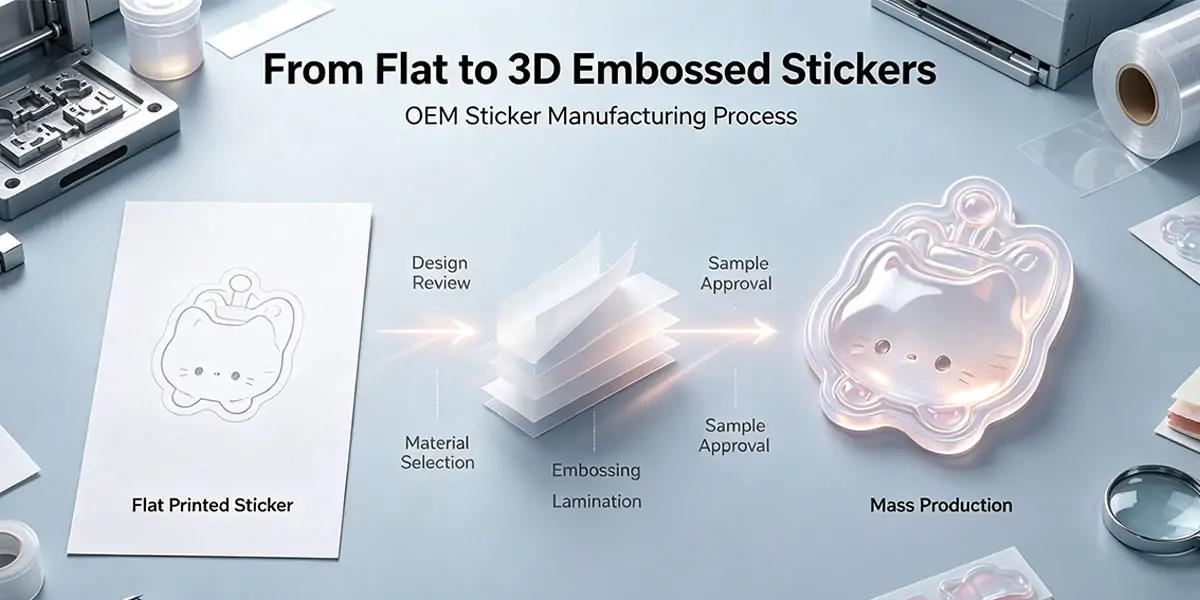
3D stickers are customized adhesive products with a raised or dimensional surface effect. Unlike standard flat stickers that rely mainly on printed graphics, 3D stickers use special materials and manufacturing techniques to create physical depth and texture.
For companies requiring unique branding products, working with a professional 3D sticker manufacturer ensures better consistency, durability, and customization options.
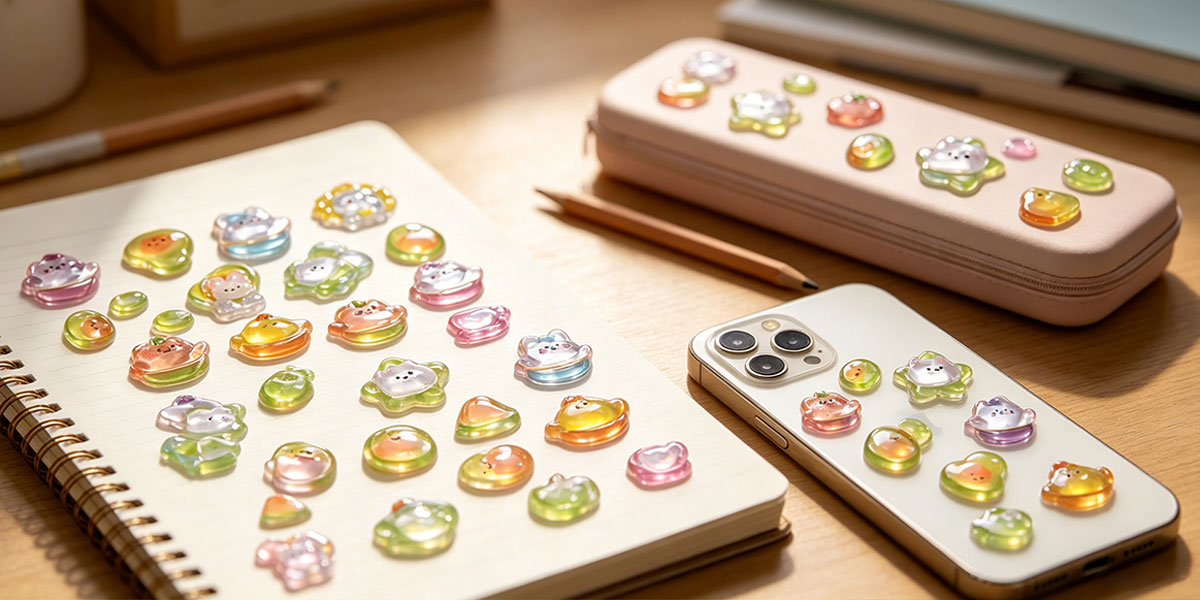
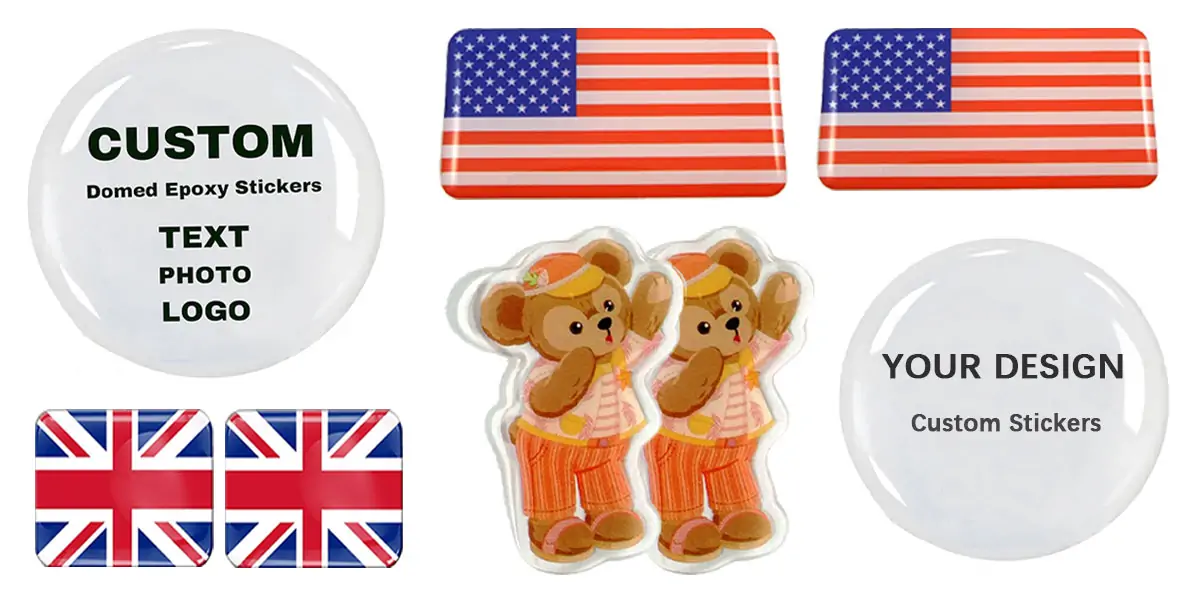
Every great 3D bonbon drop sticker begins with a great design. Whether it's a logo, a graphic, or a custom illustration, our team works with your artwork to prepare it for three-dimensional production.
For 3D Bonbon drop stickers, the artwork must be engineered with depth in mind. Unlike flat printing, where colors sit on a single plane, 3D sticker production requires designers to define which areas will be raised, embossed, or textured. This is usually achieved by creating dedicated layers in design software such as Adobe Illustrator or Photoshop, and is sometimes referred to as a "spot painting layer" or a "texture layer".
The first stage of manufacturing starts with artwork preparation.
For example, a flat logo may need adjustments before becoming a raised 3D sticker because the manufacturing process requires different thickness levels and mold structures. The prepared artwork is then converted into a production-ready digital file that guides the mold-making process. This step is critical: the more precise the artwork, the more accurate the final 3D effect will be.
At MaStickers, artwork review helps ensure that the final custom 3D bonbon stickers meet both visual expectations and production requirements. Our technical team reviews customer‑supplied AI, SVG or PDF files to adapt flat graphics for three‑dimensional molding production.
For mass‑production 3D relief stickers, thick solid shapes work better than ultra‑thin lines or complex gradients, which risk breaking after molding. Our engineers adjust line thickness, outline sharpness and relief height according to your final application, whether you need bulk 3D logo stickers for product labeling or decorative puffy 3D stickers for consumer goods.
Once the artwork is finalized, the next step is to create a custom mold. Unlike ordinary printed stickers, many 3D crystal puffy stickers require a customized mold. This is where the magic of three-dimensional shaping truly begins. The mold defines the exact 3D contour, depth and surface texture of your custom raised stickers.
Manufacturers select a metal plate and engrave a cavity that matches the pattern of the intended 3D sticker. The cavity is precision-machined to replicate every contour of your design, from the sharpest edges to the softest curves. Mold quality directly impacts edge sharpness, surface smoothness and batch‑to‑batch consistency. Poor‑quality molds produce blurry contours or uneven relief height.
The quality of the mold directly determines the quality of the final sticker. At MaStickers, we use high-precision engraving techniques to ensure that every mold captures the intricate details of your artwork, delivering consistent results across large production runs.
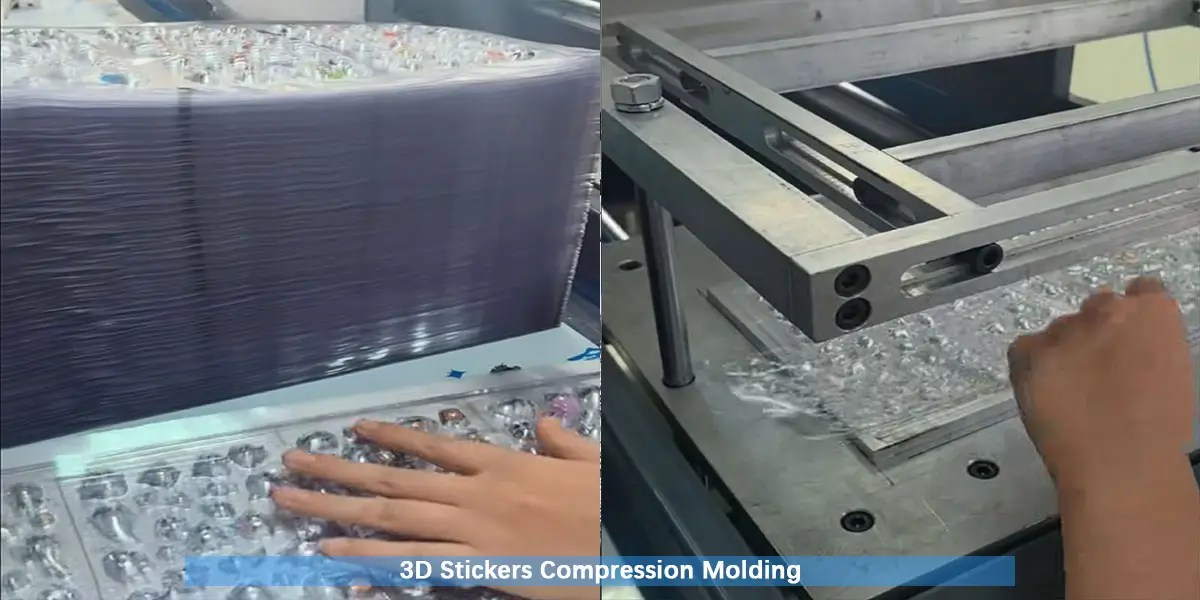
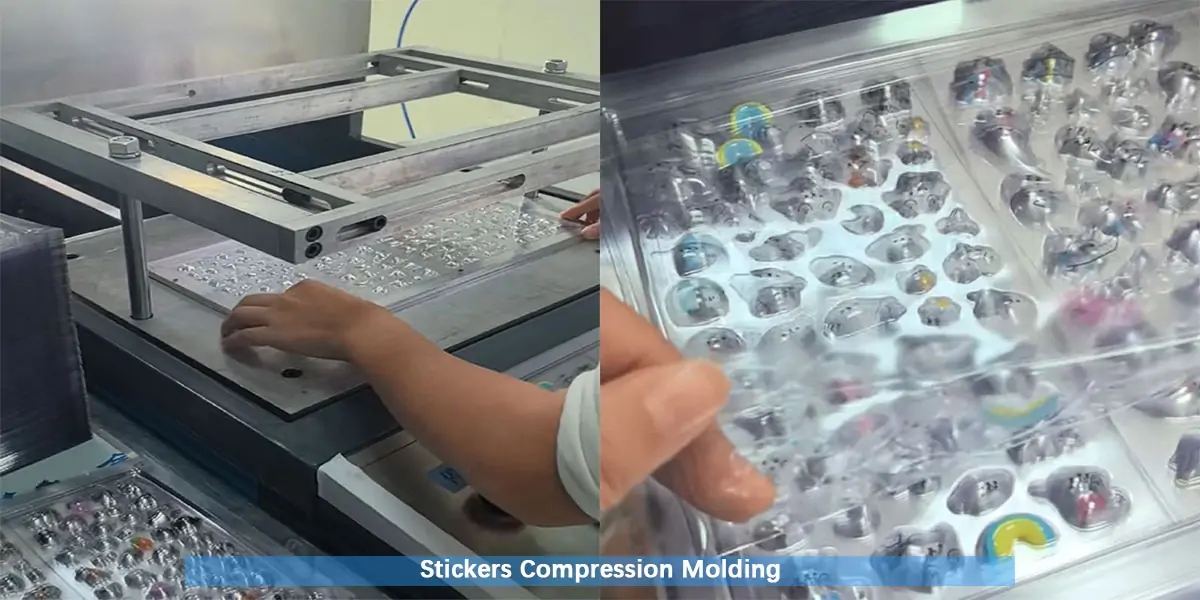
With the mold ready, the production process moves to material filling. This is the step where the 3D puffy sticker begins to take physical form.
The mold cavity is filled with a specialized PVC (polyvinyl chloride) solution or, in some cases, polyurethane resin. PVC is the material of choice for most 3D stickers due to its durability, flexibility, and ability to capture fine details. For applications requiring extra protection or a glossy “lens” effect, transparent polyurethane resin may be used instead.
For multi-color 3D stickers, each color layer must be accurately applied to achieve the final visual effect. Color matching follows Pantone codes for custom‑colored 3D emobssed stickers. And the dust‑free working areas prevent tiny particles from ruining surface finish on premium custom logo stickers.
Technicians fill liquid raw material (usually pigmented silicone or resin compound) into pre‑prepared cavities of the mold under controlled workshop conditions. Workers precisely calibrate material dosage for each cavity to get uniform thickness across the whole sheet of wholesale 3D stickers. Over‑filling causes flash and excess burrs; under‑filling leads to incomplete 3D shapes. The filling process must be carefully controlled to avoid air bubbles and ensure even distribution. Once the cavity and reservoir are completely filled, the material is ready for the next critical stage: curing.
Curing is the process that transforms the liquid PVC or resin into a solid, durable 3D structure. This is achieved through controlled heating or ultraviolet (UV) light exposure, depending on the material used. The filled molds are placed in a temperature-controlled environment to cure. This step allows the resin to harden and develop its final 3D shape.
For PVC-based 3D stickers, the filled mold is baked in a controlled environment until the PVC solution solidifies into a patterned sheet. The baking process typically takes several minutes and must be precisely timed to prevent deformation or incomplete curing.
For UV-curable materials, the process is even faster: UV inks and resins are exposed to ultraviolet light, which triggers a photochemical reaction that instantly crosslinks the polymers. This rapid curing locks the three-dimensional structure in place, creating a stable, raised texture that won't flatten or lose its shape over time.
Insufficient curing creates soft, sticky parts that deform easily; over‑curing makes 3D stickers brittle and prone to cracking. After curing, the solidified 3D pop-up embossed sticker sheet is carefully peeled from the mold. The result is a fully formed, three-dimensional emblem with the exact contours defined by the original artwork.
After full curing, operators demold solid 3D relief parts and run visual quality checks: removing burrs, rejecting deformed units, verifying relief height and color consistency. This phase guarantees long‑lasting performance for outdoor‑usable 3D raised stickers that resist scratching and fading.
Our strict quality control measures ensure each sticker maintains the same standard and cures evenly, resulting in a smooth, professional finish that meets the standards of global clients.
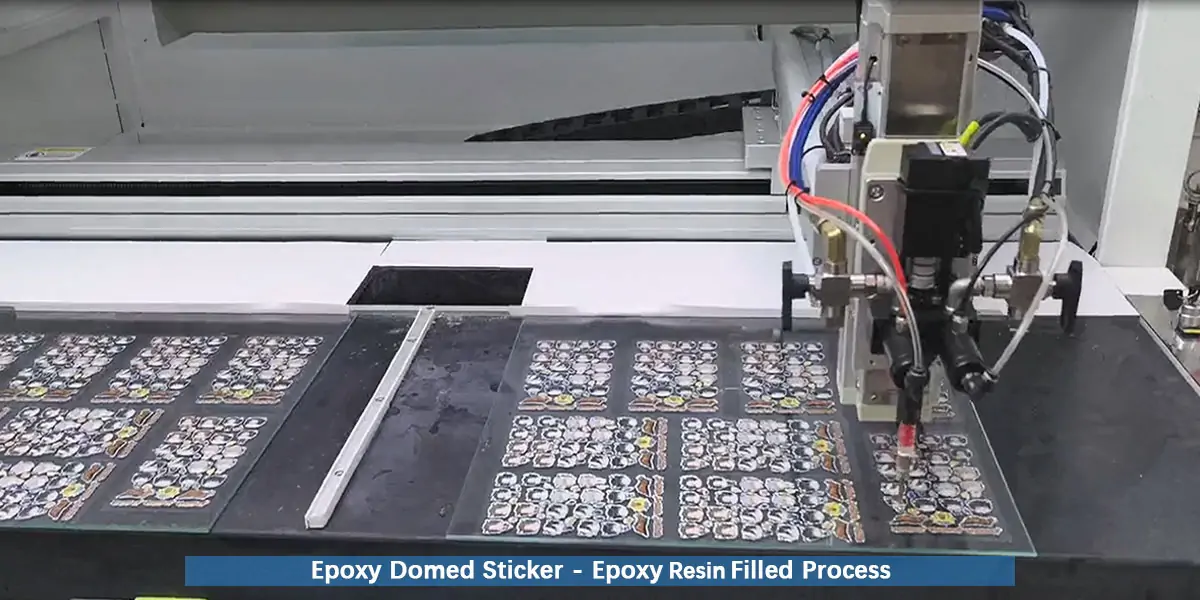
The final step in the 3D sticker manufacturing process is applying the adhesive backing. This is what transforms a sculpted piece of PVC or resin into a functional, peel-and-stick decal.
After adhesive application, products are usually:
A high-tack, double-sided adhesive is applied to the back of the cured 3D bubble sticker. For products that require repositionability or bubble-free application, specialized adhesives with air-release channels may be used. Subsequently, a layer of release liner (i.e., coated paper or film) is applied over the adhesive layer to protect it until the sticker is ready.
A release liner protects the glue layer until end‑users peel and apply the product. After backing lamination, the production team carries out die‑cutting, sheet separation and final QC sampling. Every batch of bulk custom 3D stickers goes through adhesion testing to avoid peeling issues for wholesale clients, brand resellers and OEM partners.
The factory selects suitable adhesive grades for different end‑use scenarios: strong permanent adhesive for hardware and packaging, removable adhesive for laptop & phone decoration stickers. A reliable custom sticker manufacturer considers both appearance and practical performance when selecting adhesive solutions.
Reference: How to Choose the Right Custom Sticker Manufacturer For Your Brand?
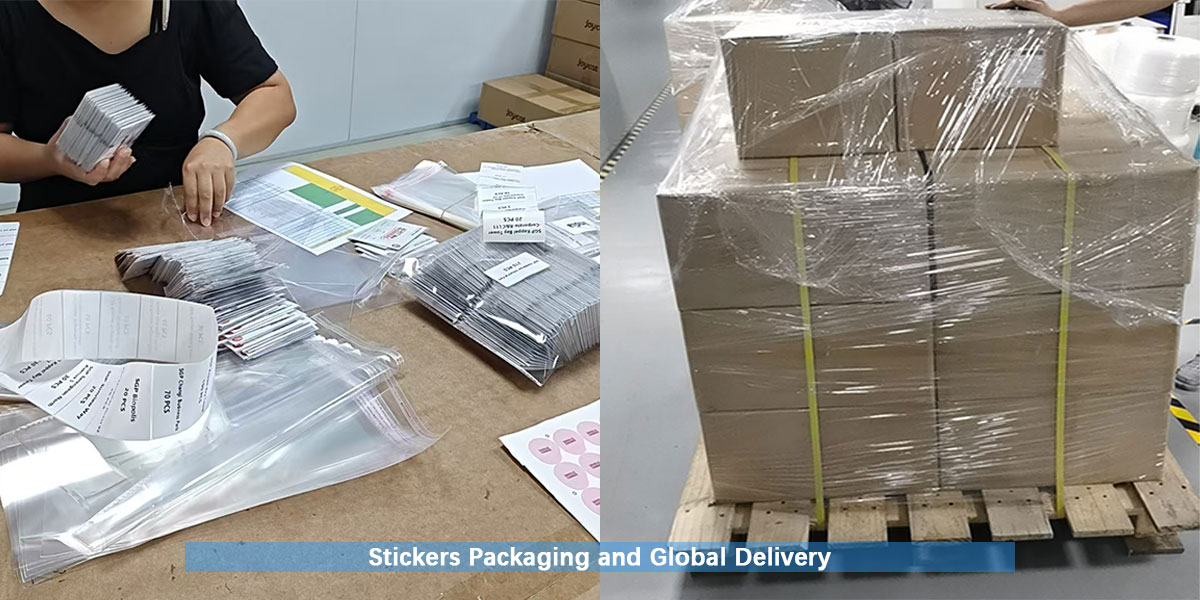
Once the adhesive backing is applied, the 3D stickers are ready for precision cutting and finishing. Depending on the order requirements, they may be cut into individual pieces using laser cutting, cold cutting, or ultrasonic cutting techniques. The finished stickers are then packaged and shipped to businesses for branding, product labeling, promotional merchandise, and countless other applications.
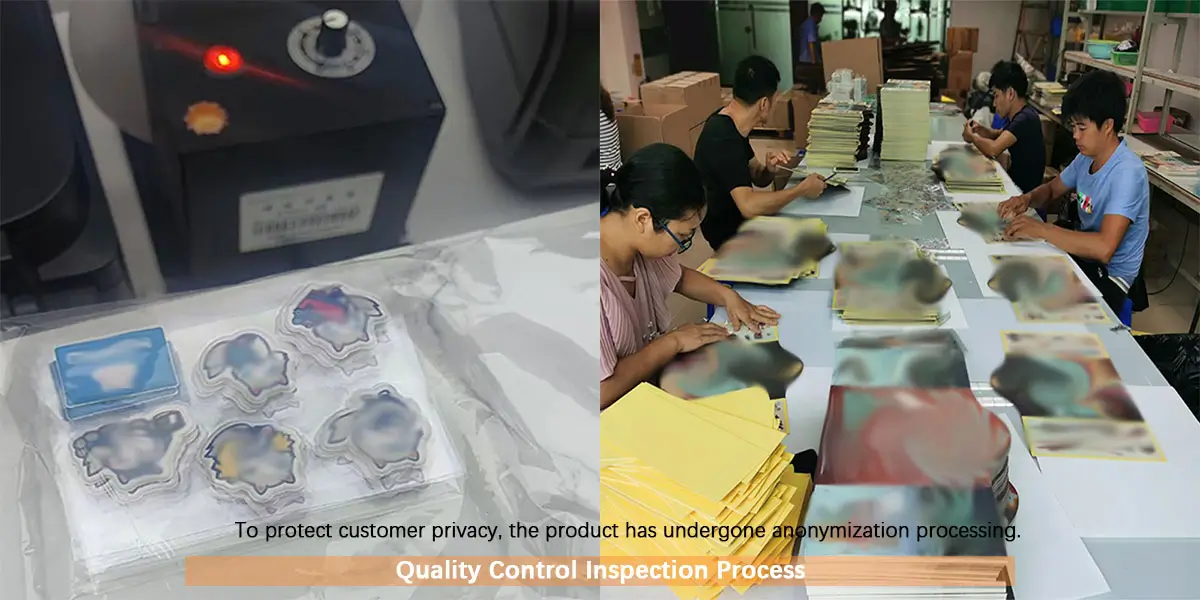
Before shipment, MaStickers inspects finished custom 3D stickers for dimension accuracy, surface defects, color deviation and adhesive performance. Qualified goods get packed for bulk wholesale or custom retail packaging according to client requirements. We support sample pre‑production for large orders so buyers can validate tactile effect and quality ahead of full‑scale manufacturing.
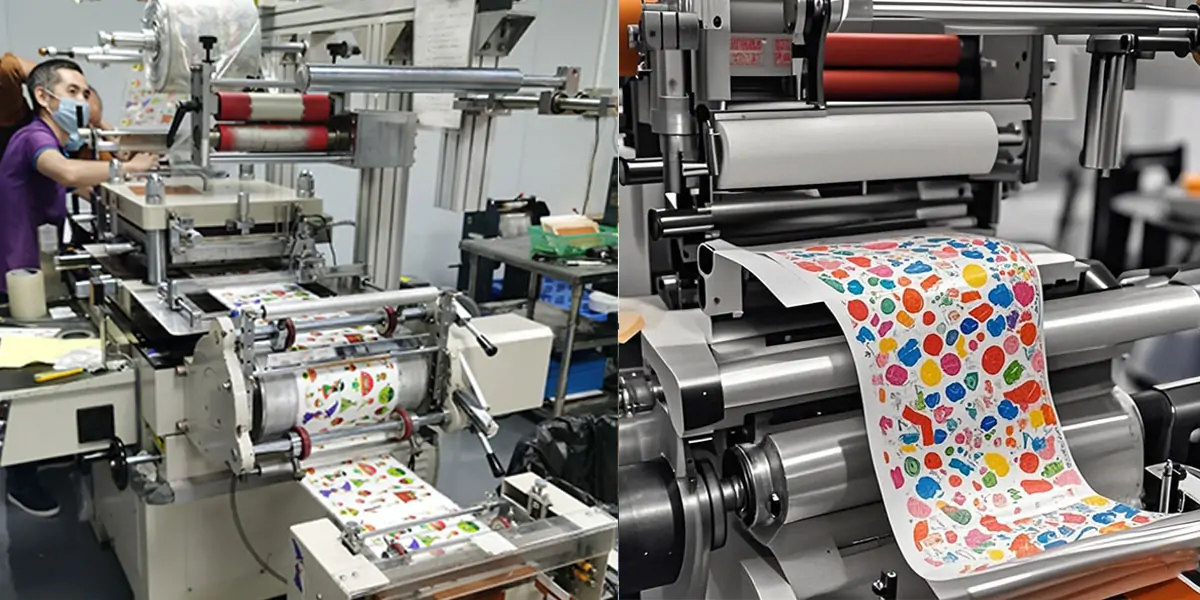
Many companies can print stickers, but manufacturing high-quality 3D stickers requires specialized knowledge. The 3D sticker production process is complex and requires specialized equipment, skilled craftsmanship, and rigorous quality control. From artwork preparation to mold making, material filling, curing, and adhesive backing, every step must be executed with precision to deliver a premium result.
A professional OEM manufacturer provides:
Custom Product Development. Manufacturers can help transform concepts into production-ready products.
Material Expertise. Different applications require different materials. Experienced suppliers understand the advantages of: Silicone, PVC, TPU, Epoxy resin, etc.
3Consistent Mass Production. For brands and distributors ordering thousands of stickers, production consistency is critical. A factory partner can provide: Stable quality, repeat production, competitive pricing, custom packaging solutions.
OEM and ODM Support. Professional manufacturers can support: Private label products, custom designs, new product development, large-volume production. (Reference: Custom OEM vs. ODM Stickers - Which Fits Your Business?)
Reference: How to Choose the Right Custom Sticker Manufacturer For Your Brand?
MaStickers specializes in custom sticker manufacturing and OEM/ODM production, providing customized solutions for international customers. At MaStickers, we combine decades of manufacturing expertise with cutting-edge technology to produce custom 3D stickers that elevate your brand. Whether you need embossed logos for automotive applications, dimensional labels for electronics, or promotional decals for retail, we're here to bring your vision to life.
From artwork development and mold creation to mass production and quality inspection, MaStickers helps global customers create unique sticker products. Whether you need bulk custom stickers, custom logo stickers, or specialized 3D bonbon drop sticker solutions, our team provides professional manufacturing support.
Ready to create your own custom 3D puffy stickers? Contact us today to discuss your project, or browse our gallery to see what's possible.
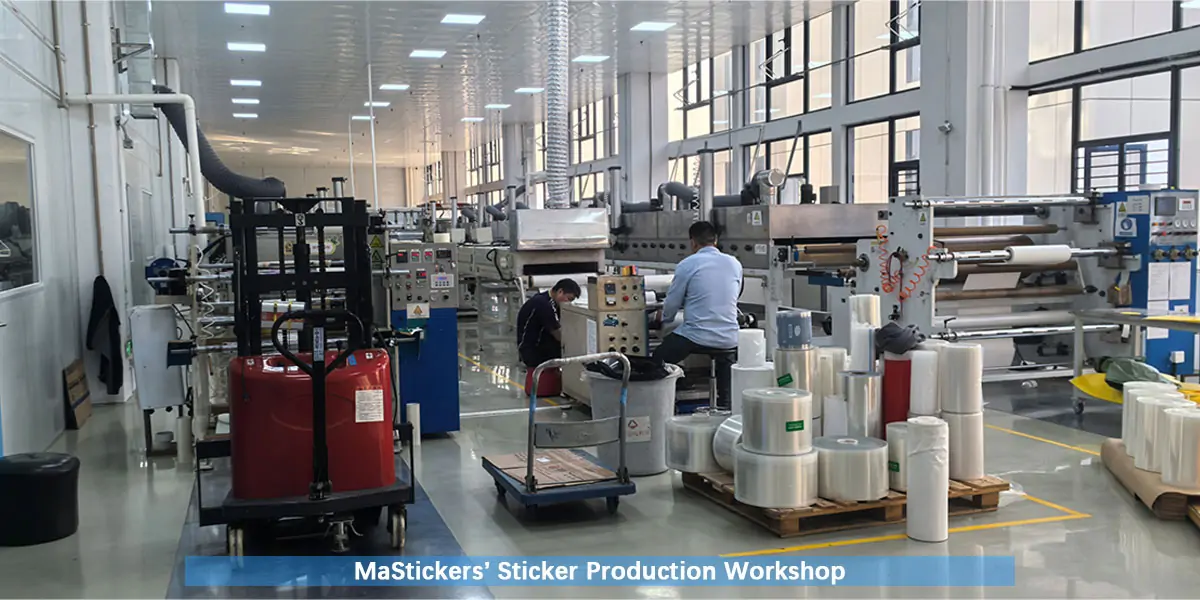
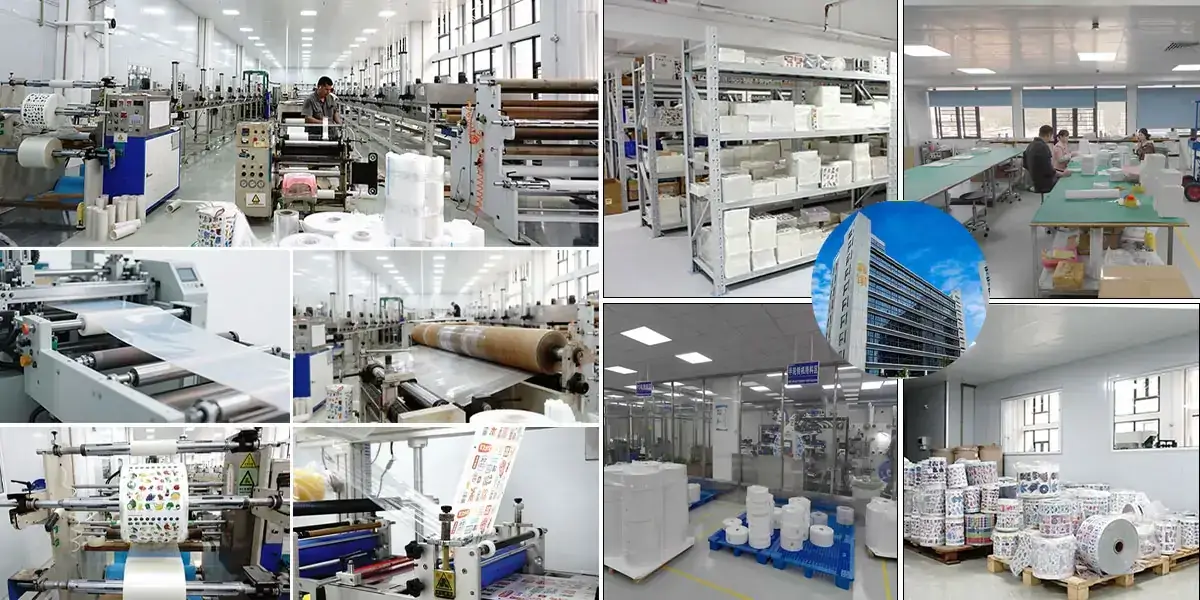
The manufacturing process of 3D stickers is far more complex than just printing. From artistic design, mold development, material filling, to batch production of stickers, curing treatment, and adhering the backing, every step will affect the quality of the final product.
For companies searching for a reliable 3D sticker manufacturer or OEM sticker supplier, choosing a factory with manufacturing experience can help ensure better quality, customization flexibility, and long-term supply stability.
If you need help optimizing your custom 3D sticker order for cost-effectiveness or require technical specifications for your project, feel free to ask!
 You May Also Like
No 410, Laoyi Village, Niuhu Community, Guanlan Street, Longhua District, Shenzhen City
MaStickers
Custom Stickers Manufacturer

No 410, Laoyi Village, Niuhu Community, Guanlan Street, Longhua District, Shenzhen City
Product
Get in touch and find out how we canmake your next shipment easier.


Copyright © 2026 Shenzhen Xinyin Environment Rubber Product Co., Ltd



 Home
Home