Custom Stickers Factory for Your Brand – Guides, Materials & Customization Hacks

Custom Stickers Factory for Your Brand – Guides, Materials & Customization Hacks
 Xinyin
 Apr 24,2026

In today's competitive branding landscape, ODM/OEM custom stickers have emerged as a versatile, cost-effective, and high-impact marketing tool for businesses of all sizes. Whether you’re a startup building brand recognition, a well-established company promoting product lines, or a creator designing personalized merchandise, understanding OEM custom stickers is essential to leveraging their full potential.
This article covers the subject of custom stickers, addressing available materials and substrates, printing technologies and finishing options, production workflows, and key factors to consider when sourcing from custom sticker suppliers. Furthermore, it outlines how to evaluate the production reliability of custom sticker manufacturers and how to facilitate the mass production of custom stickers based on appropriate technical specifications.
OEM custom stickers are adhesive labels manufactured to a buyer's exact specifications (design, size, shape, material, adhesive, and finish) for integration into the buyer's own products or packaging. Unlike off-the-shelf stickers, OEM stickers are tailored to a specific product‘s functional and aesthetic requirements.
As a custom sticker manufacturer, we oversee the entire production process to ensure consistent quality, competitive pricing, and full compliance with our clients' specific standards. This encompasses everything from raw material sourcing and design support to stickers printing, die-cutting, and packaging.
Identification: Model numbers, serial numbers, batch codes, and part identification.
Instruction: Operational icons, usage directions, and safety information.
Compliance: UL-recognized fire-rated labels, GHS-compliant chemical labels, and regulatory markings.
Branding: Color-matched logos and graphics that reinforce brand identity.
OEM custom stickers refer to stickers that are produced according to the specific requirements of customers. These stickers can be customized in terms of size, shape, design, material, and adhesive type. They are widely used in various industries such as electronics, automotive, food and beverage, and cosmetics.
Brand Promotion: Custom stickers can be printed with your brand logo, slogan, or other marketing messages, helping to increase brand awareness and recognition.
Product Differentiation: Unique sticker designs can make your products stand out from the competition, attracting more customers and increasing sales.
Enhanced Customer Experience: High-quality stickers can improve the overall appearance and functionality of your products, providing a better customer experience.
Cost-Effective Marketing: Compared to other marketing channels, custom stickers are a cost-effective way to promote your brand and products.
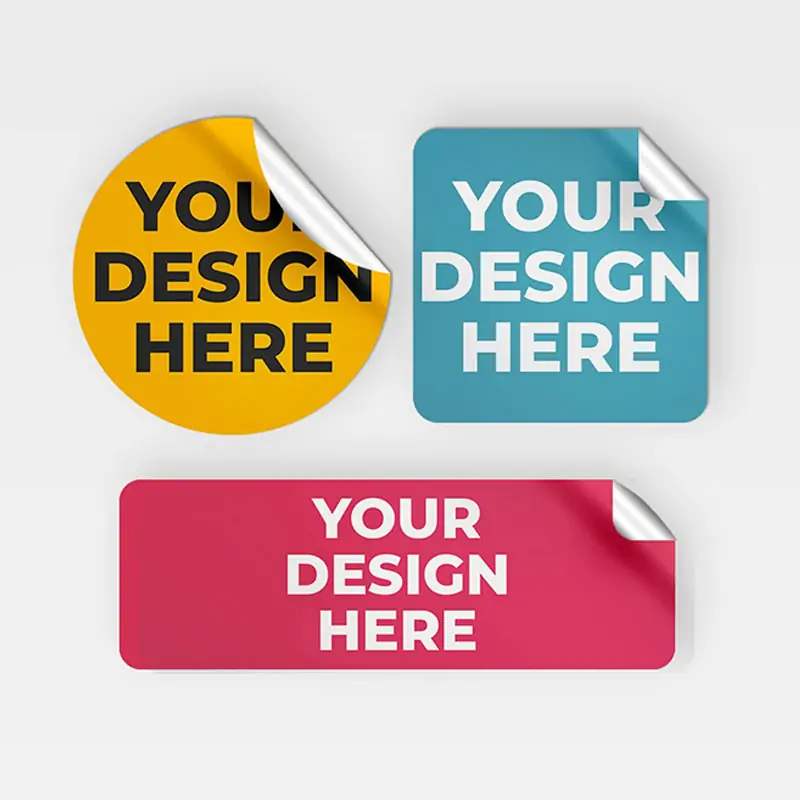
One of the biggest advantages of OEM custom stickers is the ability to tailor every detail to your brand. As a professional manufacturer, we support the following core customization options:
We offer flexible custom material options to match your specific application needs, budget, and branding goals. Based on your requirements, we can recommend and customize materials beyond our standard offerings, ensuring the stickers align perfectly with your use case.
Customizable Material Options: Whether you need a specialized vinyl for extreme outdoor conditions, a food-grade material for packaging labels, or a soft silicone for skin-contact products, our team will source and customize the ideal material for your project.
Advantages: Ensures your stickers meet unique functional requirements, enhances brand uniqueness, and adapts to specific industry standards (e.g., FDA for food labels, RoHS for electronic products).
Best for: Brands with specific functional needs, industry-specific requirements, or those looking to differentiate their products with unique material properties.
Die-Cut: Cut exactly to the outline of your design (e.g., logos, mascots, unique shapes); tolerance of less than 0.2mm for precision.
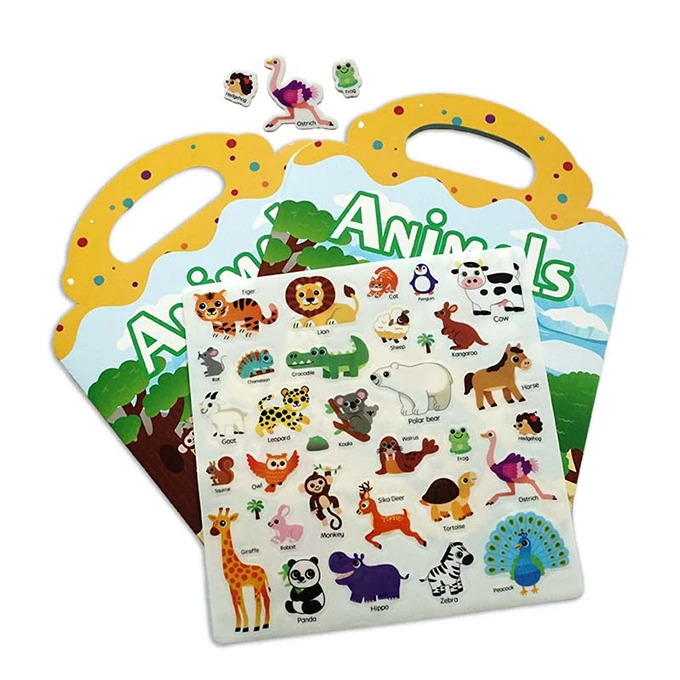
Kiss-Cut: Stickers cut on a sheet with a backing intact (easy to peel); ideal for sticker packs or multi-design sheets.
Standard Sizes: Rectangles, circles, squares, ovals; custom dimensions available upon request.
Printing: CMYK full-color printing (vibrant, detailed graphics); Pantone color matching for brand consistency; white ink for clear/metallic materials.
Finishes: Glossy (shiny, vibrant), matte (non-reflective, premium), UV coating (scratch/UV protection), lamination (waterproof, durability).
Special Effects: Holographic foil, metallic stamping, embossing, debossing, and glow-in-the-dark coatings.
Permanent: Strong bond for long-term use; ideal for product labeling, outdoor decals, and heavy-duty applications.
Removable: Leaves no residue when peeled; perfect for temporary promotions, laptop stickers, and reusable labels.
Repositionable: Adjustable during application; suitable for delicate surfaces or precise placement.
Bulk Packaging: Rolls, sheets, or individual pieces; cost-effective for large orders.
Retail-Ready: Custom header cards, branded backer boards, eco-friendly polybags, or shrink-wrapping; ready for shelf or online store sale.
Material selection is the single most consequential decision in custom sticker production because it determines durability, cost, and application suitability. The material you choose directly impacts the sticker’s resistance to water, UV radiation, temperature extremes, chemicals, and physical abrasion.
The choice of material directly impacts a sticker’s durability, appearance, and suitability for specific applications. OEM manufacturers offer a wide range of materials, each with distinct properties, advantages, and ideal use cases. Below are the most common options:
Properties: Soft, flexible, heat-resistant (withstands -40°C to 200°C), waterproof, non-toxic, and non-sticky residue; available in matte, glossy, or translucent finishes.
Advantages: Reusable (can be peeled and reattached multiple times without losing adhesion), skin-friendly, resistant to oil, chemicals, and wear; comfortable to touch and flexible enough to fit irregular surfaces.
Best for: Kids’ products (toys, sippy cups), kitchenware labels, electronic device stickers (phone cases, chargers), medical equipment labels, and any application requiring reusability or skin contact.
Properties: Lightweight, cost-effective, printable with matte, glossy, or kraft finishes; not waterproof or UV-resistant.
Advantages: Budget-friendly, eco-friendly (recyclable options available), excellent printability for detailed designs.
Best for: Indoor use, short-term promotions, product labels, packaging, and writing surfaces (e.g., note stickers).
Properties: Durable, flexible, 100% waterproof, UV-resistant; outdoor lifespan of 3–5 years.
Advantages: Weatherproof, fade-resistant, conforms to curved surfaces (e.g., water bottles, laptops), scratch-resistant.
Best for: Outdoor branding, vehicle decals, water bottle stickers, laptop stickers, and long-term promotional use.
Properties: Ultra-transparent, oil-proof, moisture-resistant; BOPP (biaxially oriented polypropylene) offers cost efficiency, PET (polyethylene terephthalate) provides premium durability.
Advantages: “No-label” look for glass/plastic surfaces, white ink printing option for dark backgrounds, compatible with permanent/removable adhesives.
Best for: Cosmetic labels, beverage packaging, glass containers, and minimalist branding.
Holographic: Rainbow-shifting metallic layer, scratch/water-resistant; ideal for premium branding, limited-edition products, and eye-catching promotions.
Metallic (Gold/Silver PET): Shiny, reflective finish; used for luxury labels, gift packaging, and high-end product branding.
Eco-Friendly: Compostable, biodegradable, or FSC-certified materials; appeals to eco-conscious brands and aligns with sustainability goals.
For more material options for custom stickers, please refer to this article: 9 Common Material Sticker Recommendations for Custom Stickers.
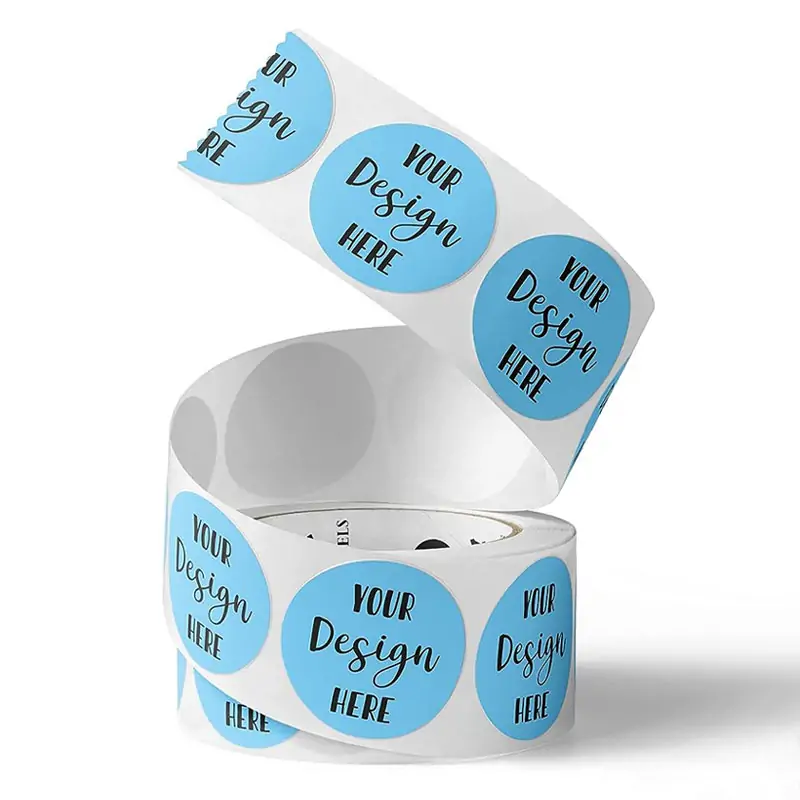
For OEM custom stickers, three primary printing methods dominate the market:
Digital Printing: Digital printing (inkjet or toner-based) is suitable for small-to-medium runs and short-turnaround orders. For OEMs running multiple short runs, multiple SKUs, or requiring variable data, digital printing is generally the most practical choice.
Screen Printing: Screen printing applies thicker ink layers for high durability and color opacity. For high-volume, single-design campaigns where ink durability and color matching are critical, screen printing offers advantages that digital printing cannot fully replicate. Screen printing also tends to be more cost-effective at large volumes due to faster production speeds once setup is complete.
Flexographic Printing: Flexographic printing is well-suited for high-volume, long-run orders. For OEMs ordering very large quantities of a single label design, flexographic printing typically provides the lowest per-unit cost.
|
Printing Method |
Best for |
Setup |
Turnaround |
Per‑unit cost at low volume |
Per‑unit cost at high volume |
|
Digital Printing |
Small-medium runs, variable data |
Fast |
3–5 days |
Lower |
Moderate |
|
Screen Printing |
High-volume, heavy ink, solid colors |
Slow |
7–10 days |
Higher |
Lower |
|
Flexographic |
Very large runs, rolls |
Slow |
10+ days |
Highest |
Lowest |
Die Cut vs. Kiss Cut: Understanding the difference between die cut and kiss cut is essential for specifying the right product for an OEM application.
Die cutting cuts through the entire sticker material (including the face stock and the backing paper) to the exact shape of the artwork. Die-cut stickers are fully cut around their perimeter and can be removed from their backing individually.
Standalone stickers for individual dispensing
Unique silhouettes that match the design outline
Maximum visual impact for product labeling
Suitable for roll formats and automated application
Kiss cutting cuts only through the top layer of sticker material, leaving the backing liner intact. Multiple kiss-cut stickers typically reside on a single larger backing sheet, often referred to as a "sticker sheet."
Easy to peel without separating from the sheet
Multiple designs on a single sheet
Suitable for distribution of many stickers with low individual packaging costs
The choice between die cut and kiss cut depends entirely on the application: die cut for direct-to-product application (manual or automated), kiss cut for sheet-based distribution and retail presentation.
Adhesive selection is frequently overlooked but directly affects application success and long-term performance.
Permanent Adhesive: Standard choice for most OEM applications where the sticker should not be removed. Provides strong initial tack that strengthens over time. Over extended periods on certain surfaces, removal may leave a slight residue, though this can typically be cleaned with warm soapy water or an adhesive remover.
Removable Adhesive: Repositionable adhesive that allows for temporary placement without surface damage. Less suited for long-term outdoor exposure—adhesion weakens under sustained harsh conditions, with typical lifespan of 6–12 months. Best for temporary promotions, seasonal applications, or product testing.
High-Tack Adhesive for Low-Surface-Energy Plastics: For OEM applications requiring adhesion to polypropylene (PP), polyethylene (PE), or other low-surface-energy plastics, high-tack adhesives specifically formulated for LSE surfaces are recommended. Standard adhesives may fail on these materials.
Specialty Adhesives: Additional options include freezer-grade adhesives for cold storage, tamper-evident adhesives that leave void patterns upon removal, and heat-resistant adhesives for high-temperature applications.
Understanding the production sequence helps OEMs plan timelines and validate quality:
Requirement communication: The buyer specifies size, shape, quantity, color, material, and any special processing requirements (hot stamping, lamination, etc.).
Design & Artwork Approval: Client submits design files (AI, EPS, PDF, 300 DPI recommended). Our pre-press team will review the resolution and color mode.
Material selection and procurement: Materials are selected based on usage environment and performance requirements—paper for low-cost indoor use, vinyl or PET for outdoor or high-wear scenarios.
Printing: The selected printing method (digital, screen, or flexographic) is employed based on order volume and quality requirements.
Lamination and finishing: Laminate is applied, and any additional finishing (hot stamping, embossing) is completed.
Cutting: Die cutting or kiss cutting is performed using precision cutting equipment.
Quality inspection: Every production batch undergoes comprehensive inspection for print quality, color accuracy, image clarity, and cut precision. Reject criteria include color deviations, blurred patterns, missing prints, and cut misalignment.
Packaging and shipment: Approved stickers are cleaned, packaged per customer specifications, and prepared for shipment with batch traceability documentation.
Understanding order flexibility and timelines is critical for planning. Below are industry-standard parameters (we offer tailored solutions for all client needs):
Standard MOQ: 500 pieces for most materials (vinyl, paper, clear).
Small Batch Support: Flexible MOQ (as low as 500 pieces) for startups, prototypes, or limited-edition runs.
Bulk Orders: Volume discounts available for orders over 5,000 pieces.
Standard Production: 7–14 business days from artwork approval.
Rush Orders: 5–7 business days available (additional fee applies).
Global Shipping: 3–7 days via express (DHL/FedEx); 10–21 days via sea freight for bulk orders.
Material: Vinyl/holographic > clear/BOPP > paper (cost hierarchy).
Quantity: Lower per-unit cost with higher volumes.
Customization: Special shapes, finishes, or effects increase pricing.
Order Complexity: Multi-design packs, mixed materials, or retail packaging add costs.
Understanding the distinction between OEM, wholesale, and retail sticker sourcing helps OEMs select the right channel:
|
Channel |
Order volume |
Customization level |
Price per unit |
Typical customer |
|
OEM (manufacturer direct) |
Retail (online printers) |
Full technical specifications, materials, adhesives |
Lowest at scale |
Equipment manufacturers, industrial buyers |
|
Wholesale (distributor) |
100–10,000 pieces |
Moderate (standard options) |
Low to moderate |
Retailers, resellers, promotional buyers |
|
Retail (online printers) |
1–500 pieces |
Basic (limited options) |
Highest |
Individuals, small businesses, one-off campaigns |
It is recommended to work directly with an OEM sticker manufacturer capable of fully meeting all technical specifications. One should avoid engaging through retail or wholesale channels, as these avenues offer a lower degree of customization and lack sufficiently rigorous quality control.
When choosing an OEM custom sticker manufacturer, there are several factors to consider:
1. Experience and Expertise: Look for a manufacturer with extensive experience in producing OEM custom stickers. They should have a deep understanding of different sticker materials, printing techniques, and adhesive types, and be able to provide professional advice and solutions.
2. Quality Control: Ensure that the manufacturer has a strict quality control system in place to ensure that the stickers meet your specifications and requirements. They should use high-quality materials and advanced printing equipment to produce durable and long-lasting stickers.
3. Customization Capabilities: Choose a manufacturer that offers a wide range of customization options, including size, shape, design, material, and adhesive type. They should be able to work closely with you to create stickers that meet your specific needs and preferences.
4. Pricing and Delivery: Compare the pricing and delivery terms of different manufacturers to find the one that offers the best value for your money. Make sure that they can deliver the stickers on time and within your budget.
5. Customer Service: Look for a manufacturer that provides excellent customer service. They should be responsive to your inquiries and concerns, and be able to provide timely support and assistance.
Partnering with a reliable OEM manufacturer offers distinct advantages over generic suppliers or overseas middlemen:
Quality Assurance: In-house production and strict QC ensure consistent color, durability, and finish; materials comply with international standards (FDA, LFGB, RoHS).
Customization Flexibility: Full control over design, materials, and packaging; support for unique or complex requests.
Cost Efficiency: Factory-direct pricing eliminates middleman markup; volume discounts and scalable production save costs.
Expert Support: Professional design and pre-press teams provide guidance on materials, printability, and branding optimization.
On-Time Delivery: Streamlined production and global shipping partnerships ensure orders meet deadlines.
The design of your OEM custom stickers is crucial to their effectiveness. Here are some tips to help you create a great sticker design:
1. Define Your Objectives: Before starting the design process, clearly define your objectives for the stickers. Are you using them for brand promotion, product differentiation, or something else? This will help you determine the design style, colors, and messaging.
2. Consider the Target Audience: Think about who your target audience is and what they are interested in. Use colors, images, and messaging that will resonate with them and capture their attention.
3. Keep it Simple and Clear: Avoid overcrowding the sticker with too much information. Keep the design simple and clear, focusing on the most important elements such as your brand logo, slogan, or product image.
4. Use High-Quality Images and Graphics: Make sure to use high-quality images and graphics in your sticker design. Low-quality images can make your stickers look unprofessional and reduce their effectiveness.
5. Test the Design: Before finalizing the design, test it on different surfaces and in different lighting conditions to ensure that it looks good and is easy to read.
When ordering OEM custom stickers, the process typically involves the following steps:
1. Request a Quote: Contact the manufacturer and provide them with your sticker specifications and requirements. They will provide you with a quote based on the quantity, material, printing technique, and other factors.
2. Approve the Design: Once you have received the quote, you will need to approve the sticker design. The manufacturer will provide you with a digital proof of the design for your review and approval.
3. Place the Order: After approving the design, you can place the order with the manufacturer. They will start producing the stickers according to your specifications.
4. Delivery: Once the stickers are produced, they will be delivered to your specified address. The delivery time will depend on the manufacturer's production schedule and your location.
By understanding materials, customization options, production processes, and sourcing best practices, you can create stickers that elevate your brand, resonate with your audience, and deliver long-term value.
When selecting a custom sticker supplier, the evaluation should balance technical capability, quality management, operational reliability, and transactional transparency. Requesting samples, verifying test data where applicable, and confirming lead times before finalizing orders are all recommended steps in the procurement process.
Whether your requirement is for small-batch prototyping or large-scale production runs, defining clear specifications and working with a manufacturer that can meet those specifications will yield stickers that perform as intended—on time, on specification, and within budget.
As a professional OEM sticker manufacturer with 20+ years of industry experience, we are committed to delivering high-quality, cost-effective, and fully customized sticker solutions for businesses worldwide. Whether you need bulk vinyl stickers, holographic logo decals, or retail-ready sticker packs, our team is here to support your project from concept to delivery.
Ready to start your OEM custom sticker project? Contact us today for a free quote, digital proof, or sample request. We look forward to helping your brand stand out.
 You May Also Like
No 410, Laoyi Village, Niuhu Community, Guanlan Street, Longhua District, Shenzhen City

MaStickers
Custom Stickers Manufacturer

No 410, Laoyi Village, Niuhu Community, Guanlan Street, Longhua District, Shenzhen City
Product
Get in touch and find out how we canmake your next shipment easier.


Copyright © 2026 Shenzhen Xinyin Environment Rubber Product Co., Ltd



 Home
Home