Custom Stickers Factory for Your Brand – Guides, Materials & Customization Hacks

Custom Stickers Factory for Your Brand – Guides, Materials & Customization Hacks
 Xinyin
 May 15,2026

If you are sourcing custom stickers for product branding, retail packaging, or promotional giveaways, you will inevitably come across two key terms: die cut stickers and kiss cut stickers. These two cutting methods are the most common in the sticker manufacturing industry, yet many buyers struggle to understand their core differences, advantages, and ideal use cases. These two cutting techniques are the backbone of custom sticker production, but understanding their differences is key to choosing the right option for your brand, campaign, or product line.
At first glance, they look quite similar. Once peeled from the backing, they can even appear almost identical. However, the difference in how they are cut fundamentally affects their presentation, handling, packaging, and suitability for specific applications.
This guide provides a clear, objective comparison of die cut and kiss cut stickers. How each is made, where each excels, and how to make an informed decision for your project, backed by industry practices rather than speculation.
A sticker typically consists of two main layers: the top vinyl or paper layer (the sticker material itself) and the bottom backing paper liner. The distinction between die cut and kiss cut lies entirely in how deep the blade cuts through these layers.
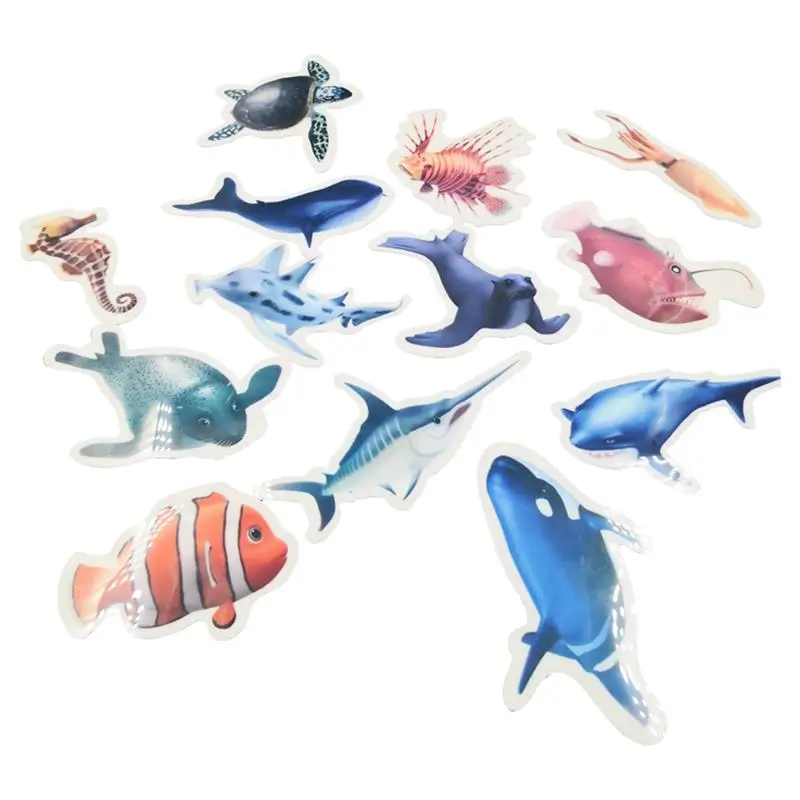
A die cut sticker is cut completely through both the top sticker material and the backing paper. The blade or die follows the exact contour of your design, removing all excess material from around the sticker and producing a final product that is precisely shaped to your artwork. The cutting blade follows the exact outline of your design, resulting in standalone, individual stickers with no excess backing around the artwork.
This process typically utilizes custom-made steel dies for mass production. These dies are manufactured to precisely match the specific shape of your design. For small-batch production or scenarios requiring shorter turnaround times, digital contour cutting technology is typically employed. This is commonly referred to as "contour cutting." This method eliminates the need to create a custom die for every unique shape. Rotary die cutting is another widely used technique, which is typically synchronized with the printing process on web-fed presses.
Full-thickness cut: Penetrates all layers (sticker face stock, adhesive, and backing paper).
Exact design shape: Each sticker matches the precise contour of your logo, illustration, or artwork. (no white border unless specified).
Standalone units: No attached sheet; every sticker is a separate piece with a thin backing edge for easy peeling.
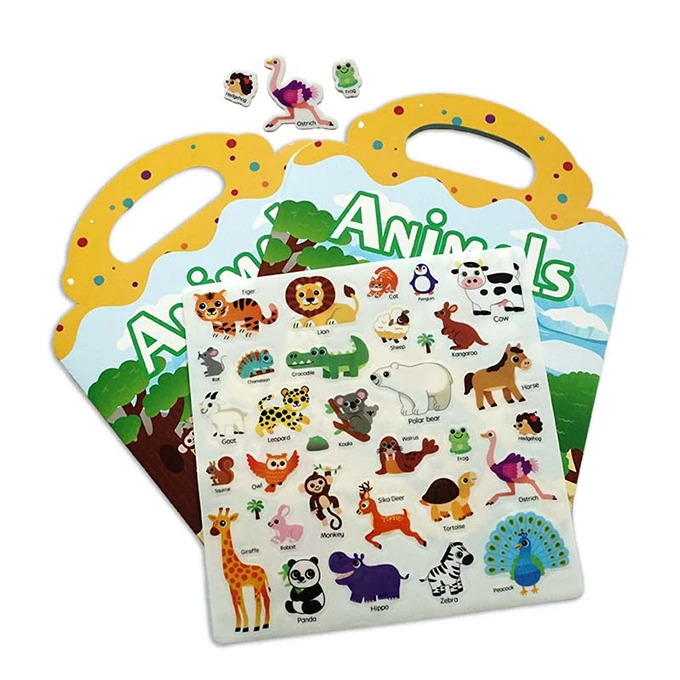
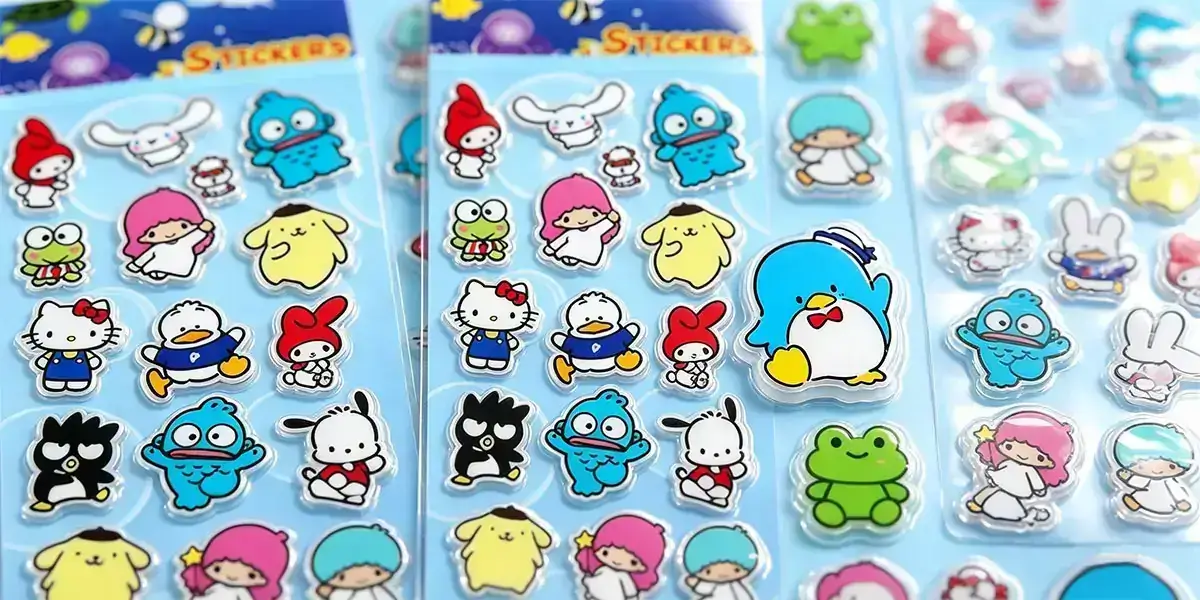
Kiss cut stickers are cut only through the top sticker layer (face stock and adhesive), leaving the backing liner fully intact. The name "kiss cut" describes the way the blade "kisses" the top surface with precisely calibrated pressure, penetrating just enough to cut the sticker but not the liner beneath. The result is a sticker that sits within a larger square or rectangular backing sheet, surrounded by a protective border of intact liner.
Kiss cutting is a form of die cutting, but die cutting as a broader category includes both through cuts (full separation) and kiss cuts (partial separation). In sticker production, kiss cuts allow multiple stickers to be arranged on a single sheet, with each sticker easily removable while the sheet remains intact. The kiss cut technique allows for multiple stickers to be arranged on a single sheet, making it a cost-effective option for bulk orders.
Partial cut: Slices through the sticker material but not the backing paper.
Sheet Format: Multiple stickers can be arranged on a single sheet, reducing waste and lowering production costs for large quantities.
Flexible Shapes: While often used for standard shapes (squares, circles, rectangles), kiss cut stickers can also accommodate custom shapes with intricate details.
Protective Backing: The backing provides extra support during shipping and storage, preventing damage to the sticker's adhesive.
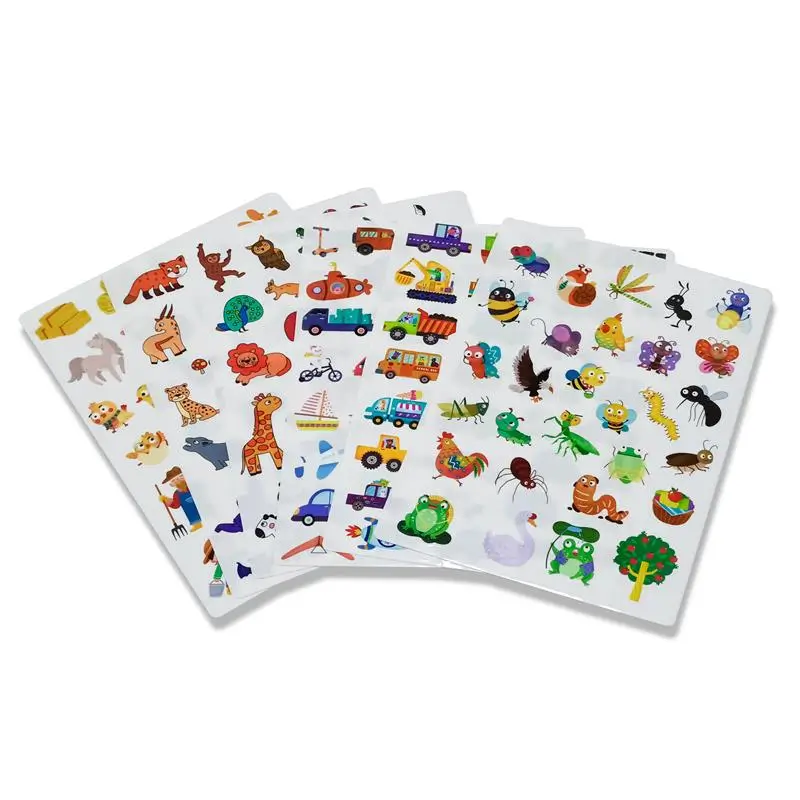
To simplify your decision, here‘s a detailed comparison of the two cutting methods across critical factors:
| Feature |
Die Cut Stickers |
Kiss Cut Stickers |
| Cut Depth |
Cuts through all layers (sticker + backing) |
Cuts only sticker layer; backing intact |
| Appearance |
Exact design shape; no excess backing; premium, clean look |
Stickers on a sheet; bordered edges; functional, budget-friendly look |
| Ease of Peeling |
Slightly harder (backing matches design shape) |
Very easy (intact backing provides leverage) |
| Production Cost |
Higher (requires precise cutting, more material waste) | Lower (efficient bulk cutting, minimal waste) |
| Design Flexibility |
Unlimited custom shapes (logos, circles, stars, etc.) |
Great for multi-design sheets; limited to sheet dimensions |
| Durability |
Same as kiss cut (depends on material: vinyl, paper, etc.) |
Same as die cut (waterproof, UV-resistant options available) |
| Ideal Order Size |
Small to medium runs (premium branding) |
Large bulk orders (cost-effective mass production) |
The decision between die cut and kiss cut stickers depends on several factors, including your design, budget, application, and intended use. Here's a step-by-step guide to help you choose:
Intricate Shapes: If your design has fine details, small text, or complex curves, die cut stickers may be better suited to showcase the full design. However, kiss cut stickers can also handle intricate shapes if the backing provides enough support.
Standard Shapes: For simple shapes (squares, circles, rectangles), kiss cut stickers are often more cost-effective and easier to produce in bulk.
Die cut stickers typically cost 10-20% more than kiss cut stickers due to the additional labor and precision required for custom cutting. If you're working with a tight budget, kiss cut stickers are a more affordable option, especially for large orders.
Kiss cut stickers offer better value for bulk quantities, as they can be arranged on sheets to reduce material waste.
Outdoor Use: Die cut vinyl stickers are more durable and resistant to weather, making them ideal for vehicle decals, outdoor signage, or products exposed to the elements.
Indoor Use: Kiss cut stickers work well for indoor applications like laptop decals, notebook stickers, or retail packaging, where ease of application is key.
Handing and Storage: If your stickers will be handled frequently or shipped individually, die cut stickers may be more prone to damage without a backing sheet. Kiss cut stickers with a backing offer better protection during transit.
Brand Identity: If you want your stickers to be a direct reflection of your brand's unique shape (e.g., a shoe brand's logo in the shape of a shoe), die cut stickers are the clear choice.
Promotional Reach: For giveaways or campaigns where you need to distribute large quantities, kiss cut stickers on sheets are more practical and cost-effective.
Selecting the right cutting method depends on your budget, design goals, and intended use:
Material Matters: Both die cut and kiss cut stickers work with a variety of materials, including vinyl (weather-resistant), paper (eco-friendly), holographic (eye-catching), and metallic (luxurious). Choose a material that aligns with your use case and brand aesthetic.
Test Before You Order: Most sticker manufacturers offer free sample packs, allowing you to test both die cut and kiss cut stickers with your design before committing to a large order.
Design for the Cut: When creating your artwork, consider the cutting technique. For die cut stickers, ensure your design has a minimum border of 1/8 inch to prevent small parts from breaking off during cutting. For kiss cut stickers, leave a small margin between stickers on the sheet to avoid overlapping cuts.
Adhesive Options: Both cutting techniques work with permanent, removable, or repositionable adhesive. Choose an adhesive based on your application surface (e.g., permanent for vehicle decals, removable for rental property signage).
Once a sticker is peeled from its backing, a die cut sticker and a kiss cut sticker made from the same material are visually and functionally identical. The backing style does not affect the sticker’s on-surface appearance, adhesive performance, or longevity.
The choice between die cut and kiss cut is therefore about how the sticker is presented, packaged, and handled before application, not its end-use performance.
Die cut and kiss cut are both effective, widely used cutting techniques for custom stickers. Neither is inherently "better". They serve different purposes. Die cut stickers offer a clean, borderless, standalone presentation ideal for branding and merchandise. Kiss cut stickers provide ease of peeling, backing-space for additional branding, and structural protection during transport, making them well suited for sticker sheets, intricate designs, and multi-sticker sets.
By understanding the differences between these two techniques and evaluating your design, budget, and use case, you can choose the perfect custom stickers to bring your brand to life.
When planning your custom sticker project, consider how your stickers will be distributed, applied, and presented. The right cutting method should align with your intended application, handling requirements, and packaging format. Not simply what appears cheaper at first glance.
Still unsure which cutting method fits your project? Contact us today for a free consultation and quote—we’ll help you choose the perfect option for your brand and budget.
 You May Also Like
No 410, Laoyi Village, Niuhu Community, Guanlan Street, Longhua District, Shenzhen City

MaStickers
Custom Stickers Manufacturer

No 410, Laoyi Village, Niuhu Community, Guanlan Street, Longhua District, Shenzhen City
Product
Get in touch and find out how we canmake your next shipment easier.


Copyright © 2026 Shenzhen Xinyin Environment Rubber Product Co., Ltd



 Home
Home