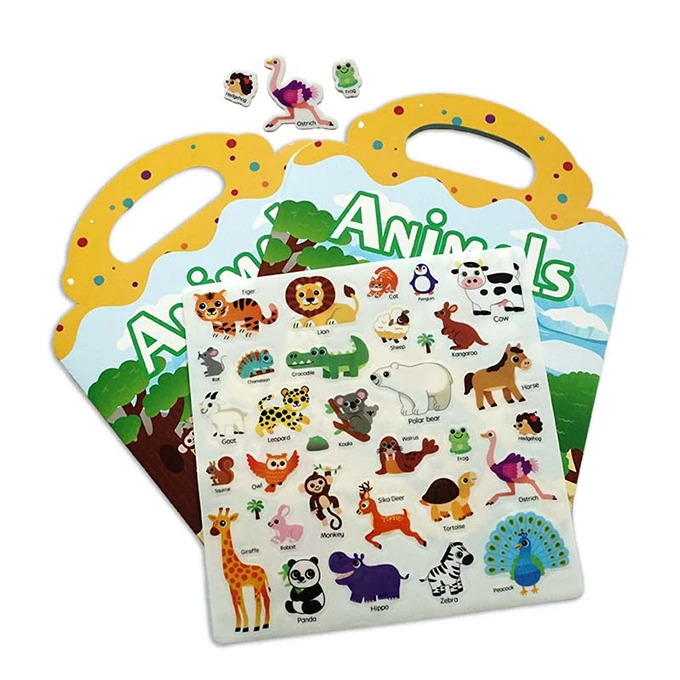
Custom Stickers Factory for Your Brand – Guides, Materials & Customization Hacks

Custom Stickers Factory for Your Brand – Guides, Materials & Customization Hacks
 Xinyin
 Jun 02,2026

Custom stickers are indispensable for modern branding, product packaging, promotional giveaways, and personal expression. Behind every vibrant, durable, and precisely shaped custom sticker lies a standardized, quality-controlled manufacturing workflow. From artwork prep and material selection to professional printing, lamination, and precision die cutting.
Custom stickers have become a cornerstone of branding, personal expression, and marketing. But what goes into creating a high-quality custom sticker that's durable, visually appealing, and tailored to your exact specifications? As a bulk custom sticker factory, we walk you through the complete, factual production process of custom stickers, focusing on core printing and die cutting technologies, to help you understand how high-quality custom stickers are made.
The Short Answer: A Two-Stage Process
Custom stickers are made in two main stages: printing and cutting.
First, the design is printed onto a roll or sheet of sticker material using digital, screen, or flexographic printing technology.
Then, a cutting process (either die-cutting or kiss-cutting) trims the material into the finished sticker shape. Between these stages, optional finishes like lamination or varnishing may be applied.
The Printing Process: Bringing Your Design to Life
Before the printing process begins, rigorous pre-production preparations lay the foundation for maintaining consistent quality. This stage directly affects the clarity of the printing, the accuracy of the colors, and the ultimate durability. For custom vinyl stickers, die-cut stickers, and waterproof stickers (in accordance with commercial standards), this is particularly important.
The first step in creating custom stickers is transforming your digital design into a physical product. This involves several key stages, each with its own set of considerations and technologies.
Before any material hits a press, the artwork must be prepared correctly. This step determines how cleanly the final sticker will cut and how accurately the colors reproduce.
Vector files and resolution. For custom-shaped stickers, vector formats such as EPS or PDF are preferred because they can be scaled without losing quality. If raster images are used, they should be set to at least 300 DPI to avoid blurriness or pixelation when printed. Professional production starts with print-ready artwork (preferably in AI, PDF, or EPS formats, 300 DPI minimum for sharpness).
Color mode (CMYK for offset/digital printing; RGB is not recommended for commercial runs)
Dieline accuracy: A separate "cut layer" defines the exact contour for die cutting, with a minimum 2 mm safety margin between the dieline and critical artwork (text/logos) to avoid cutting into design elements
Complexity check: Fine details (≤0.5 mm) or intricate curves are flagged to ensure compatibility with die cutting precision
A digital or physical pre-production sample is created for client approval, confirming size, color, material, and cut line accuracy before mass production.
The choice of material depends on the sticker's application (indoor/outdoor, waterproof needs, durability requirements). As a bulk manufacturer, we use industrial-grade materials for consistent performance:
Vinyl (PVC/PP): The most popular choice for waterproof custom stickers, bumper stickers, and outdoor labels. 2.6–3 mil thickness, with UV resistance and tear strength. Glossy finishes enhance vibrancy; matte finishes offer a modern, non-reflective look.
Coated Paper: Cost-effective for indoor use (packaging, handouts), with smooth surfaces for sharp printing but no waterproofing.
PET: High-temperature and chemical resistance, ideal for industrial labels or product tags.
Adhesives: Permanent emulsion acrylic (10–16 N/25 mm peel strength for general use), removable, or high-tack grades for different surfaces (glass, plastic, metal).
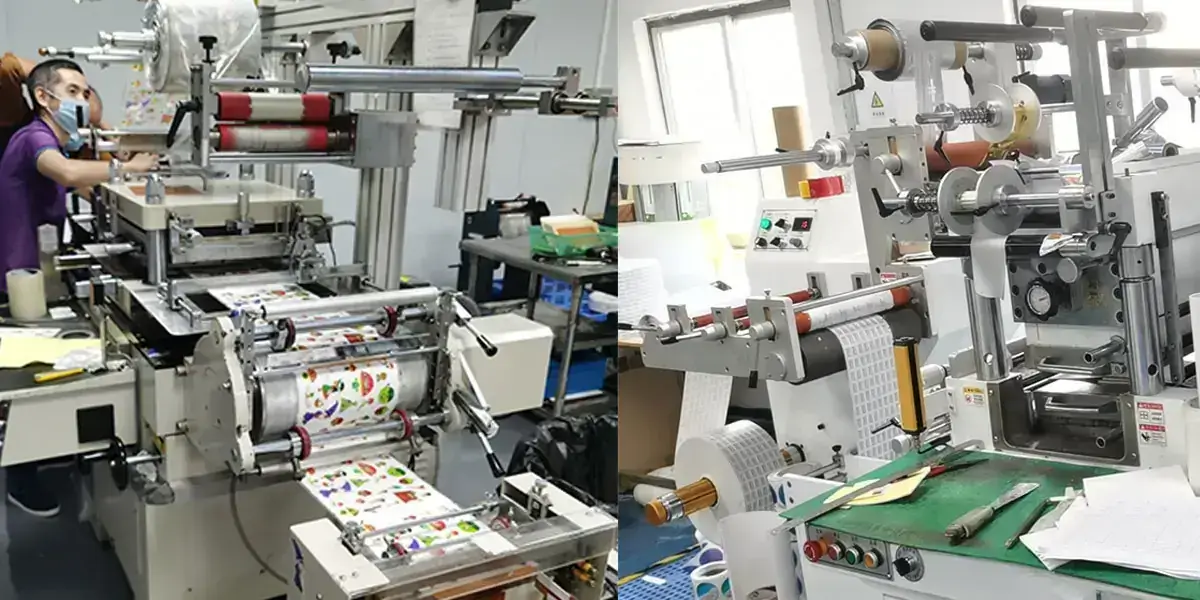
Printing is where designs come to life. Professional factories use two primary methods, selected based on order quantity, design complexity, and turnaround time—key considerations for bulk custom stickers and custom die cut stickers.
Digital printing dominates for runs of 50–5,000 pieces, offering flexibility for custom designs, no setup fees, and quick changeovers (12–18 minutes for design swaps).
Technology: Commercial eco-solvent or UV-LED printers. Eco-solvent inks bond to vinyl/PET, resisting fading and water; UV-LED inks cure instantly under UV light, delivering scratch resistance and vibrant colors.
Key Advantages:
Offset printing is the standard for 10,000+ piece bulk orders, delivering consistent color, sharp details, and lower unit costs for high volumes.
Technology: Sheet-fed or web offset presses with CMYK four-color process (or spot colors for brand-specific hues). Plates are created for each color, transferring ink to the substrate via rubber blankets.
Key Advantages:
After printing, all outdoor or high-durability stickers undergo protective lamination—a step DIY production often skips but essential for professional quality.
Process: A thin (1.4–1.6 mil) clear glossy or matte laminate is applied via heat or pressure, bonding to the printed surface.
Benefits:
Shields ink from scratches, chemicals, and UV rays (prevents fading for 3–5 years outdoors)
Enhances water resistance, critical for waterproof custom stickers
Improves durability, making stickers resistant to tearing and abrasion
After printing, stickers may receive additional treatments before cutting.
Lamination. A thin gloss or matte overlaminate film is applied to the printed surface. Gloss lamination keeps colors vibrant and improves scratch resistance; matte lamination reduces glare and hides minor scuffs but can slightly mute color contrast. Uncoated varnish is a simpler alternative, though it offers less protection.
Varnishing. UV varnishes can be applied inline with digital or hybrid presses, adding gloss, matte, or soft-touch finishes without the thickness of a full laminate film. Some converters also offer spot UV coating to create contrast on specific design elements.
For certain ink systems (particularly eco-solvent) printed material may need to outgas for 12 to 24 hours before lamination to avoid trapped solvents and silvering (a hazy appearance under the laminate).
Once printing is complete, the stickers need to be cut into their final shapes. This is where die-cutting comes into play. It is a precise manufacturing process that ensures each sticker is cut exactly to your specifications. The cutting process is what transforms a printed sheet into individual stickers. There are two primary methods: kiss cutting and die cutting.
The first step in die cutting is creating a custom die, which is a metal tool with sharp edges that matches the shape of your sticker. The die is typically made from steel or brass and is CNC-machined to ensure accuracy.
In kiss cutting, the blade cuts through only the top sticker layer (the vinyl or paper face stock) but leaves the backing liner completely intact. The name comes from the way the blade "kisses" the material. Just enough pressure to cut the top layer without piercing the liner.
Kiss-cut stickers remain on a continuous backing sheet after cutting. This makes them easier to peel because the intact backing provides more surface area to grip. The excess material between stickers stays attached to the liner and is typically discarded. Multiple kiss-cut stickers can be printed on the same sheet, which is why sticker sheets (like those sold in stationery sets) use this method.
Kiss cutting is commonly preferred for sticker sheets, sets of multiple designs, and applications where easy peeling is a priority.
Process: The blade cuts through the top sticker layer (vinyl/paper and laminate) but leaves the backing liner intact.
Result: Stickers remain attached to the backing sheet, forming a sticker sheet with multiple designs.
Applications: Retail sticker packs, event handouts, and products requiring easy peeling and individual use. Tolerance: ±0.15 mm for consistent depth.
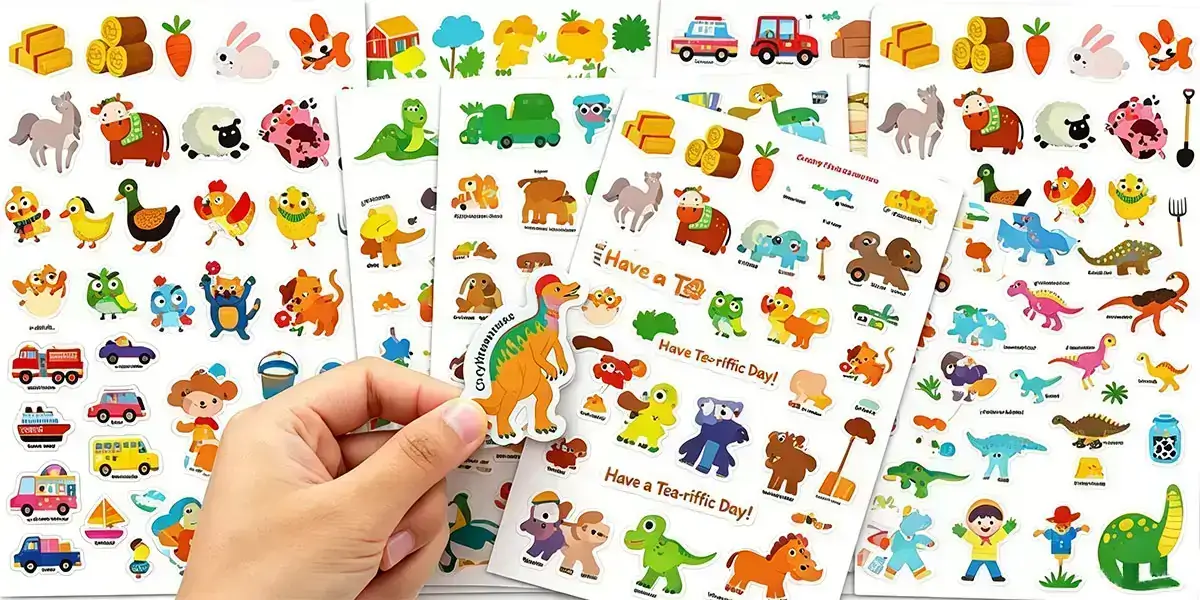
Die cutting is the process of cutting printed and laminated sticker sheets into custom shapes (logos, characters, irregular contours) or standard shapes (circles, squares). Die cutting cuts entirely through both the sticker material and the backing liner, producing individual stickers that match the exact shape of the design with no excess border. The result is a sticker that looks finished and ready to apply, even with the backing still attached.
It differentiates generic stickers from custom die cut stickers and ensures a professional, clean finish. Factories use two primary die cutting methods, plus two cutting depth techniques, tailored to order requirements.
The process is analogous to a cookie cutter: a sharp steel rule die or a digital cutting blade follows the contour of the artwork, slicing through the entire material stack. Modern digital die-cutting machines can read printed registration marks to align the cut precisely with the printed design, achieving a registration tolerance of around ±0.2 mm for most standard shapes.
Process: The blade cuts through both the sticker layer and the backing liner, separating individual stickers completely.
Result: Standalone, individual stickers with clean, custom-shaped edges (no excess material around the design).
Applications: Branding stickers, product labels, and promotional giveaways where a professional, standalone look is required.
Tolerance: ±0.25 mm for precise contour alignment.
There are several die cutting methods available, depending on your sticker's shape, quantity, and material:
Flatbed Die Cutting: A versatile method where the printed material is placed on a flat bed, and the die is pressed down to cut the stickers. It's ideal for complex shapes and small to medium runs.
Rotary Die Cutting: Uses a cylindrical die that rolls over the printed material, cutting the stickers as it moves. It's faster than flatbed die cutting and is ideal for large volume orders.
Laser Cutting: A non-contact method that uses a high-powered laser to cut the stickers. It's perfect for intricate shapes and materials that are difficult to cut with traditional dies.
Digital die cutting is the go-to for small-to-medium batches (50–5,000 pieces) and complex, intricate designs.
Process: A high-speed digital cutter (flatbed or rotary) reads the pre-programmed dieline from the artwork file, using a sharp blade to follow the contour precisely.
Precision: Tolerance ±0.1–0.2 mm, ideal for fine details, curves, and small text.
Advantages: Fast turnaround, and ability to produce unique shapes without limitations. Perfect for custom logo stickers, character stickers, and limited-edition designs.
Rotary die cutting is optimized for mass production (10,000+ pieces) and standard/simple custom shapes, delivering high efficiency and consistent quality.
Process: A custom steel die (cylindrical or flat) is manufactured to match the dieline. The die rotates against a counter-roller, cutting through the sticker sheet as it feeds through the machine.
Precision: Tolerance ±0.2–0.3 mm, suitable for simple to moderately complex shapes.
Advantages: High speed (up to 10,000 pieces per hour), low unit cost for large runs, and consistent cutting across thousands of stickers. Ideal for bulk promotional stickers, bumper stickers, and packaging labels.
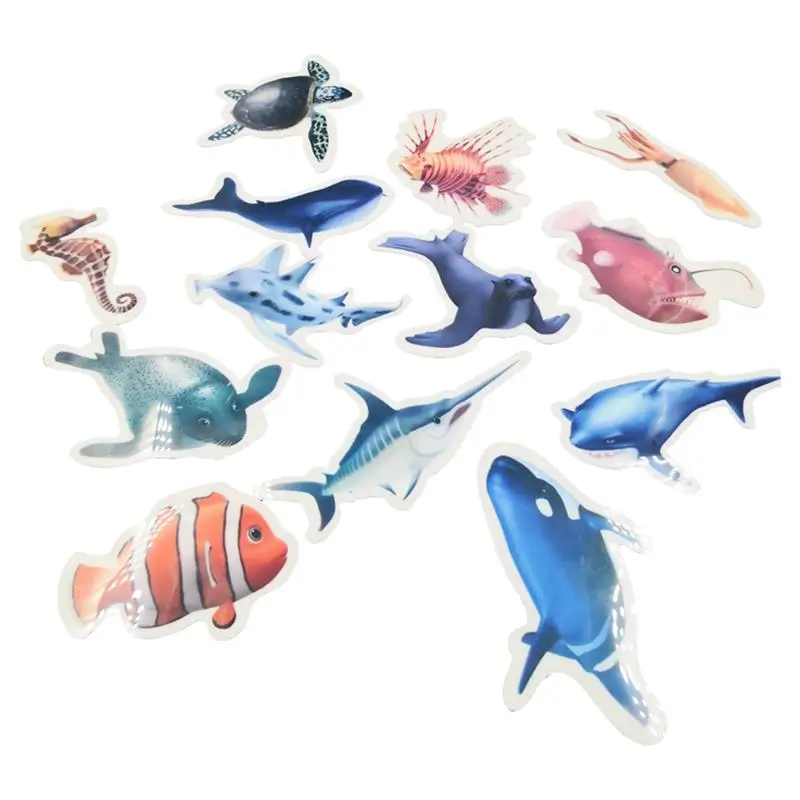
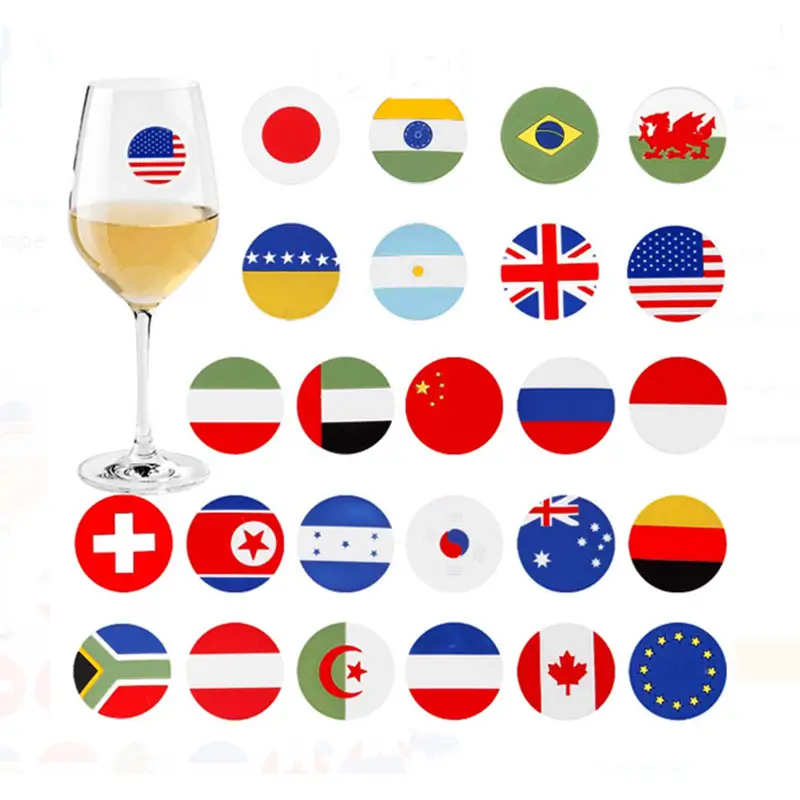
After die cutting, excess material (the "waste matrix") is removed in a process called weeding, leaving only the custom-shaped stickers on the backing sheet (for kiss cut) or as individual pieces (for full die cut).
Rigorous quality control (QC) is performed at every stage:
Print QC: Color accuracy, sharpness, and no smudges/bleeds
Lamination QC: No bubbles, scratches, or delamination
Die cutting QC: Precise contour alignment, clean edges, and correct cut depth (kiss/full)
Final inspection: Random sampling to ensure compliance with client specifications before packaging.
The choice between kiss-cut and die-cut stickers depends on how the stickers will be used and distributed.
Kiss-cut stickers are delivered on sheets, which keeps multiple stickers organized and protected during shipping. The intact backing also makes them easier to peel individually, which is useful for giveaways where customers may not have a surface to grip small stickers.
Die-cut stickers, delivered as individual pieces, offer a cleaner aesthetic with no visible backing border. This makes them well suited for direct handouts, merchandise inserts, or any application where the sticker's shape is central to the design.
The cost difference between the two methods is generally small, though kiss cutting can be more cost-effective at higher volumes because multiple stickers can be printed and cut on a single sheet.
After die cutting, each sticker is inspected to ensure it meets quality standards. This includes:
Shape Accuracy: Verifying that each sticker is cut to the exact shape specified in your design.
Edge Quality: Checking for clean, sharp edges without fraying or tearing.
Consistency: Ensuring all stickers in a batch are identical in shape and size.
Quality checks occur throughout the manufacturing process, not just at the end.
Inline inspection. Many modern production lines include inline camera systems that scan for color consistency, registration accuracy, and surface defects as the material moves through the press.
Appearance checks. Finished stickers are inspected for scratches, bubbles, wrinkles, and edge burrs. The substrate is examined for integrity, and cut edges are checked for cleanliness.
Color verification. Color accuracy is measured against brand standards, typically targeting a ΔE value (a measure of color difference) within an acceptable range. For white vinyl substrates, many production teams work toward ΔE 1.5 to 2.5 for brand-critical colors; on clear or textured films, ΔE 2.0 to 3.0 is often considered acceptable.
Adhesion testing. In some production environments, ink adhesion is evaluated to ensure the printed surface will not separate from the substrate under normal use conditions.
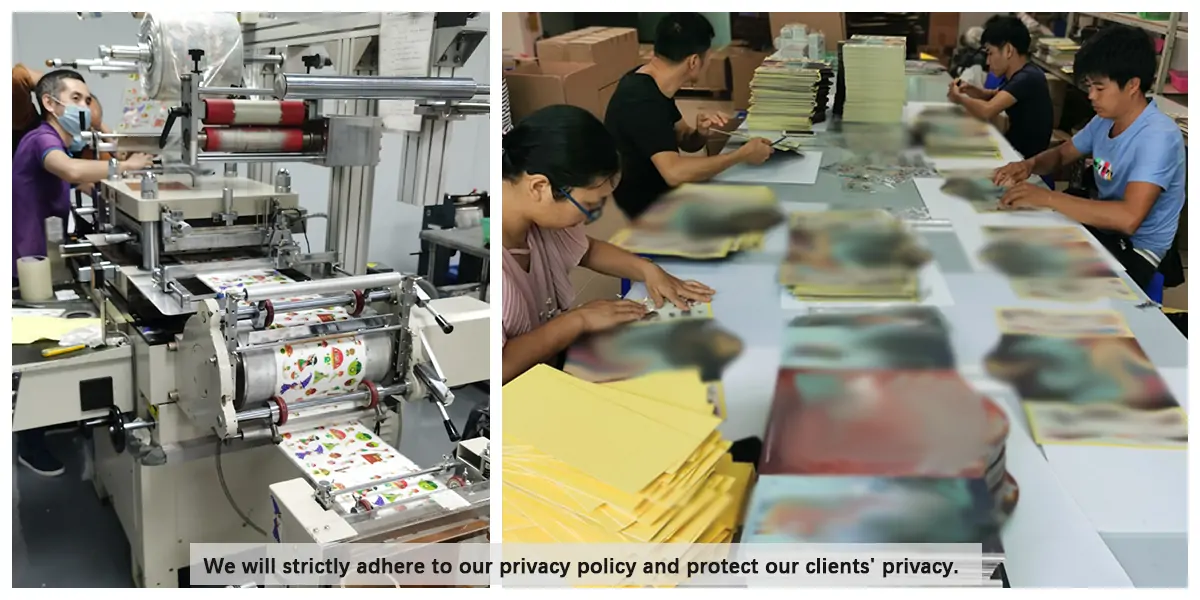
Once the stickers have passed all quality checks, they're packaged and prepared for delivery. The packaging method depends on the quantity and size of the stickers, but common options include:
Kiss cut stickers: Packed on backing sheets, stacked in bulk or individual retail packaging.
Full die cut stickers: Loose-packed in bags or boxes for easy distribution.
Rolls: Ideal for large volume orders, stickers are rolled onto a cardboard core for easy storage and application.
Sheets: Smaller quantities are often packaged on sheets, making them easy to distribute or apply by hand.
Custom Packaging: For branding purposes, some manufacturers offer custom packaging options, such as branded boxes or poly bags.
All orders include protective packaging to prevent damage during transit.
As a bulk custom sticker factory, we (MaStickers) offer flexible turnaround times: 3–7 business days for small batches, 7–14 business days for large bulk orders, with expedited options available for urgent projects.
The choice of sticker material directly affects how the printing and cutting processes are executed. Here is a summary of the most common options:
| Material |
Best For |
Key Properties |
| Paper |
Indoor use, packaging, labels |
Cost-effective; not moisture-resistant |
| Vinyl (3M or equivalent) |
Outdoor use, water bottles, durable applications |
Waterproof, UV-resistant; typical 3–5 year lifespan outdoors |
|
BOPP (Biaxially-Oriented Polypropylene) |
Refrigerated products, food labels, moisture-prone items |
Stronger than paper; resists moisture and oils; food-safe |
| Clear Vinyl |
Glass, plastic, and metal surfaces requiring a seamless look |
Low-visibility; weather-resistant |
For labels exposed to refrigeration or oils, BOPP generally handles the environment better than standard vinyl. For outdoor applications requiring long-term durability, vinyl (especially cast PVC) provides the necessary UV resistance and flexibility over curved surfaces.
At MaStickers, we specialize in creating high-quality custom stickers that meet the highest standards of durability, visual appeal, and performance. Here's why you should choose us for your next sticker project:
State-of-the-Art Technology: We use the latest printing and die cutting technologies to ensure precise, consistent results.
Wide Range of Materials: Choose from vinyl, paper, clear, metallic, and more to find the perfect material for your needs.
Customization Options: We offer full customization of shapes, sizes, colors, and finishes to bring your vision to life.
Quality Assurance: Every sticker we produce undergoes rigorous testing to ensure it meets our strict quality standards.
Fast Turnaround Times: We understand the importance of deadlines, which is why we offer quick turnaround times without compromising on quality.
Whether you're looking to promote your brand, personalize your belongings, or create custom labels for your products, MaStickers has the expertise and technology to deliver the perfect solution.
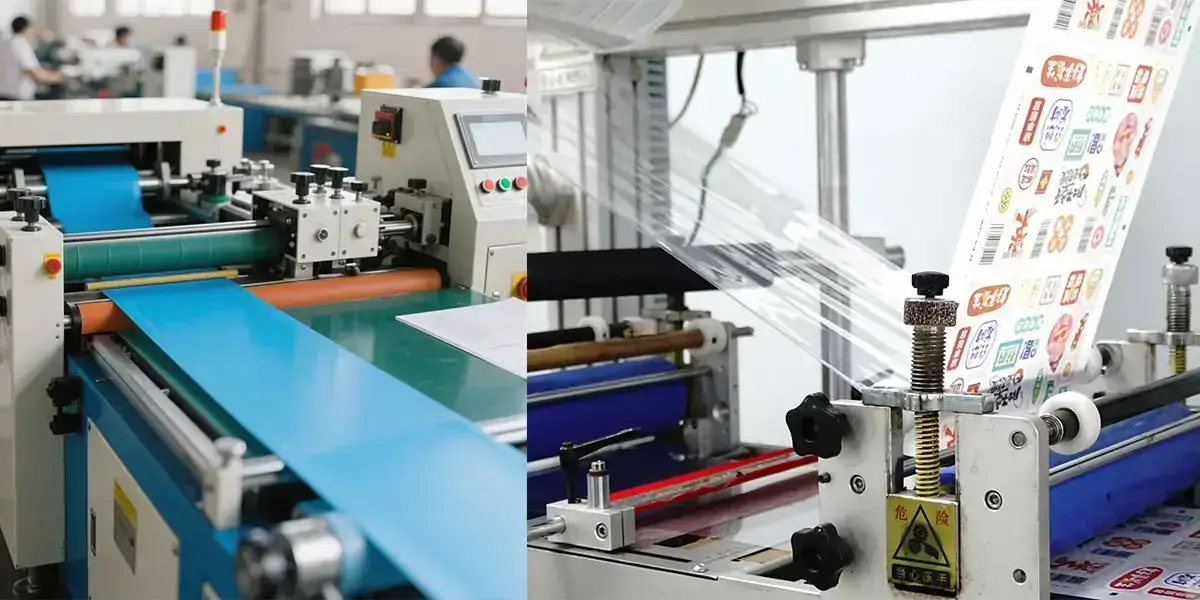
The production of custom stickers is a precise, multi-stage process that combines professional artwork prep, industrial-grade materials, advanced printing (digital/offset), and precision die cutting (digital/rotary, kiss/full cut).
The manufacturing of custom stickers involves a sequence of well-defined steps: design preparation, printing (digital, screen, or flexo), optional finishing (lamination or varnishing), and cutting (kiss-cut or die-cut). From blade pressure and cutting speed to ultraviolet curing energy and color tolerance, each step has specific parameters. Experienced operators will make adjustments according to the materials and design requirements.
Understanding this process helps businesses set realistic expectations for turnaround times, material performance, and achievable cut detail. Whether you need durable outdoor stickers or complex-shaped stickers for product packaging, as long as the graphic design is correct and the appropriate base material suitable for the intended usage environment is selected, there are technologies that can reliably produce these products.
At MaStickers, we specialize in bulk custom sticker manufacturing, offering end-to-end solutions from design to delivery. Our factory's advanced equipment and strict quality control ensure every custom sticker meets commercial standards for durability, vibrancy, and precision.
Ready to order custom stickers for your brand or project? Contact our team today for a free quote and expert guidance on material, printing, and die cutting options.
 You May Also Like
No 410, Laoyi Village, Niuhu Community, Guanlan Street, Longhua District, Shenzhen City

MaStickers
Custom Stickers Manufacturer

No 410, Laoyi Village, Niuhu Community, Guanlan Street, Longhua District, Shenzhen City
Product
Get in touch and find out how we canmake your next shipment easier.


Copyright © 2026 Shenzhen Xinyin Environment Rubber Product Co., Ltd



 Home
Home