Custom Stickers Factory for Your Brand – Guides, Materials & Customization Hacks

Custom Stickers Factory for Your Brand – Guides, Materials & Customization Hacks
 Xinyin
 Jun 09,2026

For brand owners, e-commerce sellers, wholesale distributors, and procurement managers sourcing custom bulk stickers, material selection directly impacts product lifespan, brand presentation, total project cost, and customer satisfaction. The two most widely ordered sticker substrates worldwide are PVC vinyl stickers and wood-pulp paper stickers. Yet many buyers struggle to tell their practical differences beyond surface appearance. When it comes to custom stickers, choosing between vinyl and paper materials is a critical decision that impacts durability, cost, and suitability for different applications.
MaStickers, a direct factory specializing in OEM & ODM bulk custom sticker production since 2015, our production and quality inspection teams process thousands of vinyl and paper sticker orders monthly for clients across retail, food packaging, automotive, craft, promotional merchandise, and industrial labeling sectors. As a leading custom sticker manufacturer with over 20 years of experience, we've helped thousands of businesses and individuals select the right material for their needs.
Let's break down the key differences between vinyl and paper stickers to help you make an informed choice.
Understanding base materials is the foundation of evaluating sticker performance, as all durability and functional differences stem from raw substrate makeup.
Vinyl stickers are made from polyvinyl chloride (PVC), which is a durable plastic material known for its strength, flexibility, and ability to withstand tough conditions. Custom vinyl stickers use flexible PVC (polyvinyl chloride) synthetic film as the face stock, paired with solvent-based acrylic adhesive for most permanent applications. Factories can add optional clear matte/gloss laminate layers for extra scratch, and water protection. That's why they're the go-to for bumper stickers, car decals, laptop stickers, and outdoor signage.
Waterproof & weather-resistant: Vinyl handles rain, humidity, and UV exposure without fading, peeling, or losing adhesion.
Long lifespan: Vinyl stickers typically last 3 to 5 years outdoors, and 5+ years indoors, depending on sun exposure and conditions.
Highly durable: Resists tearing, scratching, and daily wear.
Versatile: Adheres smoothly to glass, metal, plastic, painted surfaces, and even curved surfaces.
Higher cost: Vinyl stickers cost more than paper upfront due to the material and manufacturing process.
Environmental consideration: Vinyl is plastic-based and not biodegradable, though it lasts long enough that replacements are rarely needed.
Real-world lifespan note: Outdoor durability varies significantly based on sun exposure, road grime, and cleaning habits. Specialty vinyls like chrome or glitter generally last 12–24 months outdoors. Standard vinyl with proper lamination holds up better for 3–5 years. Calendered vinyl options can also last up to 3 years outdoors depending on usage and exposure.
Substrate variants: white opaque vinyl, clear transparent vinyl, frosted vinyl, outdoor-grade UV vinyl.
Physical trait: Flexible, tear-resistant plastic film with slight stretchability; resists liquid absorption entirely.
Adhesive options: permanent solvent adhesive, low-tack removable adhesive, high-temperature industrial adhesive.
Best uses for vinyl stickers: Water bottles, laptops and phone cases, outdoor signage, car decals and bumper stickers, product labels that need to look professional and last, beauty and skincare product packaging.
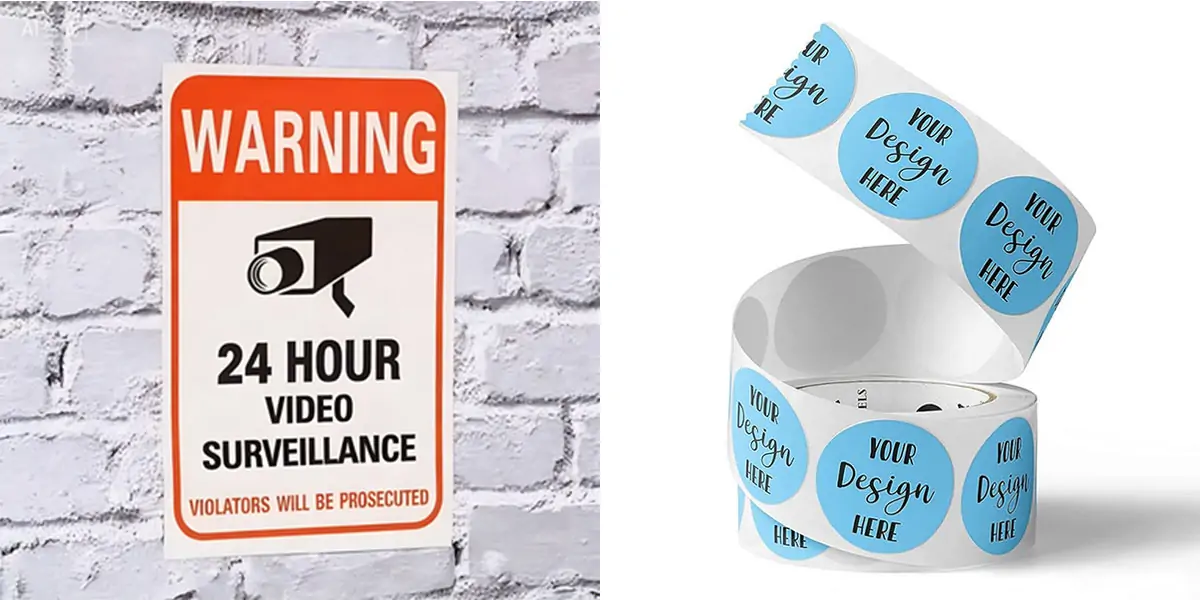
Paper stickers, as the name suggests, are stickers that are printed on paper and have a sticky backing. They're the classic, simple option that's been around forever. Paper stickers are constructed from wood pulp coated paper stock, including glossy coated paper, matte uncoated paper, and kraft recycled paper, matched with water-based general-purpose adhesive. No plastic waterproof barrier exists on standard uncoated paper labels.
Substrate variants: glossy art paper, matte writing paper, natural kraft paper, semi-gloss packaging paper.
Physical trait: Rigid, lightweight, porous material; absorbs water easily and tears under moderate tension.
Adhesive options: standard permanent water-based glue, low-tack removable glue for temporary price tags.
Budget-friendly: Paper stickers typically cost up to 40% less per unit than vinyl, making them ideal for bulk orders.
Eco-friendlier: Paper is biodegradable and recyclable (unless laminated), which matters for sustainable branding.
Natural feel: Offers a tactile, traditional paper texture that some brands prefer for wine labels and artisan packaging.
Writable surface: Matte paper stickers can be written on by hand, great for price tags, dates, or short-run custom information.
Limited durability: Uncoated paper stickers last about 3–6 months indoors, while laminated ones may reach 12–18 months indoors. Paper is not recommended for outdoor use, refrigerated products, or moist environments because paper absorbs moisture and will peel or wrinkle.
Best uses for paper stickers: Product packaging and shipping labels, thank-you stickers and branding inserts, planner stickers and scrapbooking, event favors and seasonal promotions, craft projects and small-batch labels.
|
Feature |
Vinyl Stickers |
Paper Stickers |
|
Material |
Plastic (PVC), flexible and durable |
Paper fibers, lightweight but less strong |
|
Water resistance |
Fully waterproof; withstands rain, splashes, and even dishwasher cycles |
Not recommended for moisture; absorbs water, peels, and wrinkles |
|
Outdoor durability |
3–5 years (standard vinyl with lamination) |
Not recommended; weeks at most if exposed |
|
Indoor lifespan |
5+ years |
3–12 months depending on coating |
|
UV resistance |
UV-resistant when laminated; resists fading |
Fades relatively quickly under sunlight |
|
Print quality |
Sharp, vibrant, color-saturated prints that last |
Bright and accurate prints, but can fade over time |
|
Cost |
Higher upfront cost |
Up to 40% lower per-unit cost |
|
Eco-friendliness |
Plastic-based; not biodegradable |
Biodegradable and recyclable (if uncoated) |
|
Finish options |
Matte, glossy, clear, UV |
Matte, gloss UV |
|
Surface flexibility |
Conforms to curved surfaces (bottles, car bodies) |
Best on flat, porous surfaces |
|
Removability |
Removable options available; clean removal possible within 2 years |
May tear or leave residue when removed |
Vinyl Stickers Key Features: Waterproof, UV-resistant, tear-resistant, and available in both permanent and removable adhesive options. Outdoor vinyl can last up to 7 years, making it ideal for long-term applications.
Paper Stickers Key Features: Easy to print on, fully recyclable, and available in a wide range of textures. However, paper stickers are not waterproof and can tear or fade quickly when exposed to moisture or sunlight.
Vinyl Stickers: Fully waterproof. PVC plastic does not absorb water; laminated vinyl withstands splashes, brief submersion, high humidity bathroom/kitchen environments without ink bleeding, warping, or substrate breakdown. Suitable for water bottles, beverage containers, outdoor equipment.
Paper Stickers: Not waterproof. Porous paper absorbs moisture rapidly. Exposure to rain, spills, or high humidity causes ink smudging, paper wrinkling, edge curling, and adhesive failure within days. Limited to fully dry indoor spaces only.
Vinyl Stickers (Outdoor Grade): Formulated with UV stabilizers in the PVC film; laminated variants slow color fading under direct sunlight. Standard outdoor vinyl maintains clear print and intact adhesion for consistent outdoor exposure.
Paper Stickers: Zero UV resistance. Uncoated and coated paper fades noticeably within weeks of sunlight exposure. Heat and cold cause paper brittleness or adhesive separation; unsuitable for any outdoor placement.
Vinyl Stickers: Flexible plastic resists tearing during daily handling, backpack friction, surface wiping, and light scratching. Laminated vinyl adds anti-scratch protection for frequently touched surfaces like laptops, luggage, toolboxes.
Paper Stickers: Thin paper tears easily when pulled or scraped. Even minor rubbing wears off top print layers, leaving faded, scuffed graphics. Not recommended for items with repeated contact or transport wear.
Vinyl Stickers: Smooth plastic surface repels standard ballpoint ink; permanent marker ink may smudge before drying. Matte laminated vinyl improves writeability slightly but cannot match paper.
Paper Stickers: Porous surface absorbs pen, pencil, and marker ink cleanly. Ideal for handwritten price labels, inventory tags, custom gift note seals, and craft journal stickers where manual labeling is required.
Vinyl Stickers: PVC synthetic plastic is not biodegradable. While some vinyl film can be recycled via specialized plastic streams, most single-use vinyl decals end up as hard-to-process waste. Not a match for brands prioritizing zero-plastic packaging.
Paper Stickers: Wood-pulp base is recyclable and biodegradable. Kraft paper variants use recycled pulp, aligning with eco-conscious brand positioning, sustainable packaging lines, and green marketing campaigns.
Choosing the cheaper material upfront doesn't always save you money. A paper sticker might cost 40% less per unit than vinyl. But if your paper stickers only last 3 months while vinyl lasts 3 years, you'll end up reordering paper multiple times that potentially spending more over the long run. That said, if your application is strictly indoor and short-term, paper's lower upfront cost is a real advantage. There's no need to pay for vinyl's durability if you won’t use it.
The smart approach: Match the material to the sticker's intended environment and lifespan. Over-specifying (vinyl for everything) wastes money. Under-specifying (paper for outdoor use) wastes time and brand reputation when stickers fail.
Eco-Friendliness: Traditional vinyl is not biodegradable, though recycling options are becoming more widely available. Some manufacturers now offer eco-friendly vinyl made from recycled materials or bio-based polymers.
Sustainability: Longer lifespan means fewer replacements, reducing overall waste compared to paper stickers for long-term applications.
Eco-Friendliness: Fully recyclable and biodegradable, making them a more sustainable choice for short-term use. Many paper stickers are made from FSC-certified recycled paper.
Sustainability: Shorter lifespan may lead to more frequent replacements, increasing overall waste production over time.
Print Technology: Supports high-resolution digital printing (up to 1440dpi) with vibrant colors and sharp details. Vinyl can also be produced with special effects like holographic finishes, metallic foils, or embossing.
Customization: Available in a wide range of shapes, sizes, and adhesive options (permanent, removable, or repositionable). Die-cutting allows for precise, custom shapes that match your logo or design perfectly.
Print Technology: Ideal for offset or digital printing, with excellent color reproduction for text and graphics. Paper stickers can be finished with gloss or matte coatings for added protection, though this does not make them waterproof.
Customization: Limited to flat, rectangular shapes in most cases, though die-cut options are available for higher quantities. Paper stickers are best suited for simple designs with bold colors.
Choose waterproof vinyl stickers if your project falls into any of these categories:
Outdoor branding: vehicle decals, window storefront graphics, outdoor equipment labels, street promotional decals. If your sticker will face sun, rain, snow, or road grime—vinyl is the only sensible choice.
Moisture-prone products: water bottle stickers, cosmetic jar labels, beverage packaging, shower/kitchen appliance markers. Vinyl holds up. Paper stickers on a water bottle? The edges will start peeling within weeks.
Long-term reusable items: laptop decals, luggage stickers, tool & machinery identification labels.
Industrial & commercial use: warehouse asset tags, fleet vehicle marking, chemical-resistant equipment labels. Premium brand presentation. The thicker, premium feel of vinyl stickers signals quality. Luxury brands consistently choose vinyl for product labels because it elevates the unboxing experience.
All-weather promotional merchandise: festival waterproof giveaways, outdoor event branded decals.
Opt for custom paper stickers when your application meets all three criteria: indoor placement, short-to-medium lifespan needs, and dry storage conditions:
Retail packaging seals: gift box stickers, candle box labels, apparel hang tag seals. Matte paper stickers accept handwriting, which is useful for price tags, date labels, or short runs of custom information.
Temporary retail labeling: price tags, seasonal sale stickers, limited-edition product marks. The natural texture of paper can't be replicated by vinyl. Many winemakers choose special paper stocks specifically because the tactile quality is part of the product experience.
Stationery & craft goods: journal planner stickers, envelope seals, scrapbook decorative sheets.
Short-term indoor marketing: in-store window temporary signage, event indoor handout stickers.
Eco-focused brand packaging: recycled kraft paper labels for organic skincare, natural food goods. If your brand prioritizes sustainability and the stickers won't face moisture, paper is the greener choice. Paper stickers are recyclable and biodegradable, while vinyl is plastic-based.
Answer these practical questions to eliminate guesswork when placing wholesale custom sticker orders with MaStickers:
Will the stickers be exposed to water, spills, rain, or high humidity? → Choose vinyl stickers.
Do you need the graphics to last 6+ months with regular handling? → Choose vinyl stickers.
Will stickers sit outdoors under direct sunlight? → Choose UV-laminated vinyl stickers.
Is your application fully indoor, completely dry, and short-term (under 6 months)? → Choose paper stickers.
Do you require hand-writable labels for inventory or gifting? → Choose matte paper stickers.
Does your brand prioritize plastic-free, recyclable packaging materials? → Choose kraft paper stickers.
Are you working with a tight per-unit budget for large-volume packaging labels? → Choose paper stickers.
There is no universal "better" sticker material. Only a material better suited to your unique bulk project requirements. Here's the simplest way to decide:
One more thing: Many businesses actually need both. Vinyl for permanent product labels that go on bottles or packaging. Paper for the promotional sticker sheets inside the box. Using the right material for each application saves money and ensures your stickers do what you need them to do.
Still not sure? Reach out to our team at Mastickers. We'll help you match the right material to your specific project, just honest advice based on real manufacturing experience. At MaStickers, our sales and technical team reviews your usage environment, surface type, order volume, and branding timeline to recommend the optimal substrate without pushing higher-cost vinyl materials unnecessarily for indoor-only paper-eligible projects. Our factory maintains full transparency on material limitations, pricing tiers, and production lead times to help wholesale buyers avoid costly mis-material selection errors.
Looking for custom vinyl or paper stickers? Visit mastickers.com to explore our sticker printing options, or contact us for a free consultation.
FAQ 1: Can I laminate paper stickers to make them waterproof?
A: Laminating paper adds limited splash resistance but does not deliver full waterproof performance. Paper’s porous core will still absorb moisture through cut edges over time. Laminated paper remains unsuitable for wet environments and carries higher cost than standard vinyl.
FAQ 2: Are all vinyl stickers outdoor-safe?
A: No. Economy indoor vinyl lacks UV stabilizers and will fade quickly outdoors. Specify outdoor UV-resistant vinyl with gloss/matte laminate during your bulk order inquiry for long-lasting exterior use. MaStickers clearly separates indoor and outdoor vinyl material stock for transparent ordering.
FAQ 3: Which material supports custom die-cut shapes equally well?
A: Both vinyl and paper substrates support custom kiss-cut and full die-cut shapes (circles, logos, irregular custom outlines). Vinyl offers better shape retention during peeling and application; thin paper may crease when removing small intricate cutouts.
FAQ 4: Does MaStickers offer free samples for vinyl and paper sticker comparison?
A: Yes. We provide complimentary material sample sheets for all wholesale clients, including blank vinyl/paper substrates and printed test swatches matching your brand CMYK/Pantone colors, so you can physically test texture, water resistance, and print quality before committing to large bulk orders.
 You May Also Like
No 410, Laoyi Village, Niuhu Community, Guanlan Street, Longhua District, Shenzhen City

MaStickers
Custom Stickers Manufacturer

No 410, Laoyi Village, Niuhu Community, Guanlan Street, Longhua District, Shenzhen City
Product
Get in touch and find out how we canmake your next shipment easier.


Copyright © 2026 Shenzhen Xinyin Environment Rubber Product Co., Ltd



 Home
Home