Custom Stickers Factory for Your Brand – Guides, Materials & Customization Hacks

Custom Stickers Factory for Your Brand – Guides, Materials & Customization Hacks
 Xinyin
 Aug 13,2026

When sourcing custom stickers for your business, choosing between a professional sticker factory and a trading company is a critical decision that impacts product quality, product consistency, branding output, total procurement costs, and supply chain reliability. Buyers may encounter many different types of suppliers. Some companies operate their own manufacturing facilities, while others act as trading companies or sourcing intermediaries that purchase products from different factories.
At first glance, both may appear to offer the same products at competitive prices. From the outside, both types of suppliers may have professional websites, product catalogs, and sales teams. But beneath the surface, the differences in their business models, production quality control, customization depth, risk exposure differ significantly, pricing transparency, production consistency, and overall reliability are significant.
So how can a buyer tell the difference? More importantly, does it actually matter whether you buy from a sticker factory or a trading company? The answer depends on your project. For standard products and small orders, a trading company may provide useful sourcing services. But for custom sticker manufacturing, OEM/ODM projects, bulk production, and long-term product development, understanding the supplier's actual manufacturing capabilities becomes much more important.
For B2B buyers seeking OEM/ODM sticker solutions, understanding these differences ensures you partner with a supplier aligned with your long-term goals. Below, we break down the core distinctions to help you make an informed choice.
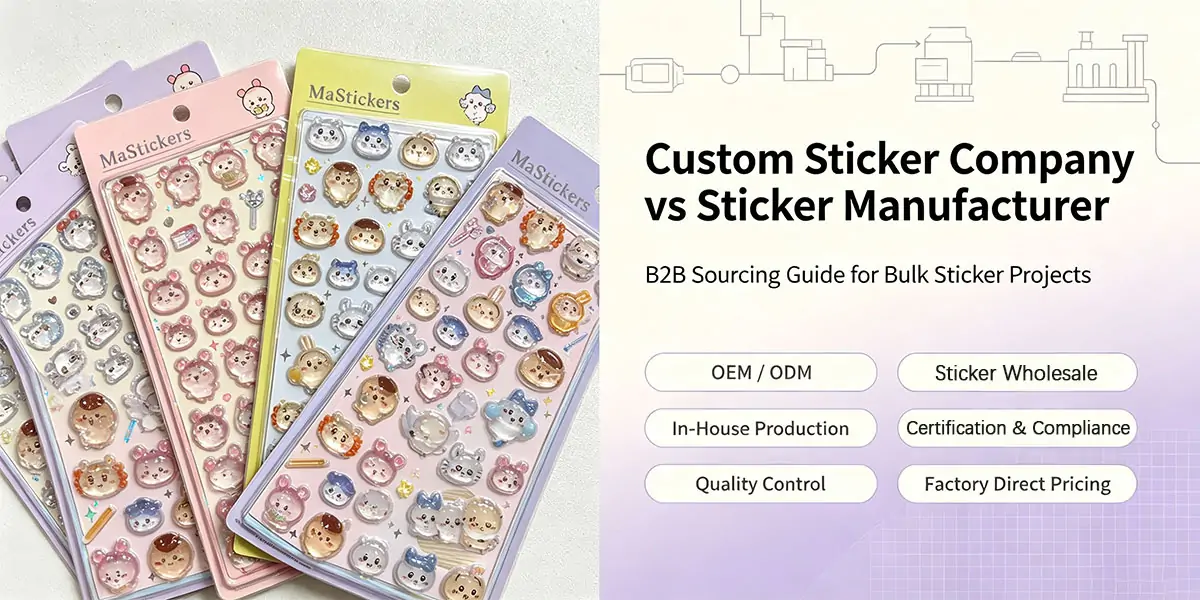
A professional sticker factory is a manufacturing company that operates or directly manages production processes for sticker products. Depending on the factory's capabilities, this may include: Artwork preparation, material processing, printing, molding, embossing, coating, adhesive application, cutting, assembly, quality inspection, and packaging.
A specialized custom sticker manufacturer can therefore be involved in the complete production process rather than simply purchasing finished products from another supplier. For OEM customers, this distinction can become important when the product requires specific materials, dimensions, textures, shapes, or production processes.
A trading company generally focuses on sourcing, sales, export, and customer service rather than operating the complete stickers manufacturing process itself. A trading company may: Source products from different factories, combine products from multiple suppliers, handle export documentation, communicate with overseas buyers, coordinate production, arrange shipping, and provide product sourcing services.
This business model is not necessarily a problem. In fact, export intermediaries can provide useful services for companies that do not have their own sourcing or international purchasing teams. The U.S. Commercial Service describes export intermediaries as businesses that can help with activities such as finding overseas buyers, shipping products, and handling payment-related processes.
The important question is therefore not: Custom stickers factory or trading company, which one is always better? Instead, buyers should ask: Which supplier structure is more suitable for this particular project?
A professional sticker factory owns printing presses, die‑cutting machines, laminating equipment and raw‑material warehouses, managing every phase from material selection, pre‑press color calibration, printing, lamination, die‑cutting to final quality inspection on‑site.
A trading company, by contrast, is an intermediary. They take your order and pass it along to a third-party printer, often without disclosing who actually produces your stickers. Your job might be outsourced to different subcontractors depending on availability, which means different equipment, different operators, and potentially different quality between orders. With a trading company, the people you speak with don't control the production schedule, the materials, or the quality standards. They're simply a middleman.
For buyers, this distinction matters greatly for waterproof custom vinyl stickers, 3D EVA foam stickers, domed stickers, holographic stickers, kiss‑cut sticker sheets and 3D puffy stickers. In‑house manufacturing enables real‑time mid‑production checks, quick sample revision and stable batch‑to‑batch color matching for your brand colors. Trading companies relay feedback backward and forward between you and unknown subcontractors, raising risks of color drift and inconsistent finishing across re‑orders.
A professional sticker manufacturer should be able to explain how its products are manufactured. For example, if you are ordering custom 3D stickers, you may need to discuss: Mold development, material selection, 3D structure, color application, curing, adhesive backing, and quality inspection.
A factory that manages these processes directly can communicate production requirements with greater technical detail. A trading company may instead need to confirm these questions with its manufacturing partner. Neither model is automatically right or wrong, but the communication chain is different.
Standard sticker printing is relatively straightforward. But OEM manufacturing is different. A buyer may require: Custom shapes, sizes, materials, thickness, adhesives, special textures, raised effects, embossed designs, and private-label packaging. For these projects, the supplier's ability to understand manufacturing requirements becomes critical.
Serious sticker factories support deep‑level OEM and ODM custom sticker manufacturing. You can tailor every variable: vinyl sticker material types, adhesive strength (permanent / removable / high‑tack), special finishes (glitter lamination, gold foil, clear overlay), custom die‑cut shapes and private‑label export packaging according to your technical brief. Factories can also develop new sticker variants for your brand based on your market requirements.
Trading companies often struggle with complex customization. Their reliance on third-party factories means they may lack the technical expertise to advise on material compatibility or design feasibility. They can only offer what their contracted factories can provide and any change means going back through the intermediary, adding layers of miscommunication and delay.
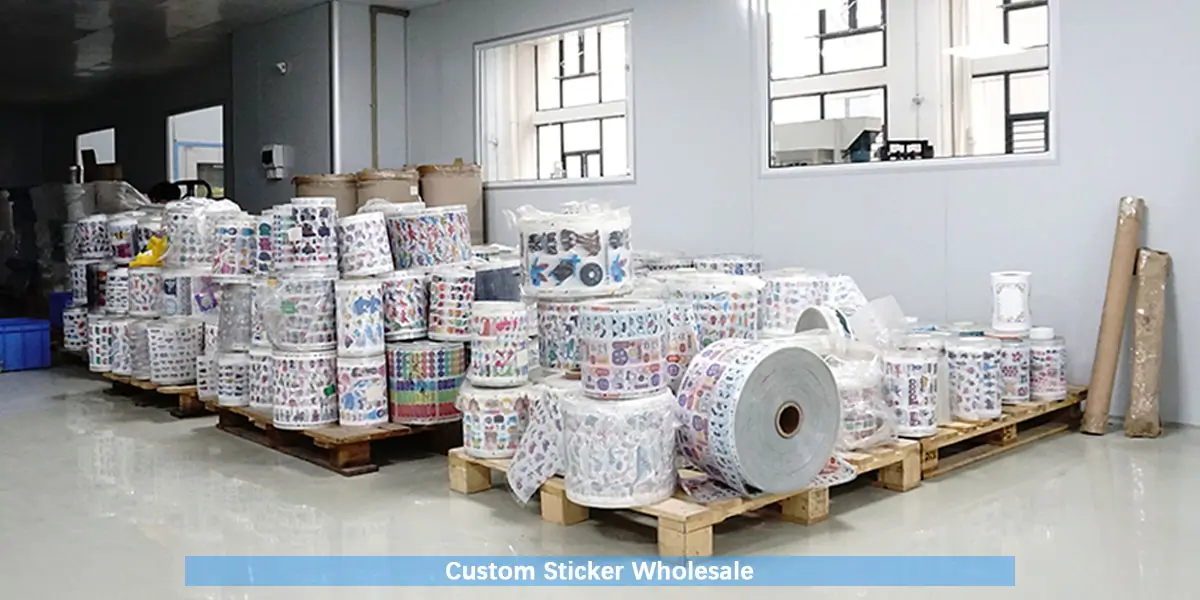
Unit pricing is another clear divider. A professional sticker factory calculates quotations based on real raw‑material expenses, machine runtime and labour costs, offering transparent cost breakdowns for large‑quantity custom sticker wholesale. There is no middle‑man markup stacked onto factory costs.
Sticker trading companies build their profit by adding 10‑40% margins above the actual factory price for identical sticker products. For high‑volume sticker orders, this extra layer noticeably raises your landed cost. Note that trading companies may shine for mixed small‑batch sourcing, as they consolidate orders from multiple clients to achieve lower effective MOQs, which standalone factories often cannot match.
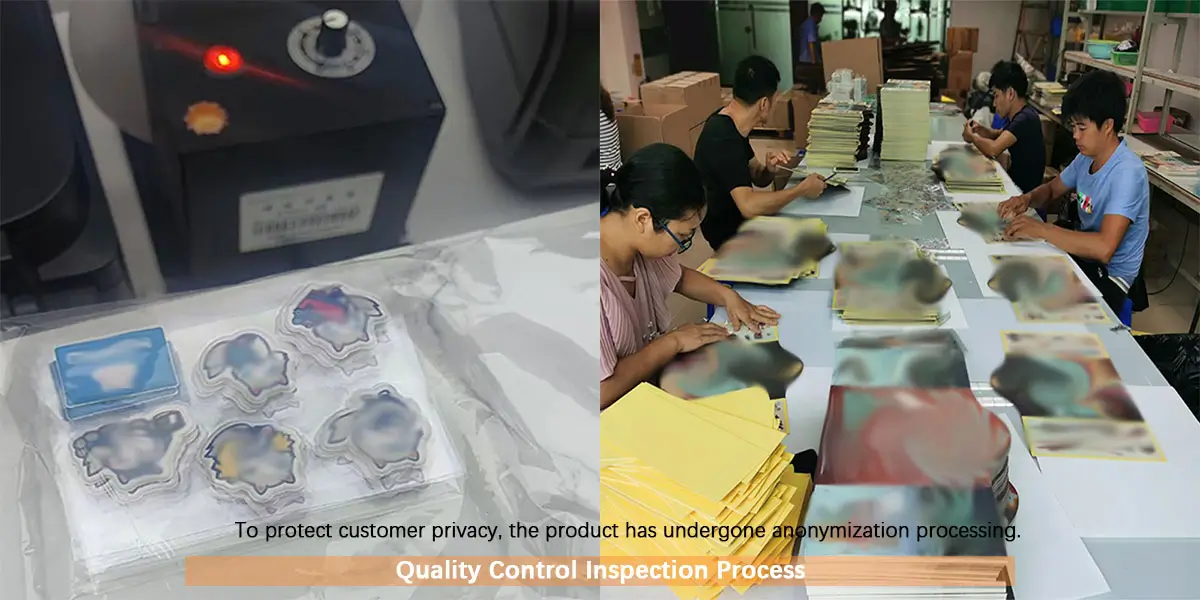
A professional sticker printing factory doesn't just inspect finished products. Reliable manufacturers inspect work during prepress, mid-run, and post-production stages. This multi-stage approach can detect problems early on and prevent them from escalating into serious problems.
A trading company, by contrast, rarely has the capability to conduct these kinds of in-process inspections. They rely on the quality control standards provided by the subcontractors, and this standard may vary significantly depending on the specific order.
When you work with a custom sticker manufacturer, you know exactly where your stickers are being made. You can verify the production facility, request factory audit reports, and even conduct remote or on-site inspections. A reputable sticker factory runs in‑house QC workflows for every production run. They can provide verifiable compliance documents including REACH, RoHS, and ISO 9001 certificates for custom printed stickers, critical for European and North‑American retail imports. You or your third‑party inspector can schedule factory tours to audit production floors and check sticker quality during manufacturing.
These certifications aren't just paperwork, they're evidence that the manufacturer follows strict quality, safety, and environmental protocols. Trading companies cannot perform hands‑on product inspection. They rely on whatever QC reports their subcontractors supply. Some traders even hide the real manufacturing facility identity from overseas purchasers, which creates compliance risks for private‑label sticker merchandise sold in regulated markets.
Trading companies often can't or won't disclose the actual factory behind your order. Their business model depends on keeping that information opaque. While they may present themselves as suppliers, their business license typically limits their scope to "wholesale," "retail," or "import/export". Not "manufacturing" or "production".
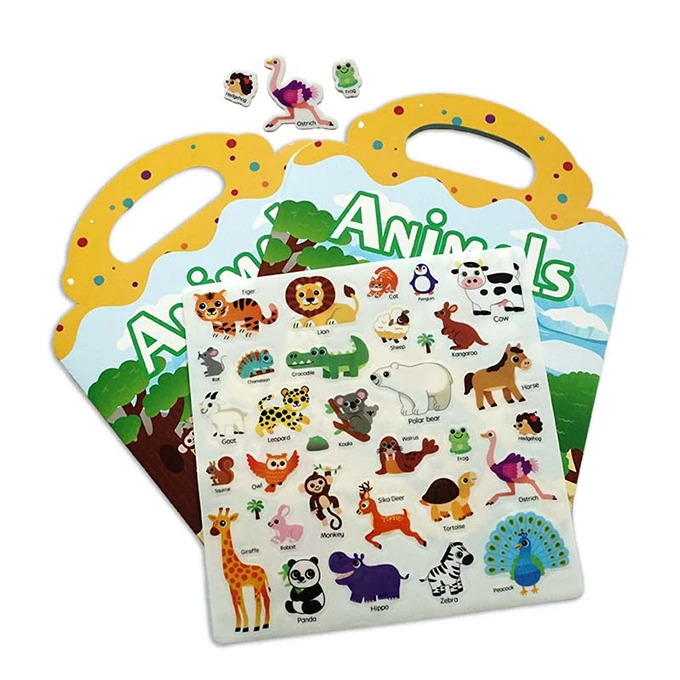
A trading company may be very good at sourcing existing products. But an OEM project may require something different. For example, suppose a children's product company wants to develop a new: Custom Educational Sticker Book.
The project may involve:
A manufacturer with relevant production experience can participate in the technical side of this process. This is one reason OEM sticker manufacturers can be particularly valuable for product development projects.
When working with a factory, buyers can potentially communicate directly with the people responsible for production. This can be useful when dealing with technical issues.
The second model adds another communication layer. For simple products, this may not create a significant difference. For complex OEM sticker manufacturing, however, detailed communication can be important because small changes in artwork, material, thickness, or mold design can affect the final product.
Working with a trading company, your complaint must travel to external manufacturers. Response cycles lengthen, and traders often lack professional knowledge of sticker printing, adhesive properties and lamination processes to give actionable technical advice.
When you work with a factory, you have a single point of contact for all post-production issues. MaStickers offers warranty on all products, and our customer service team resolves 95% of inquiries within 24 hours. If a defect occurs, we handle reprints or refunds directly, no need to navigate multiple intermediaries.
| Factor |
Professional Sticker Factory |
Trading Company |
| Direct manufacturing |
Usually |
Usually relies on suppliers |
| Product customization |
Often strong |
Depends on factory partner |
| OEM production |
Suitable |
Possible through factory |
| ODM development |
Depends on factory capability |
Depends on partner |
| Product sourcing |
Limited to own capabilities |
Often broader |
| Multiple product categories |
May be more specialized |
Often flexible |
| Factory-level technical communication |
Usually available |
May require coordination |
| Quality control |
Factory process |
May be managed through suppliers |
| Small mixed orders |
Depends on factory |
Can sometimes be flexible |
| Long-term production |
Suitable |
Possible with stable suppliers |
The table should not be interpreted as saying that every factory is better than every trading company. Supplier capability matters more than the label.
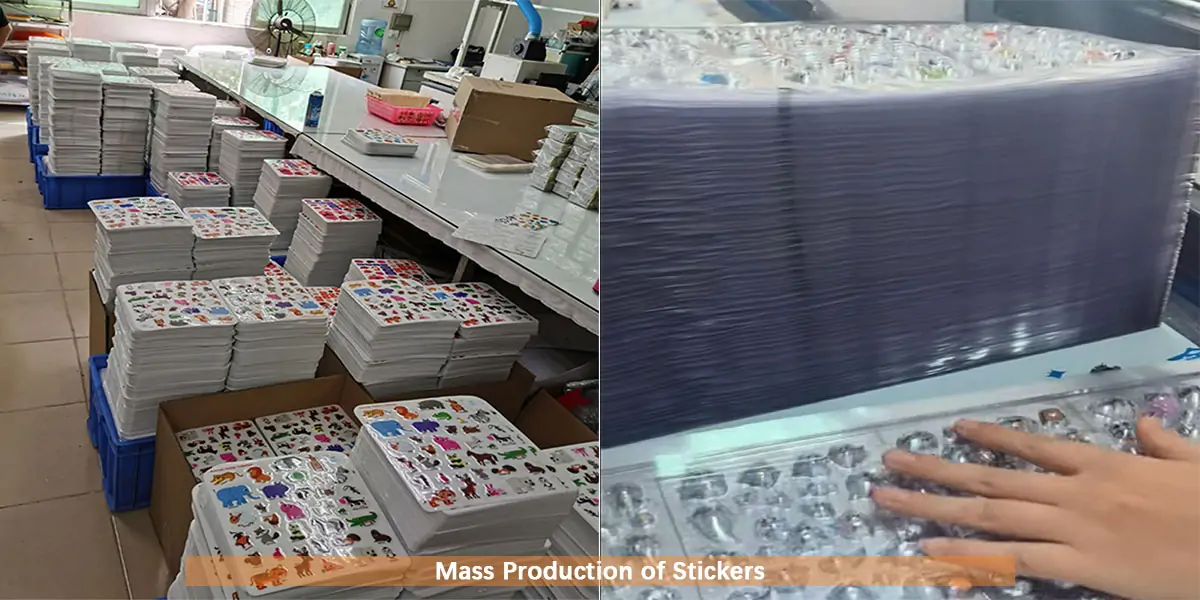
Choosing between a professional sticker factory and a trading company isn't just about price. It's about reliability, consistency, and brand protection. A sticker that peels, fades, or misregisters doesn't just look cheap. It tells your customer something about how much you care about the details.
Consistent quality from the same team and equipment, order after order.
Transparent pricing without hidden middleman markups.
Direct communication with the people who actually produce your stickers.
Genuine customization options that match your brand's needs.
Certified materials that meet regulatory requirements.
Multi-stage quality control that catches issues before they reach you.
At Mastickers, we're a factory-direct custom sticker manufacturer, not a broker, not a trading company. We own our equipment, control our production process, and stand behind every sticker we print. Whether you need custom vinyl stickers, die-cut stickers, kiss-cut stickers, or bulk sticker orders for your brand, we deliver professional-grade quality at factory-direct prices.
Ready to work with a real sticker factory? Contact us today to discuss your custom sticker project.
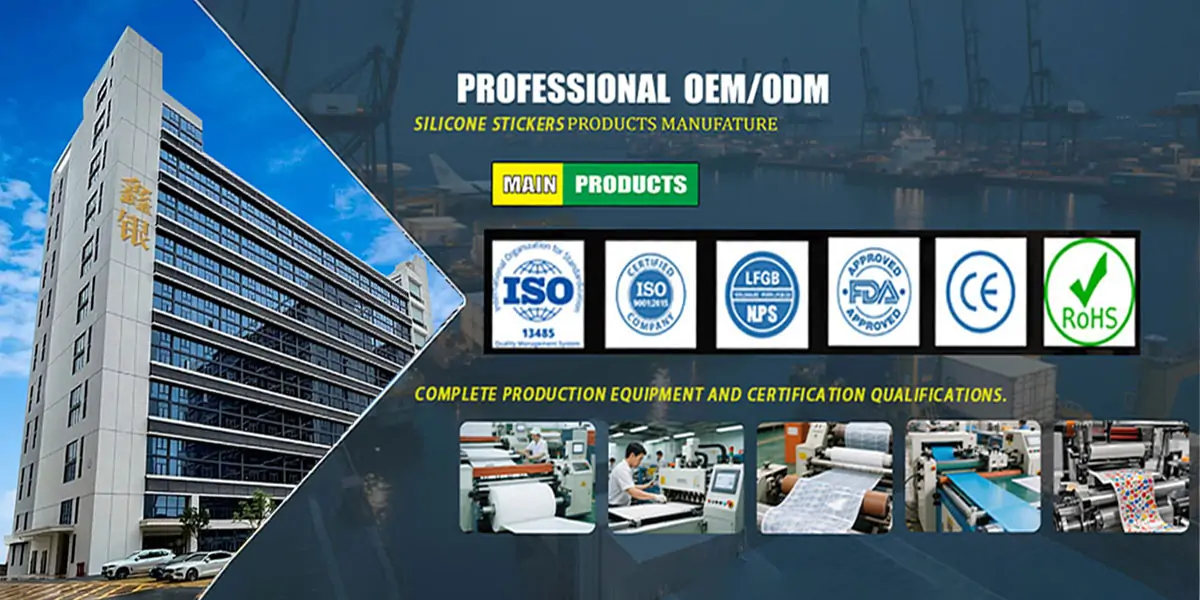
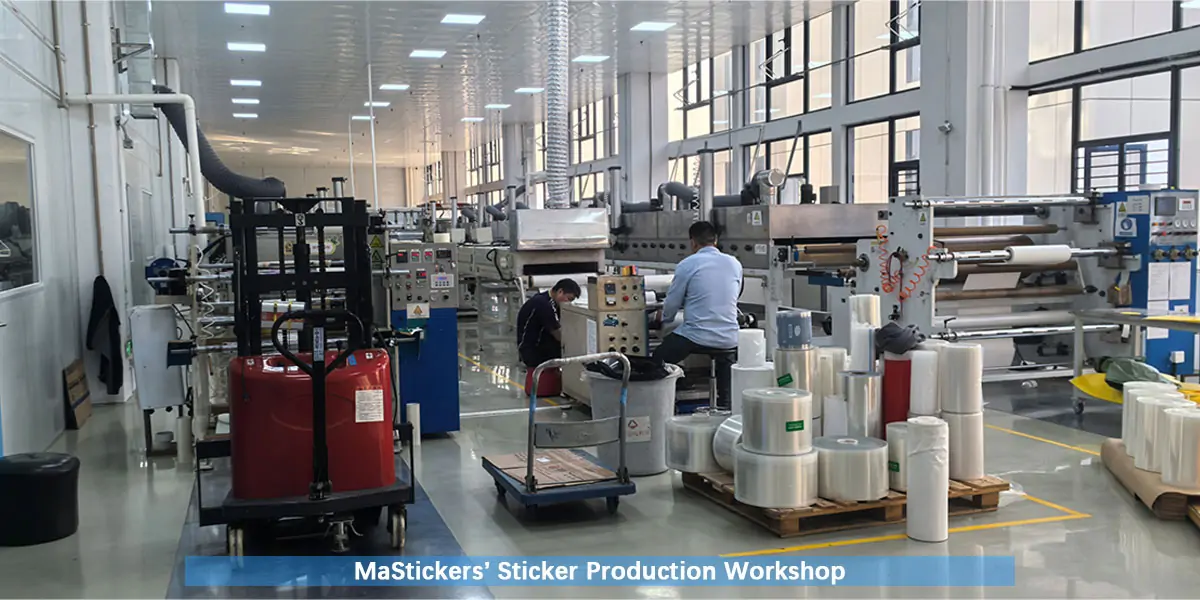
This is one of the most important questions for international buyers. A professional supplier should be able to provide meaningful information about its manufacturing capabilities.
What products do you manufacture directly? Ask for specific examples rather than a general product catalog.
Can you provide factory and production information? Look for: Production areas, equipment, manufacturing processes, quality-control areas, and finished products.
Can you provide product samples? Samples allow buyers to evaluate actual production quality instead of relying only on website images.
Can you explain the manufacturing process? A genuine manufacturer should generally be able to explain the basic production process of the products it claims to manufacture.
Can you support repeat production? Ask how the supplier manages product specifications for future orders.
Can you provide company information? International buyers should verify the supplier's company information and background.
The U.S. Commercial Service specifically recommends conducting due diligence when selecting international business partners and notes that buyers can investigate company history, management, references, capabilities, and other relevant information.
Are Trading Companies Always a Bad Choice? No. This is an important point. A professional trading company can provide value when a buyer needs:
For some buyers, these services may be more useful than working directly with one specialized factory. The issue arises when a buyer assumes a trading company is the actual manufacturer without verifying the supply chain.
For an OEM project, buyers should understand: Who is actually manufacturing my product? That question can affect communication, quality control, product development, lead times, and long-term supply.
For these projects, direct manufacturing experience can provide significant value.
In these situations, the trading company's sourcing network may be an advantage. The key is to understand the supplier's role before signing a contract.
MaStickers focuses on custom sticker manufacturing and OEM/ODM production for international B2B customers. We deliver high-quality products at competitive prices with full transparency and support every step of the way.
For OEM and ODM projects, customers can provide: Artwork, product specifications, reference samples, product concepts, and packaging requirements.
The manufacturing team can then work with the customer to develop the product for production. For businesses searching for a custom sticker manufacturer in China, the goal is to build a repeatable manufacturing solution that meets the customer's specifications.
Request a free quote today or explore our custom sticker gallery to see our work.
Many market players falsely advertise themselves as sticker factories while actually operating as trading brokers. Verify supplier credentials before committing: check business‑scope documentation, request real‑time factory workshop photos, ask for compliance certificates and test sample quality before bulk sticker production.
For brand wholesalers building long‑term sticker product lines, partnering with a real professional sticker manufacturer delivers better quality stability, more customization flexibility and clearer supply‑chain visibility than sourcing via intermediaries.
How do I know if a sticker supplier is a real factory?
Ask for specific manufacturing information, production capabilities, samples, company details, and information about the processes performed directly. Buyers should independently verify important supplier claims rather than relying solely on website descriptions.
Is a sticker factory cheaper than a trading company?
Not necessarily. Pricing depends on materials, specifications, quantity, tooling, packaging, logistics, and other factors. A factory may offer a more direct manufacturing relationship, but the lowest quotation should not automatically be considered the best option.
Can a trading company provide OEM stickers?
Yes. A trading company can coordinate OEM production through a manufacturing partner. However, buyers should understand which company actually manufactures the product and who is responsible for quality and production decisions.
Why choose an OEM sticker manufacturer?
An OEM sticker manufacturer can be a suitable partner when a business needs customized specifications, bulk production, repeat orders, private labeling, or specialized sticker products.
What should I ask a China sticker factory before ordering?
Ask about manufacturing capability, relevant product experience, materials, sampling, quality control, production capacity, packaging, lead time, and the company's ability to support your specific OEM requirements.
 You May Also Like
No 410, Laoyi Village, Niuhu Community, Guanlan Street, Longhua District, Shenzhen City

MaStickers
Custom Stickers Manufacturer

No 410, Laoyi Village, Niuhu Community, Guanlan Street, Longhua District, Shenzhen City
Product
Get in touch and find out how we canmake your next shipment easier.


Copyright © 2026 Shenzhen Xinyin Environment Rubber Product Co., Ltd



 Home
Home