


 Home
Home Xinyin
  Aug 20,2026
For brands, wholesalers, distributors, and product manufacturers, every brand relies on high‑quality custom logo stickers to boost product branding, packaging decoration, and offline promotional campaigns. When sourcing bulk custom stickers, brand buyers frequently face a core decision: epoxy domed stickers or vinyl stickers.
Both adhesive sticker solutions deliver waterproof performance, yet they differ heavily in visual texture, wear resistance, production cost and applicable scenarios. For companies sourcing custom stickers in bulk, the right choice depends on the intended application, appearance, durability requirements, budget, and production volume.
Understanding these differences is critical for brand owners who want to make a lasting impression without wasting budget on the wrong material.
What Are Epoxy Stickers and Vinyl Stickers?
What Are Domed Stickers?
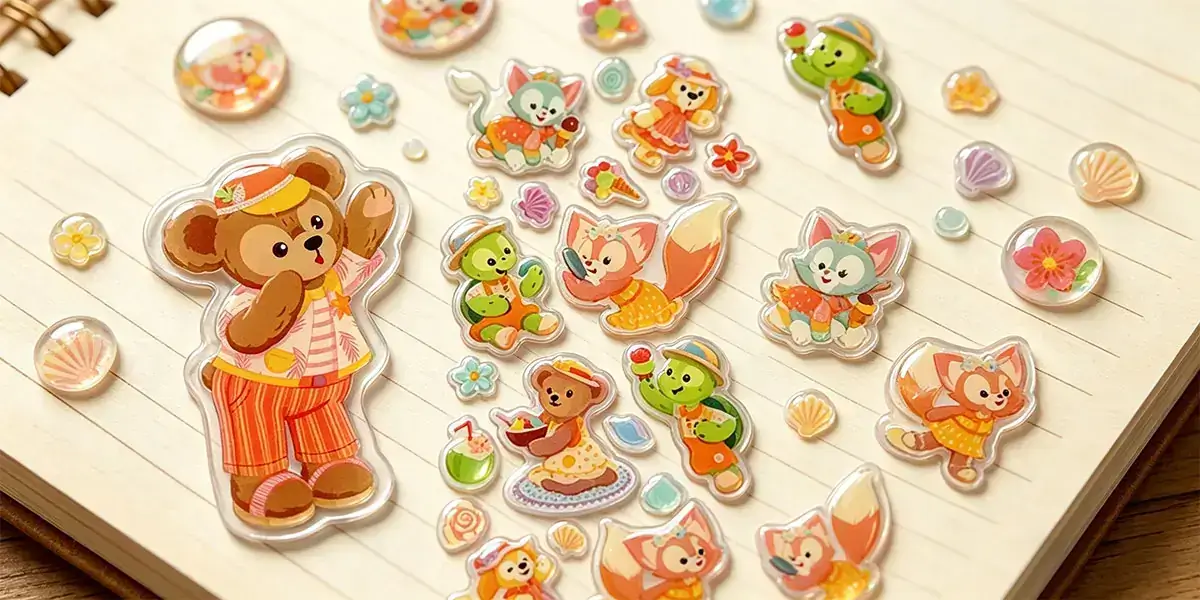
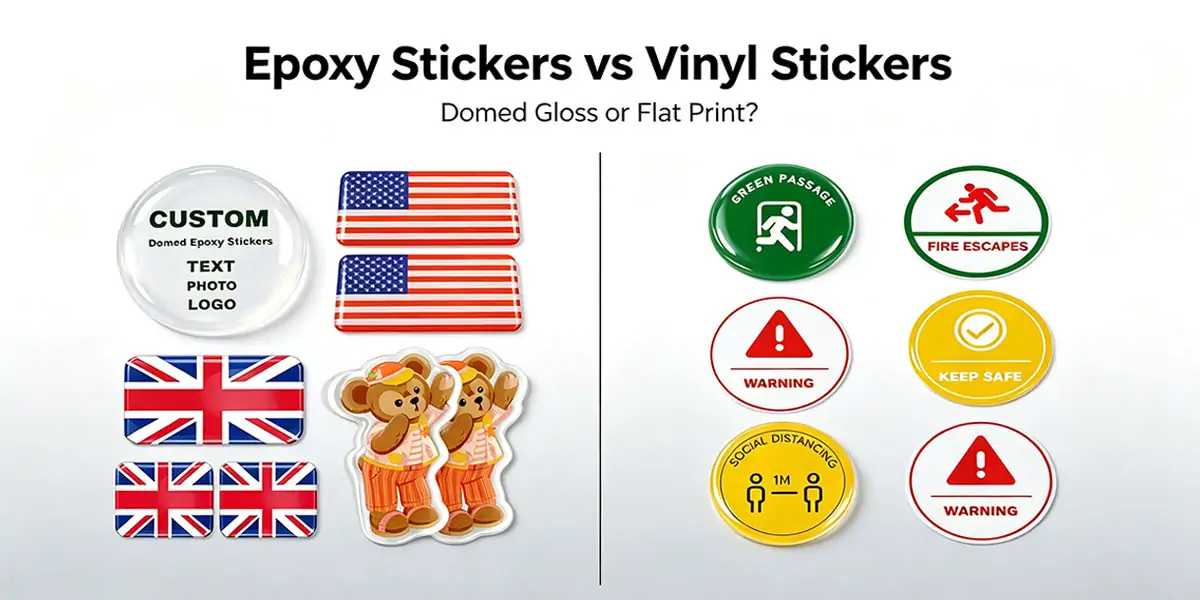
Domed stickers (also known as epoxy stickers, 3D domed epoxy stickers, 3D domed stickers, epoxy dome stickers, resin stickers, domed label, or 3D resin stickers) are built on vinyl or PVC base material, covered with a thick transparent two‑part epoxy resin layer. The resin is hard, scratch-resistant, and waterproof, which gives the sticker a premium, almost jewel-like appearance. They are commonly used for high-end product branding, car emblems, appliance badges, and corporate seals.
The resin is poured onto the printed artwork and cured into a smooth, glass-like, raised bubble. This process, called "doming," produces a sticker with a distinct thickness (typically ranging from 0.3mm to 1.2mm) and a premium, badge-like feel. After curing, the resin forms a convex crystal‑gloss dome surface that creates three‑dimensional visual depth, while fully sealing printed graphics underneath against scratches and chemical exposure.
Advantages of Epoxy Stickers:
- Premium visual appeal: The thick resin layer creates a "jewel-like" depth that makes colors pop and gives a luxurious, OEM-grade appearance;
- Superior scratch resistance: The hard resin dome protects the artwork from scratches, abrasion, and daily wear;
- Excellent waterproofing: The resin dome acts as a physical barrier against water and moisture;
- Weather resistance: High-quality epoxy domes resist fading and yellowing when exposed to sunlight;
- Edge protection: The dome seals the edges of the design, preventing water ingress and peeling.
Limitations of Epoxy Stickers:
- Rigidity: Epoxy stickers are thicker and more rigid than regular vinyl, making them unsuitable for highly curved or flexible surfaces;
- Longer production time: The curing process typically requires around 10-14 days handling time, which is longer than standard vinyl stickers;
- Best on flat or slightly curved surfaces: Products like packaging, electronics, and promotional items are ideal; water bottles with extreme curves are not;
- Quality dependency: The bond between the resin dome and the vinyl base can be a weak point in high-humidity conditions if manufacturing quality is subpar;
- Sheets only: Epoxy resin stickers are usually produced on fixed-format sheets with only one design per sheet, rather than as individual pieces.
Typical applications include:
Brand logos, product identification, promotional products, automotive accessories, electronics, packaging, equipment labels, retail products, and custom branded merchandise.
For OEM buyers, epoxy stickers are especially interesting when the 3D appearance is part of the product design rather than simply a printed graphic.
What Are Vinyl Stickers?
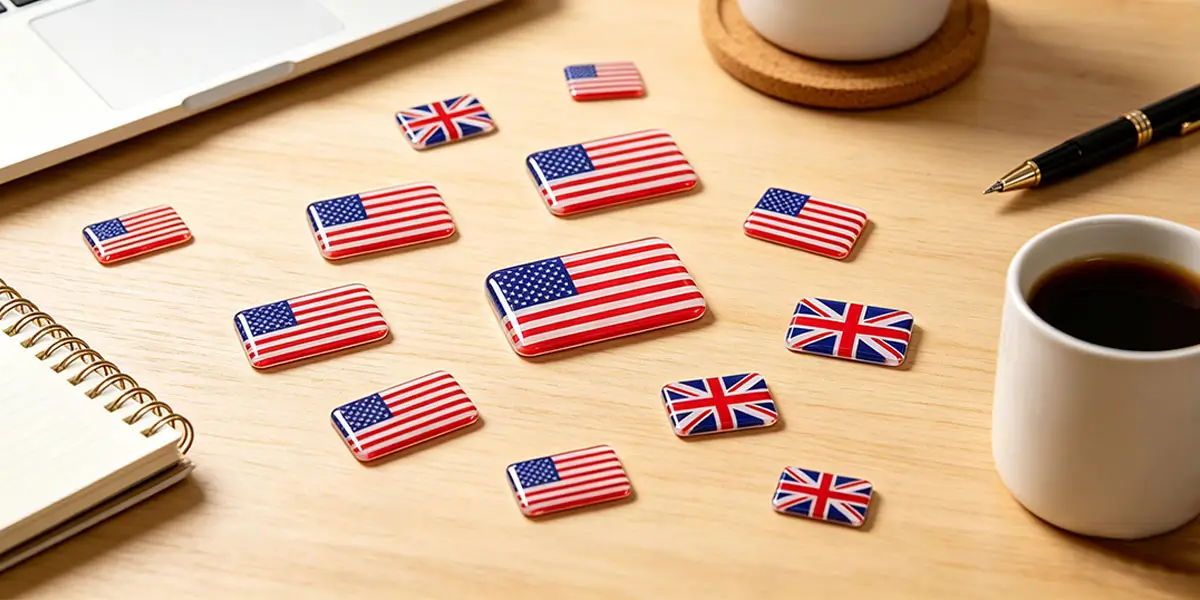
Vinyl stickers, on the other hand, are made from a thin, flexible polyvinyl chloride (PVC) film with an adhesive backing. Manufacturers print designs directly onto vinyl sheets, with optional UV lamination for extra protection. They stay flat and thin without domed resin coating, and remain one of the most popular weather‑resistant sticker options for commercial branding. They can be printed in full color, cut into custom shapes, and come in various finishes. Such as matte, gloss, or clear.
While they are also water-resistant and durable, vinyl stickers typically have a shorter lifespan. However, vinyl stickers are more cost-effective and can be easily produced in large quantities, making them a popular choice for promotional campaigns and temporary applications.
Advantages of Vinyl Stickers:
- Exceptional durability: Vinyl stickers are waterproof, weather-resistant, and tear-resistant;
- Flexibility: The material conforms easily to curved surfaces like bottles, cups, and automotive bodies;
- Lifespan: Outdoor-rated vinyl stickers typically last 3–4 years or more with proper care;
- Versatile finishes: Available in matte, gloss, clear, holographic, metallic, and more;
- Faster production: Standard turnaround times are shorter than epoxy, often 7–10 days;
- Individual pieces: Vinyl stickers can be produced as individual die-cut pieces, not just sheets;
- Lower cost per unit: Especially cost-effective for bulk orders.
Limitations of Vinyl Stickers:
- No 3D effect: Lacks the raised, premium feel of epoxy dome stickers
- Can scratch: Without lamination, the printed surface is more vulnerable to scratches
- Less premium perception: May not convey the same luxury feel as domed alternatives for high-end branding
Vinyl stickers are used for everything from laptop decals to outdoor signage, packaging labels, and promotional giveaways. They are not domed and lie flat on the surface. For brands that need a flat, lightweight, flexible sticker, vinyl can be a practical option.
Epoxy Stickers vs Vinyl Stickers: Key Differences
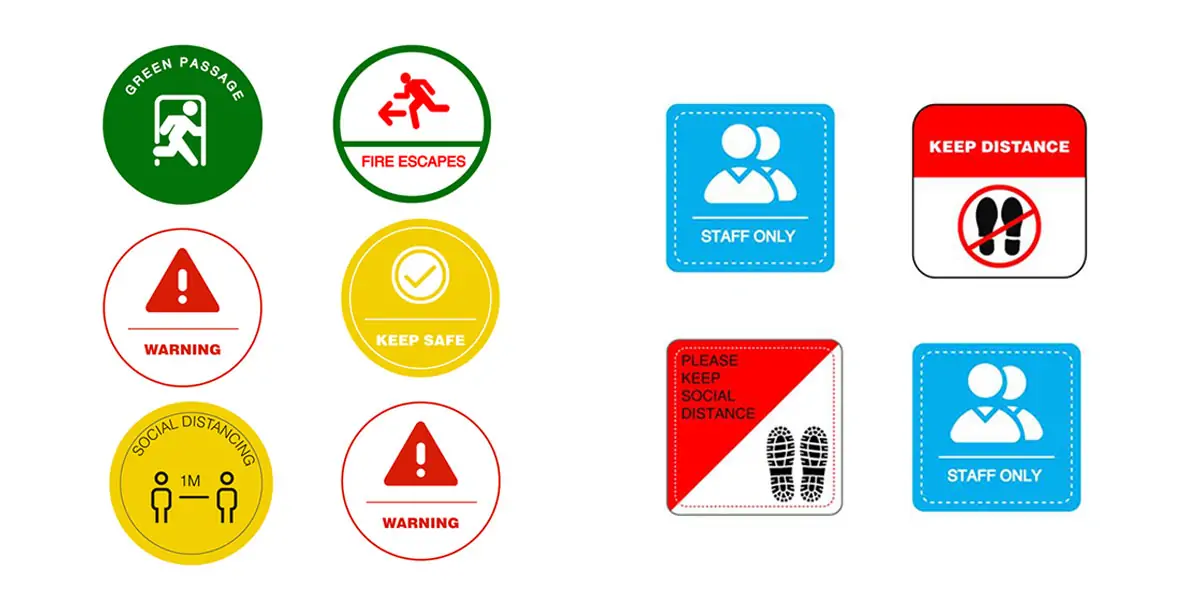
The biggest difference is the construction. A traditional vinyl sticker is primarily a printed flexible film with an adhesive backing. An epoxy sticker adds a transparent resin dome over the printed surface, creating a raised 3D appearance.
1. Visual Appearance & Texture
Epoxy stickers offer a high-end, 3D look that adds depth and dimension to your design. Manufacturers commonly describe this construction as a domed or 3D resin finish. Epoxy stickers have a three-dimensional, glossy dome that catches light and adds depth to your logo. This makes colors appear richer and more vibrant, and the tactile feel signals premium quality. Additionally, epoxy stickers can be customized with a variety of finishes, including metallic, matte, and glossy, to match your brand's aesthetic.
This can be useful for brands that want:
- A premium appearance
- A raised logo
- A glossy finish
- Greater visual depth
- A more distinctive product label
Vinyl stickers are flat and can be made to look sleek and minimal, but they lack the dimensional pop. You can select matte, glossy or holographic lamination finishes. No 3D bulge appears, so they lay completely flush on surfaces. They suit large‑size printed graphics and multi‑sheet sticker packs. If your brand relies on a clean, modern aesthetic, matte vinyl can be a great choice.
2. Durability & Environmental Resistance
It is tempting to say that one material is simply "more durable" than the other. For professional sticker manufacturing, that is too simplistic. Durability depends on the complete sticker construction. For vinyl stickers, factors can include:
- Vinyl film
- Adhesive
- Printing technology
- Lamination
- Surface preparation
- Moisture
- Application surface
Therefore, when requesting a quotation from a custom sticker manufacturer, brands should not simply ask: "Which sticker is more durable?" Instead, provide the actual application requirements. For example:
- Will the sticker be used indoors or outdoors?
- Will it be exposed to water, sunlight, chemicals, or abrasion?
- What surface will it be applied to?
- Is permanent or removable adhesion required?
- These details allow the manufacturer to recommend a more appropriate construction.
Vinyl stickers are durable, but their thin surface is more prone to scratching and fading over time, especially when exposed to prolonged sunlight or frequent handling. High-quality vinyl with UV-resistant lamination can last years, but it will never match the hard-shell protection of epoxy.
Premium epoxy resin layers offer excellent scratch‑proof, water‑proof and chemical‑resistant performance. Well‑produced epoxy domed stickers can withstand harsh weather conditions, making them ideal for outdoor applications like vehicle decals or industrial equipment labels.
3. Flexibility
Vinyl stickers feature good flexibility. They adhere firmly to curved bottles, tumblers, laptop shells, shipping cartons and irregular product surfaces, covering far more flexible‑material use‑cases. Epoxy stickers perform best on rigid, smooth surfaces: metal badges, plastic device shells, gift packaging boxes, automotive interior emblems. They fit gentle curved surfaces, yet thick domed epoxy does not adapt well to highly flexible bendable substrates.
If your product requires a highly flexible sticker, a custom vinyl sticker may be the more straightforward choice.
4. Cost and Production Complexity
One of the most significant factors to consider when choosing between epoxy stickers and vinyl stickers is cost. Custom epoxy domed stickers involve extra resin dispensing and curing procedures. Unit prices run higher than standard vinyl stickers, and complex doming processes raise minimum order quantity for some factories.
Vinyl stickers, on the other hand, are more cost-effective and can be produced in large quantities quickly. Additionally, vinyl stickers can be produced in a shorter turnaround time, making them a convenient option for last-minute projects. Digital printing enables low‑MOQ custom vinyl logo stickers with competitive unit costs, ideal for brands running test marketing or seasonal promotions.
- Vinyl stickers generally have a simpler construction: Artwork → Printing → Cutting → Adhesive backing
- Epoxy stickers add another production stage: Artwork → Prototyping → Mold Making →Printing → Cutting → Resin application → Curing → Inspection → Adhesive backing.
Head-to-Head Comparison:
| Feature |
Epoxy Stickers |
Vinyl Stickers |
| Visual effect |
3D crystal dome, raised glossy surface |
Flat 2D, matte/gloss/holographic lamination |
| Key strength |
Scratch‑resistant, luxury branding look |
Flexible, wide surface compatibility, cost‑efficient |
| Flexibility |
Rigid, best on flat surfaces |
Flexible, conforms to curves |
| Visual depth |
High |
Standard |
| Custom shapes |
Yes |
Yes |
| Product differentiation |
High |
Moderate |
| Thickness |
0.3–1.2mm |
Thin (approx. 0.1mm) |
| Production time |
10-14 days | 7–10 days |
| Format |
Sheets only |
Individual pieces or sheets |
| Outdoor suitability |
Depends on resin/substrate |
Depends on vinyl, adhesive and finish |
| Production complexity |
Higher |
Generally simpler |
| Cost |
Medium‑high |
Lower per unit (especially in bulk) |
| Best for |
Hardware logo emblems, electronics branding, premium gift labels |
Packaging stickers, outdoor decals, promotional sticker sheets, bottle labels |
Which Option Fits Your Brand? Practical Selection Tips
Choose Epoxy Stickers If:
- You want a premium, luxurious look that conveys quality and sophistication
- Your application is on flat or slightly curved surfaces. Such as packaging boxes, electronics, keychains, promotional items
- Scratch resistance and long-term durability are critical
- You have a longer production timeline (around 14 days)
- You're branding high-end products where visual impact justifies the higher cost
- You need custom epoxy stickers for product launches, gift sets, or premium labeling
Choose Vinyl Stickers If:
- Your stickers will be applied to curved or flexible surfaces—water bottles, cups, automotive bodies, helmets
- You need fast turnaround for time-sensitive campaigns
- You’re ordering in bulk and need cost efficiency
- You want custom vinyl stickers in a wide variety of shapes, sizes, and finishes
- You need custom die cut stickers in intricate shapes
- Your application is outdoor and requires weather resistance without the premium price tag
At Xinyin (MaStickers), we offer a wide range of custom sticker options, including epoxy stickers, vinyl stickers, and more. Our team of experts can help you choose the right sticker for your brand and create a custom design that will help you stand out from the competition. Contact us today to learn more about our custom sticker manufacturing services.
Which Is Better for Your Brand? Choosing the Right Sticker for Your Brand.
The answer depends on your product type, usage environment, and brand positioning. If your stickers will be applied to outdoor equipment, vehicles, or items that face heavy handling and weather exposure, epoxy stickers are the superior choice. Their resistance to scratching and fading ensures your branding stays pristine for years, which is essential for building long-term brand trust.
Vinyl stickers are better for indoor use, short-term campaigns, or applications where cost and versatility are paramount. They work well for product labels, shipping boxes, promotional handouts, and event stickers. If you update your branding frequently or run seasonal promotions, vinyl allows you to change designs without a large financial commitment.
For most businesses, a hybrid approach works best: use epoxy stickers for your flagship products and long-term assets, and use vinyl stickers for everyday packaging, giveaways, and internal labeling. This way, you maximize brand impact where it counts while keeping overall sticker costs in check.
Ultimately, the decision is not about which sticker type is "better" in absolute terms. It is about which one aligns with your brand's promise and the physical realities of your product. Evaluate your sticker's lifecycle, the surface it will be placed on, and the message you want to send. With the right choice, your stickers will do more than stick. And they will represent your brand with clarity and confidence.
Looking for a Custom Sticker Manufacturer?
MaStickers focuses on OEM/ODM custom sticker manufacturing and bulk production for international brands, wholesalers, distributors, and product companies.Our custom sticker capabilities include:
- 3D Puffy Stickers
- Epoxy Dome Stickers
- Silicone Stickers
- TPE Stickers
- PVC Stickers
- 3D EVA Foam Stickers
- Glow-in-the-Dark Stickers
- Custom Sticker Books
- Educational & Interactive Stickers
For projects requiring custom structures, materials, shapes, or production specifications, share your artwork and requirements with our team for evaluation.
Need a custom sticker manufacturer for your next OEM project? Contact MaStickers to discuss your production requirements.
Reference:
Why Work With an OEM Sticker Manufacturer?
For brands developing a custom product, the supplier's manufacturing capability can be just as important as the sticker material.
A professional custom sticker factory can assist in the evaluation process: design → materials → structure → production → surface treatment → adhesive → quality control, rather than merely printing the files provided by the customers. This becomes particularly important for specialty products such as 3D embossed stickers, epoxy dome stickers, silicone stickers, TPE stickers, 3D EVA foam stickers, and other custom molded sticker products.
For an OEM project, the goal is not simply to find the cheapest sticker. The goal is to develop a sticker construction that can be produced consistently at the required quality and volume.
Reference:
- Sticker Printing Companies vs OEM Sticker Manufacturers: Which Is Better For Your Brand?
- Sticker Manufacturing Process: From Design Concept to Mass Production
What Should OEM Buyers Tell a Sticker Manufacturer?
Before requesting a quote, prepare as much information as possible. A professional OEM/ODM custom sticker manufacturer will normally need to understand the intended application before recommending the final construction.
Provide:
- Artwork. Send the logo, illustration, or product design.
- Size. Specify the finished dimensions.
- Shape. Tell the manufacturer whether you need: Round, Square, Rectangle, Custom die-cut, Irregular shape
- Material. Indicate whether you are considering: Vinyl, Silicone, PVC, TPE, Epoxy/resin, Foam and Other specialty materials
- Surface. Explain where the sticker will be applied: Plastic, Metal, Glass, Packaging, Electronics, Promotional products and Other surfaces
- Application Environment. Tell the manufacturer whether the product will be exposed to: Water, Heat, Cold, Friction, Chemicals and Outdoor conditions
- Quantity. For OEM production, the expected order quantity is important for determining the appropriate production process and quotation.
Final Thoughts
There is no absolute "better" between epoxy stickers and vinyl stickers. Your project budget, target visual style, application surfaces and expected service life decide the right material. Many growing brands combine both: apply epoxy domed stickers for flagship product logos, and deploy cost‑effective vinyl stickers for mass packaging and giveaway promotions.
As a professional sticker manufacturer, MaStickers provides OEM & ODM custom service for both epoxy domed stickers and vinyl stickers. Send over your artwork requirements to get material suggestions and free pre‑production samples before bulk manufacturing.
 You May Also Like