Custom Stickers Factory for Your Brand – Guides, Materials & Customization Hacks

Custom Stickers Factory for Your Brand – Guides, Materials & Customization Hacks
 Xinyin
 Aug 24,2026

Traditional stickers, whether paper-based, vinyl, or PVC, have long served as the default choice for branding, labeling, and promotional applications. But as consumer expectations evolve and brands demand more from their marketing materials, silicone stickers are rapidly becoming the preferred alternative.
Unlike conventional flat stickers that are generally designed for single-use applications, silicone jelly stickers are soft, flexible, washable, and reusable. Its surface is smooth and flat, and it can be easily peeled off, cleaned and repositioned when the product is designed for repeated use.
Commercial reusable jelly sticker products are already marketed with features such as washable, reusable, waterproof, and residue-free performance, particularly for children's sticker books and activity products. For brands, wholesalers, publishers, toy companies, stationery businesses, and product developers, this creates an opportunity to develop custom reusable stickers with a different user experience from conventional disposable stickers.
As an experienced OEM/ODM silicone sticker manufacturer, MaStickers provides customized silicone sticker solutions for global brands, wholesalers, and product developers, including silicone logo stickers, silicone sticker sheets, and silicone stickers in bulk. We can develop customized silicone sticker products according to customers' artwork, shapes, colors, sizes, adhesive requirements, and packaging specifications.
This blog breaks down the core advantages of silicone stickers, compares them against conventional sticker options, and helps you decide whether silicone stickers fit your brand project.
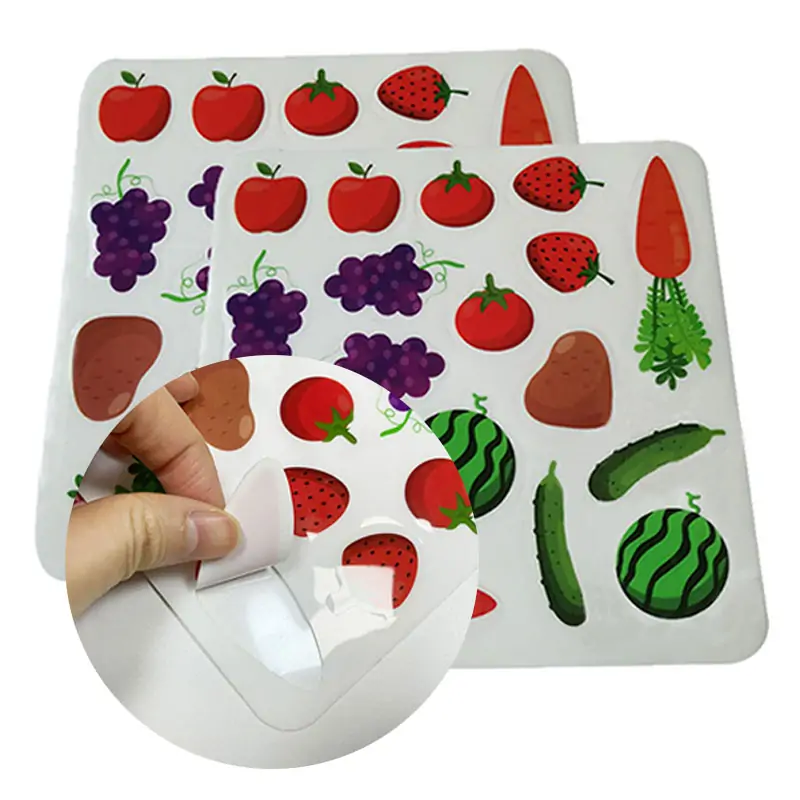
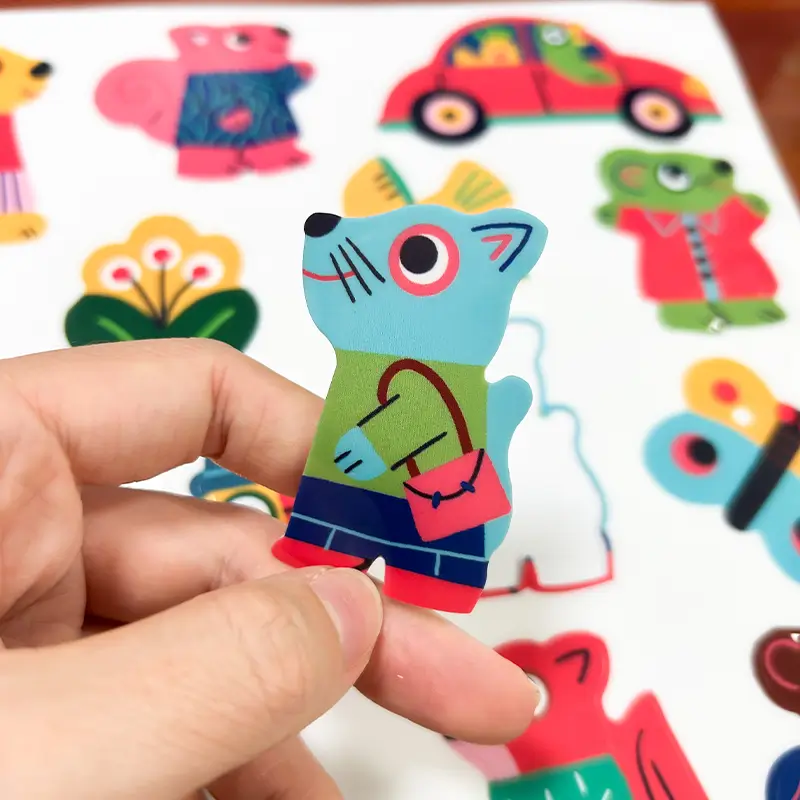
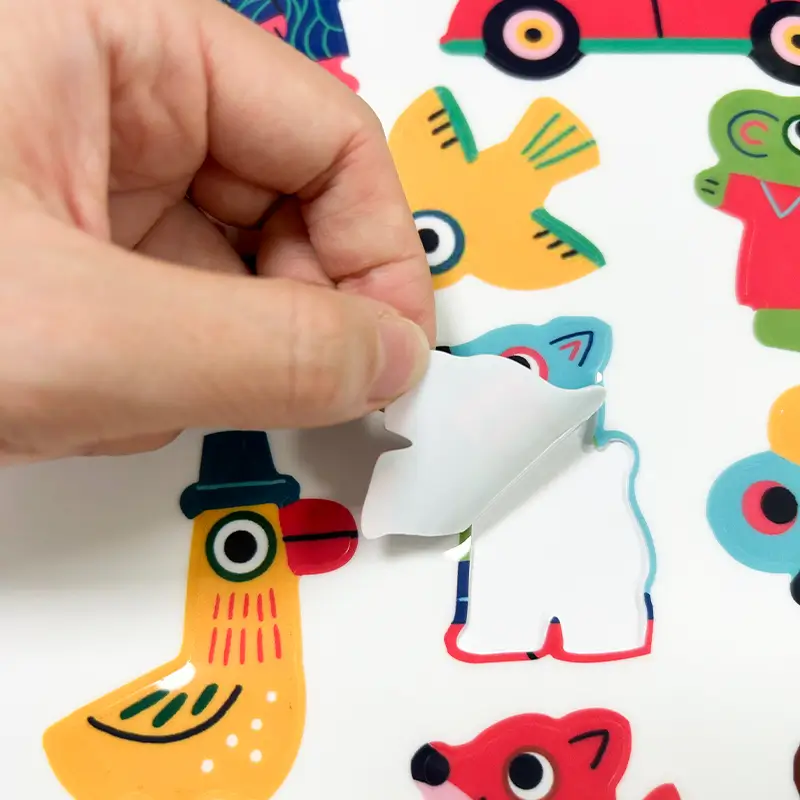
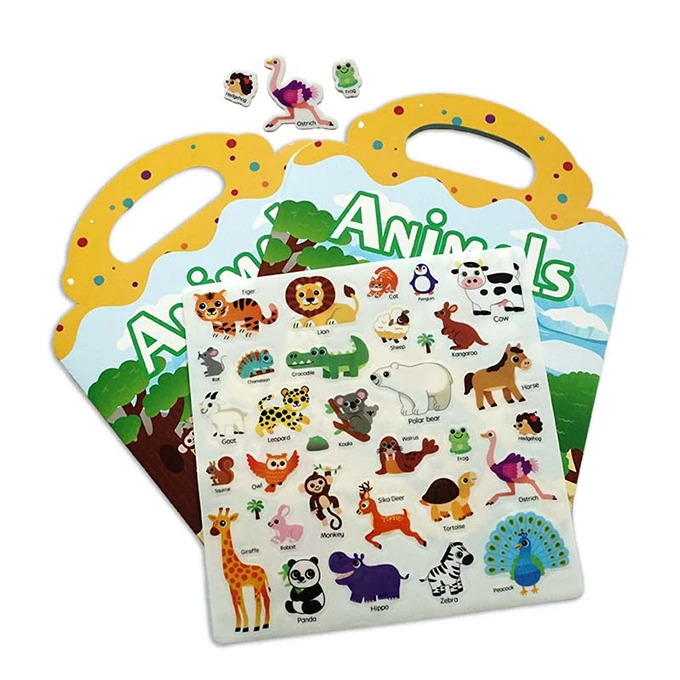
Silicone jelly stickers are soft, flexible stickers made primarily from silicone material. Unlike 3D foam stickers or puffy embossed stickers, their main feature is not a raised 3D structure. Instead, silicone jelly stickers typically have a relatively flat, smooth, and flexible surface.
Silicone stickers are made from a type of polymer called silicone, which is known for its flexibility, durability, and resistance to extreme temperatures. These stickers offer a unique combination of properties that make them ideal for a wide range of applications. Unlike traditional stickers that are often made from paper, vinyl, or plastic, silicone stickers are non-toxic, hypoallergenic, and can withstand exposure to water, oil, and chemicals.
Their key characteristics can include:
Silicone itself is known for flexibility, elasticity, water repellency, and resistance to weathering and degradation under many conditions. This combination makes silicone an interesting alternative for applications where conventional paper or film stickers may not be suitable for repeated use.
Traditional stickers, particularly those made from vinyl (PVC), often rely on phthalate plasticizers and contain residual heavy metals in their printing inks to achieve flexibility. Silicone is a non-toxic and hypoallergenic material. Silicone gel stickers are made from food-grade or medical-grade silicone, they are naturally BPA-free, phthalate-free, and odorless. They do not leach harmful chemicals, even when exposed to body heat or sunlight.
This is the game-changer that traditional stickers lose every time. Paper stickers disintegrate when wet, and standard vinyl stickers often lose their adhesive grip permanently once moisture seeps beneath the surface. Washable reusable stickers made from silicone possess a unique physical property: hydrophobic resilience. You can submerge them in water or scrub them gently. When you peel them off and let them dry, the adhesive properties fully recover.
Silicone elastomers have a tensile strength that far exceeds organic polymers used in paper and standard vinyl. Our durable silicone decals resist tearing, scratching, and abrasion without requiring a thick 3D profile.
While traditional stickers are largely single-use (or at best, short-term-use) and end up in landfills where paper degrades (releasing methane). Because they are washable and reusable, one silicone sticker can replace hundreds of disposable paper stickers over its lifetime.
The biggest difference is how the sticker is intended to be used. The traditional paper stickers are often designed as disposable decorative or labeling products. Once removed, they may not be suitable for repeated application. Silicone jelly stickers can instead be designed as reusable stickers, allowing users to peel, reposition, clean, and reuse them.
| Feature |
Traditional Paper/PVC Stickers |
Silicone Jelly Stickers |
| Surface |
Flat |
Flat and soft |
| Touch |
Paper/plastic feel |
Soft, flexible |
| Reusable |
Usually limited |
Designed for repeated use |
| Washable |
Depends on construction |
Suitable for washing |
| Flexibility |
Depends on material |
Highly flexible |
| Water Resistance |
Material-dependent |
Strong water-resistant characteristics |
| Tear Resistance |
Material-dependent |
Good flexibility and tear resistance |
| Repositionable |
Usually limited |
Suitable for repeated repositioning |
| Custom Shapes |
Yes |
Yes |
| Custom Artwork |
Yes |
Yes |
| OEM Production |
Yes |
Yes |
The important distinction is therefore not that silicone stickers are necessarily more "3D" or visually complicated. Their major product advantage is reusability and washability.
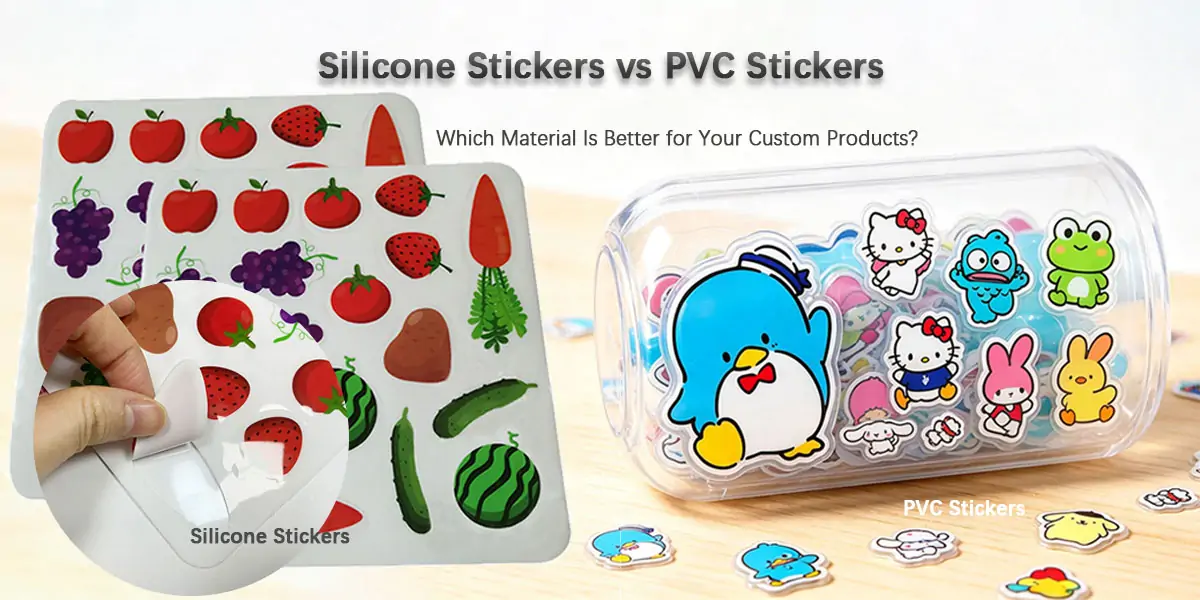
PVC remains a widely used material for custom stickers because of its versatility and cost-effectiveness. However, silicone provides a different product experience.
Therefore, neither material is universally "better." The right choice depends on the intended application. If the product is intended to be used once as a label or decoration, PVC may be more practical. If the product is intended to be peeled, washed, repositioned, and reused, silicone can provide a significant functional advantage.
Reference: Silicone Stickers vs PVC Stickers: Which Material Is Better for Your Custom Products?
The difference becomes even clearer when comparing silicone with traditional paper stickers. Paper stickers are commonly used for:
Their advantages include low production cost and excellent printability. However, paper is generally not the first choice for products that need repeated washing and reuse.
Silicone jelly stickers are better suited to applications where the product needs to withstand repeated handling and cleaning. For example:
This difference can be particularly valuable for reusable sticker books and children's activity products.
Silicone stickers bring obvious strengths, yet they are not for every scenario. Traditional vinyl or paper stickers remain cost‑effective for short‑term promotional campaigns, one‑time event giveaways, and small‑budget simple flat‑print projects with low durability requirements. If you run temporary marketing activities with limited budget and do not need long‑time wear‑resistance, traditional custom vinyl stickers can satisfy your needs.
Children's products require careful consideration of material selection, product design, and applicable safety requirements. Silicone jelly stickers can be attractive for children's products because they are:
Reusable silicone sticker books are already commercially available for children's activity and educational applications.
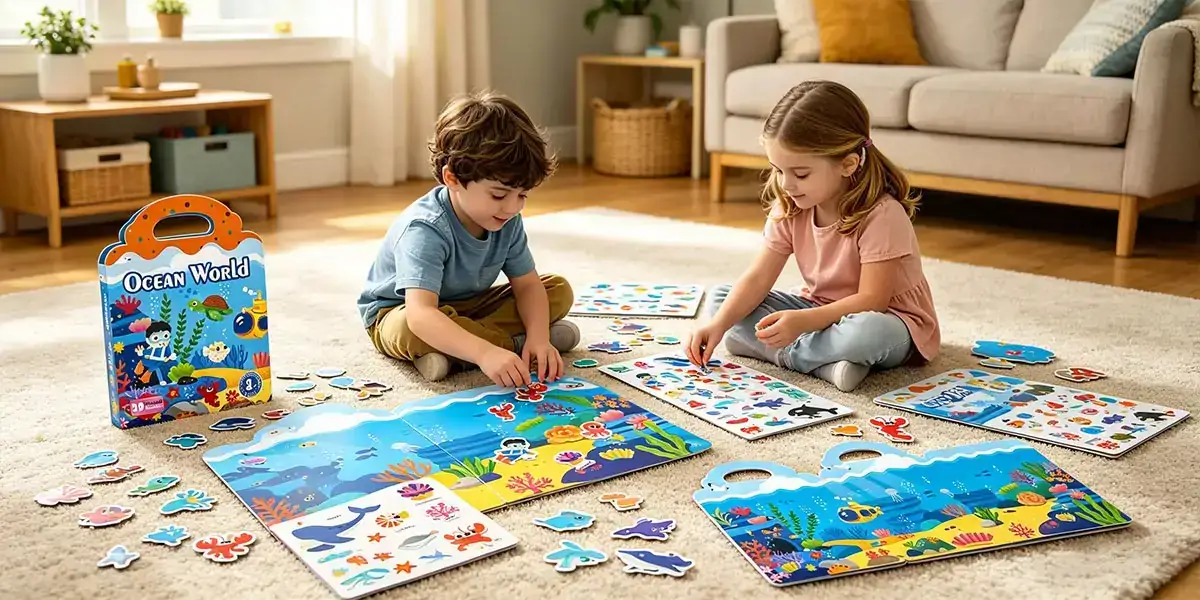
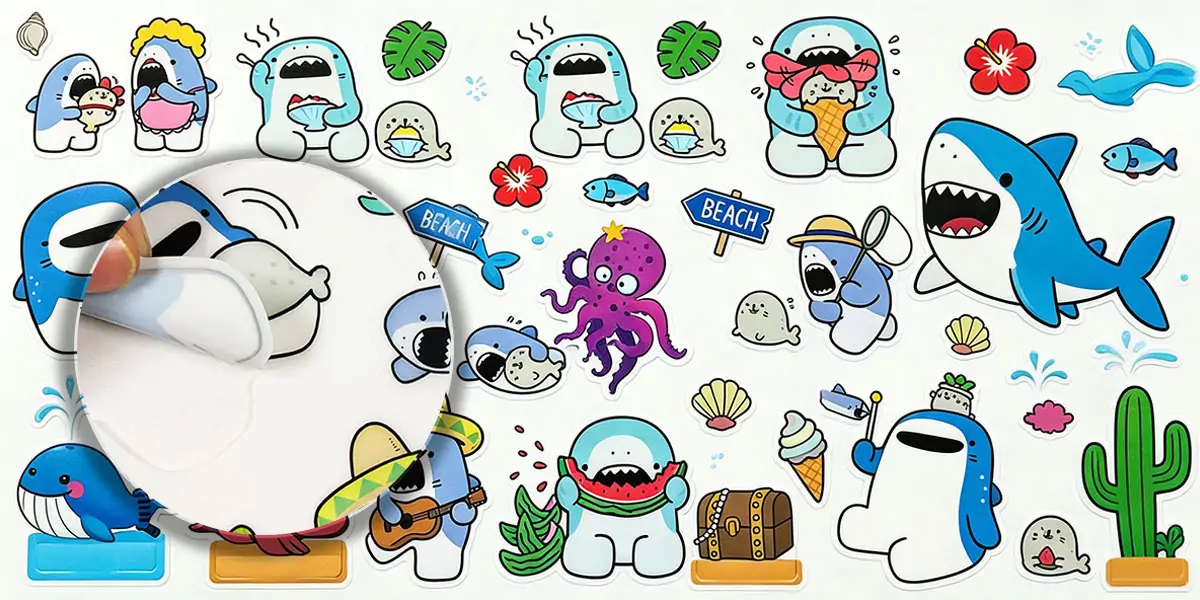
One of the biggest advantages of working with a custom silicone sticker manufacturer is that silicone jelly stickers do not need to be limited to standard designs. MaStickers can develop custom sticker products according to the buyer's artwork and specifications.
The sticker can be manufactured according to the required outline. Customers can provide:
This allows a buyer to develop an entire custom reusable sticker product, rather than simply purchasing generic stickers.
The manufacturing process depends on the exact silicone sticker construction, but a typical OEM workflow includes several stages.
Artwork Preparation. The customer provides the artwork, dimensions, colors, and product requirements. The manufacturer reviews the artwork and prepares it for production.
Mold and Tooling Development. For customized silicone sticker products, tooling may be required to form the desired shape and structure.The tooling is developed according to: Sticker dimensions, shape, artwork, product thickness,and production requirements. For simple flat silicone sticker constructions, the tooling requirements may differ from those used for dimensional molded silicone products.
Silicone Material Processing. The silicone material is processed according to the required product specification. The formulation and processing parameters influence: Flexibility, softness, tear resistance and surface feel. This is one reason why selecting an experienced silicone sticker manufacturer is important for OEM buyers.
Printing and Surface Top Coating. The custom design is then printed onto the silicone surface, followed by a robust protective layer. Depending on the design, the product may utilize different printing or surface finishing methods. This allows brands to achieve customization.
Finishing and Quality Inspection. The finished stickers are checked for: Shape accuracy, printing quality, surface defects, color consistency, adhesion performance, and product dimensions.
For OEM orders, production samples can be approved before moving to mass production.
Reference: Sticker Manufacturing Process: From Design Concept to Mass Production
For a company developing a reusable sticker product, simply finding a supplier that can "print silicone stickers" may not be enough. OEM buyers often need support with: Material → Artwork → Tooling → Printing → Adhesion → Testing → Production → Packaging.
A professional silicone sticker manufacturer can coordinate these stages and develop the product around the buyer's actual application.
This is particularly important for:
Instead of purchasing an existing sticker design, OEM customers can develop a proprietary product that matches their brand and target market.
MaStickers specializes in OEM and ODM custom sticker manufacturing for international buyers.
Our product range includes specialty sticker solutions such as:
This allows buyers to select different sticker materials according to the intended product rather than forcing every application into the same sticker construction. For silicone jelly sticker projects, MaStickers can support customized artwork, shapes, colors, sizes, sticker-sheet layouts, and packaging for OEM/ODM production.
Our goal is not simply to print a sticker. It is to help international buyers develop a finished custom sticker product that can be manufactured consistently at scale.
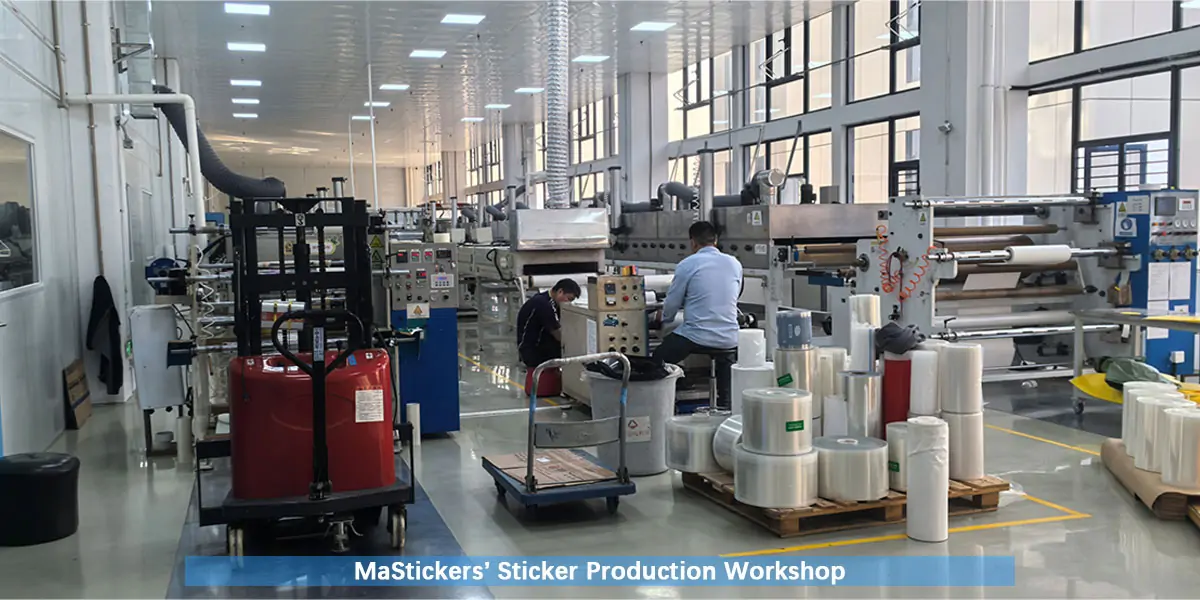
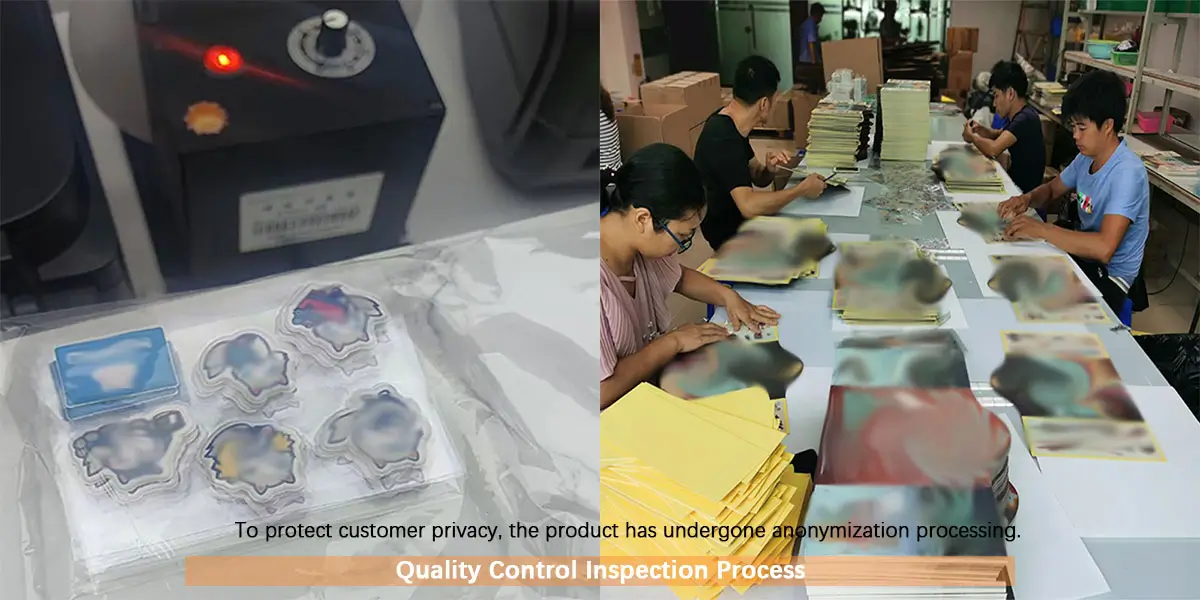
Traditional paper, PVC, and vinyl stickers still have their place in packaging, labeling, branding, and promotional applications. But when a product requires reusability, washability, flexibility, and repeated repositioning, silicone jelly stickers provide a different solution.
Their biggest advantage is not necessarily a more complicated appearance. It is the combination of:
For brands developing children's products, educational materials, reusable sticker books, stationery collections, and other specialty products, this can create a more functional alternative to conventional disposable stickers.
If you are looking for a custom silicone sticker manufacturer, silicone jelly sticker supplier, OEM reusable sticker manufacturer, or China custom sticker factory, MaStickers can help develop your product from artwork and material specifications through sampling and bulk production.
Have a custom silicone jelly sticker project? Send us your artwork, reference images, or product requirements to discuss your OEM/ODM production needs.
 You May Also Like
No 410, Laoyi Village, Niuhu Community, Guanlan Street, Longhua District, Shenzhen City

MaStickers
Custom Stickers Manufacturer

No 410, Laoyi Village, Niuhu Community, Guanlan Street, Longhua District, Shenzhen City
Product
Get in touch and find out how we canmake your next shipment easier.


Copyright © 2026 Shenzhen Xinyin Environment Rubber Product Co., Ltd



 Home
Home