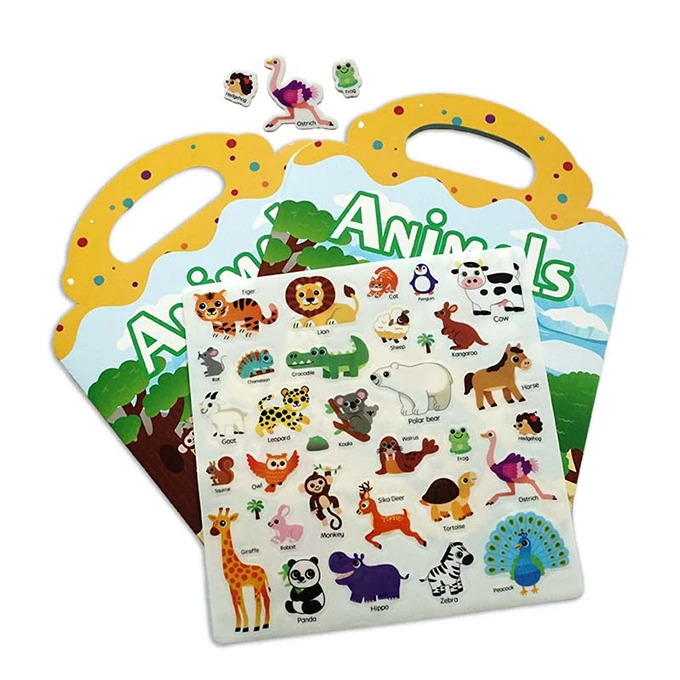
Custom Stickers Factory for Your Brand – Guides, Materials & Customization Hacks

Custom Stickers Factory for Your Brand – Guides, Materials & Customization Hacks
 Xinyin
 Sep 11,2026

Starting your first custom sticker project can seem straightforward: send a design, receive a quotation, approve a sample, and place an order. In reality, a successful OEM sticker project involves much more than printing artwork.
The factory needs to underst and your design, material, dimensions, 3D structure, adhesive, finishing, packaging, quantity and quality requirements. At the same time, you need to know whether the supplier can actually manufacture your product consistently at the required scale. This is especially important when developing specialty products such as 3D puffy stickers, dome epoxy Stickers, silicone stickers, foam stickers or other customized sticker products.
A good first project should therefore be treated as a manufacturing development process, not simply a printing order.
If you are a brand owner, product reseller or startup launching your first custom sticker order, partnering directly with an OEM sticker factory cuts out middleman markup and gives you full control over materials, finishes and brand details. Many first-time buyers confuse OEM sticker manufacturers with trading companies, which often leads to misaligned specs, delayed shipments and inconsistent batch quality.
But if it's your first time sourcing overseas or working with a manufacturer at all. The process can feel overwhelming. This guide walks you through each step and shares industry best practices. In this guide, MaStickers (Xinyin) explains how B2B buyers can work with an OEM sticker factory from the initial inquiry to mass production.
Before contacting an OEM custom sticker manufacturer, prepare as much product information as possible. Manufacturers appreciate buyers who come prepared.
The most common mistake first-time buyers make is reaching out to factories without having their specifications ready. Custom sticker suppliers can respond within 24–48 hours, but only if you provide complete information upfront.
You do not need a perfect technical specification on day one. However, the more clearly you describe the product, the more accurately a factory can evaluate feasibility and calculate the quotation.
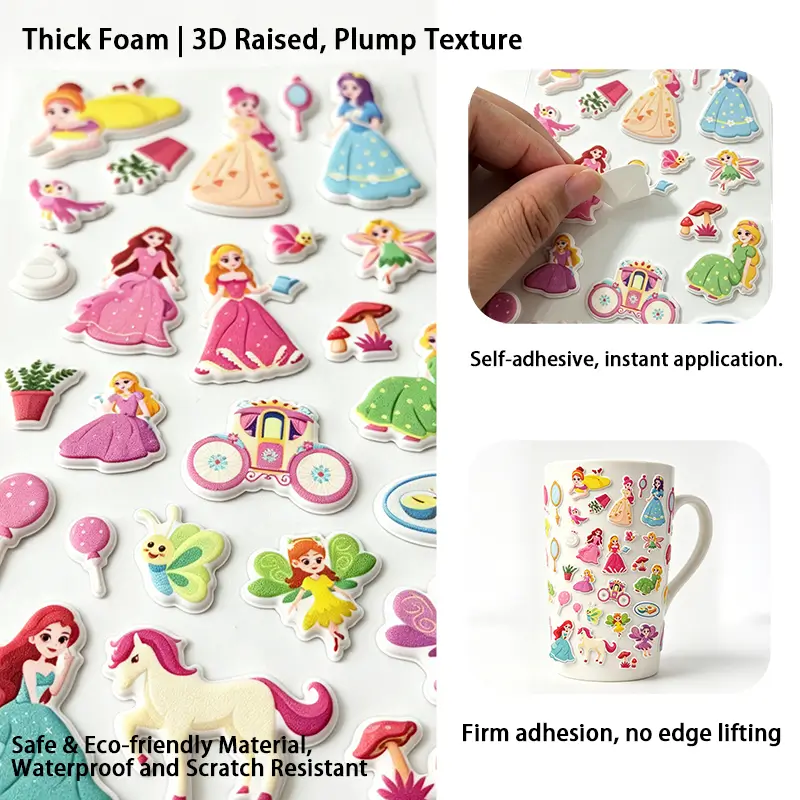
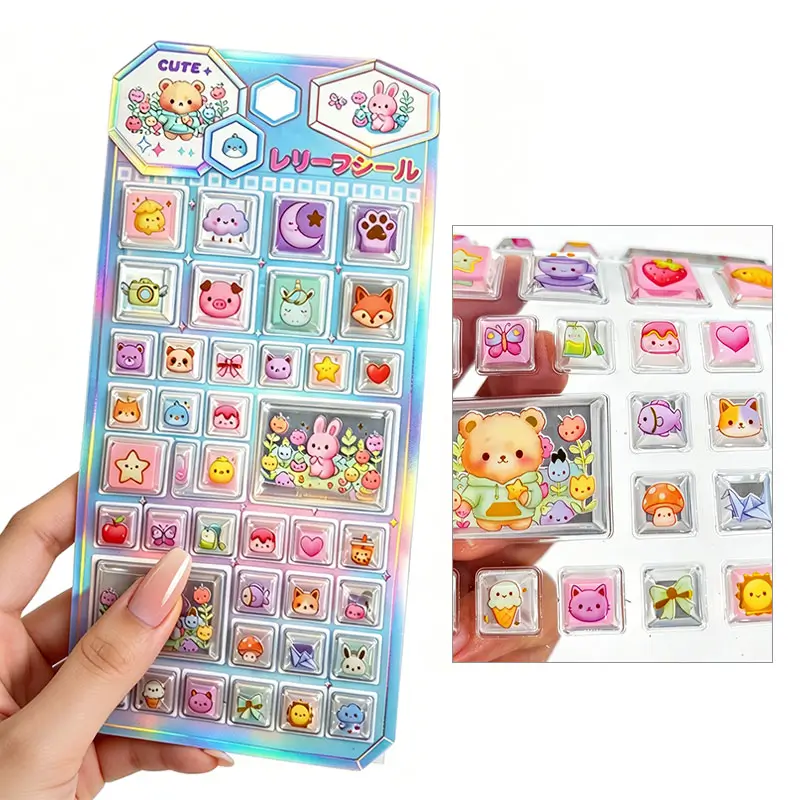
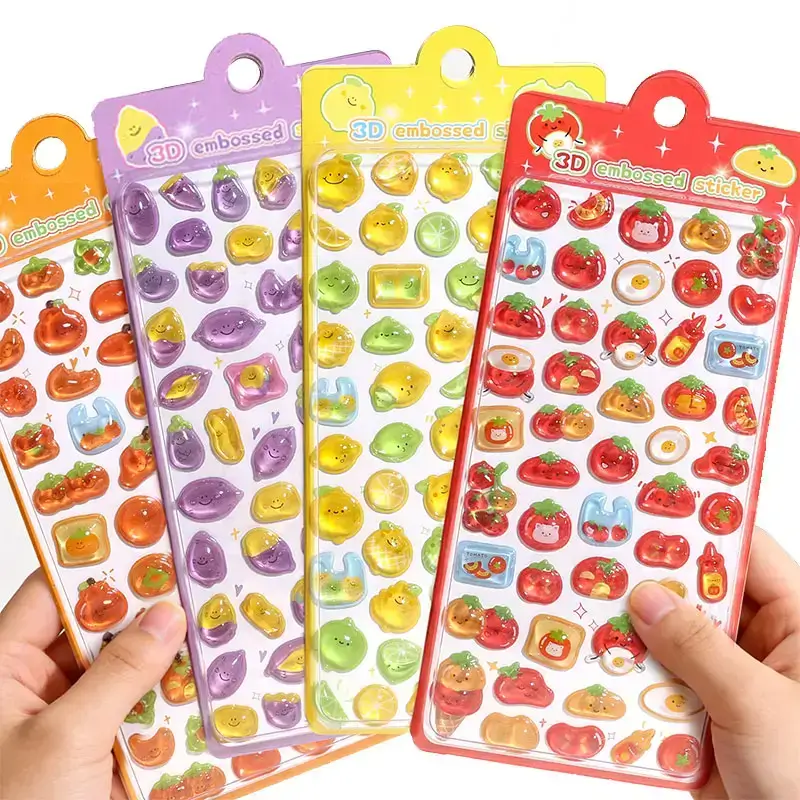
Define your project before reaching out. Ask yourself these questions:
What sticker type do I need? (Vinyl, 3D Puffy, Epoxy Dome, Holographic, Kraft, etc.)
What is my intended use? (Packaging, branding, gifts, decoration)
What size and shape do I need?
Do I need a specific finish (matte, glossy, glitter, metallic)?
What quantity am I looking for?
What is my target budget per piece?
Do I need the stickers to be waterproof or UV-resistant?
What is my timeline?
Pro Tip: The more detail you provide upfront, the faster and more accurate your factory quote will be.
Before contacting any custom sticker factory, prepare the following:
Artwork: A print-ready vector file (AI, EPS, or PDF/X-1a) with fonts converted to outlines and 2mm bleed
Size and shape: Exact dimensions (in mm or cm) and whether you need die-cut, kiss-cut, or sheet format
Material preference: Vinyl, PET, paper, or specialty substrates. Factories can advise if you're unsure
Quantity: Even a rough range helps factories provide accurate quotes
Application details: Where will the stickers be applied? Indoor or outdoor? What surface?
A professional sticker factory will need the following to generate a quotation: material, size, shape, color, quantity, and surface finishing. Having these details ready signals that you're a serious buyer and helps you get faster, more accurate pricing.
Common Mistake: Sending a JPEG or PNG without a cut line. Most factories will charge extra to redraw your design, or simply can't quote you without proper files.
A better inquiry would be: "We need custom 3D puffy stickers based on the attached artwork. Finished size is approximately 50 × 50 mm. The stickers will be supplied on retail backing cards. Initial order quantity is 10,000 pieces."
This gives the OEM sticker factory a much clearer starting point.
Once your artwork is ready, send the same spec to 3–5 reputable factories to compare:
Industry Insight: Most OEM sticker factories in Asia have MOQs ranging from 500 to 1,000 pieces for custom designs, with bulk pricing kicking in at 5,000+ units. (Source: Alibaba's B2B sourcing platform data.)
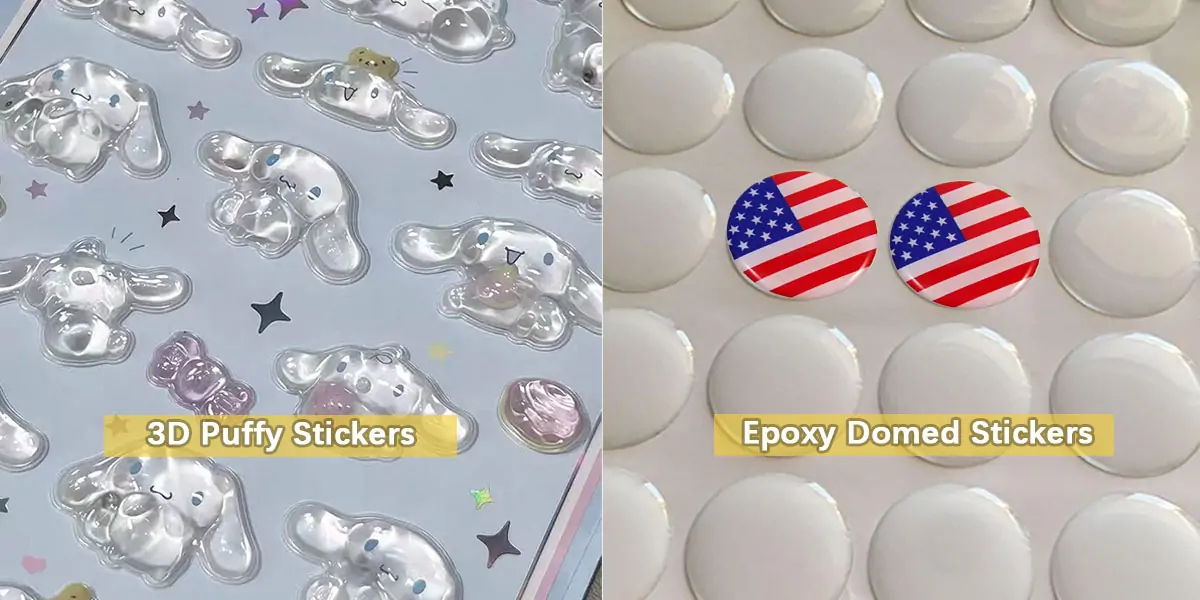
One of the most common mistakes in a first custom sticker project is choosing a product name without defining the actual construction. For example, 3D puffy stickers and epoxy dome stickers can look similar in photographs but may use different manufacturing processes.
MaStickers' 3D Puffy Sticker construction can use vacuum forming, thermoforming or embossing/relief pressing to create the raised top structure. Epoxy resin is then filled into the raised 3D structure and cured. A printed sticker substrate is added underneath, followed by adhesive application, die cutting and waste removal.
A conventional domed sticker generally starts with a printed flat sticker. Resin is then dispensed directly onto the printed surface and cured to form a raised dome. This distinction matters because the manufacturing process affects the appearance, structure and quotation.
Before requesting a price, tell the factory whether you need:
MaStickers (Xinyin) currently offers multiple specialty sticker constructions and OEM/ODM customization options.
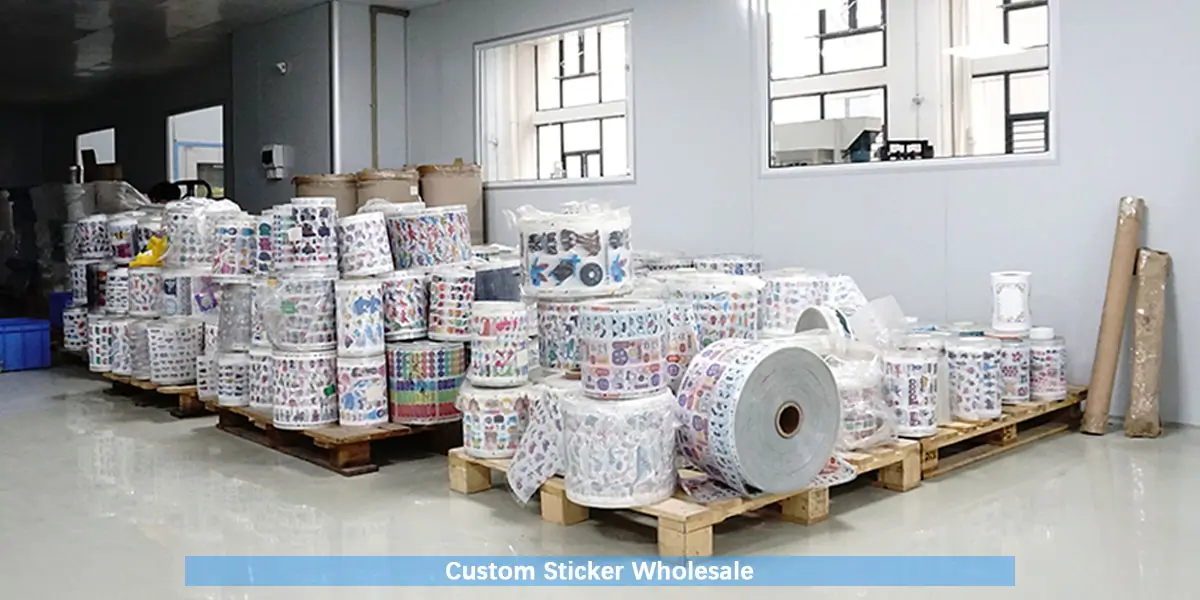
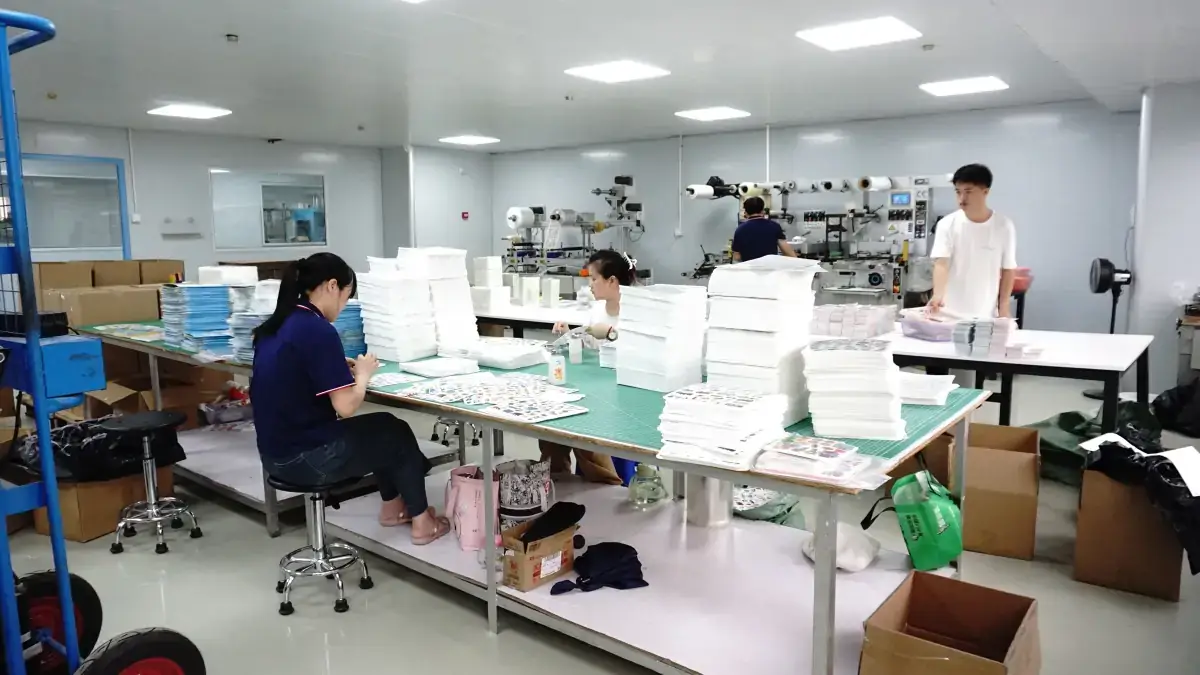
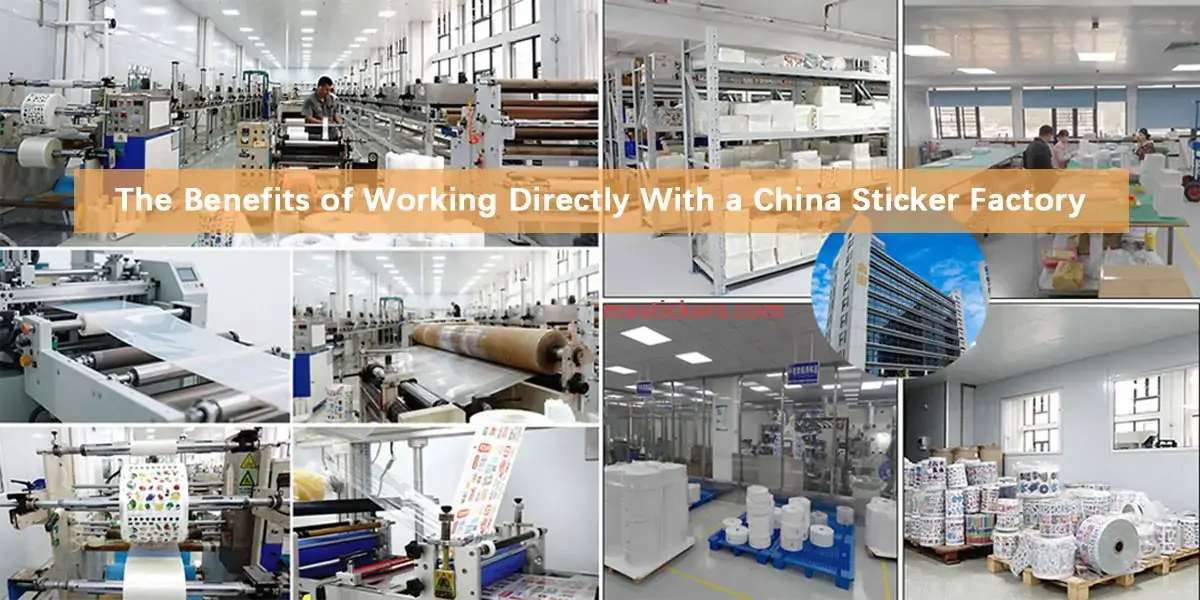
One of the biggest risks for new buyers is mistaking a trading company for an OEM sticker factory. An OEM manufacturer owns printing, die-cutting and finishing equipment, controls in-house QC and adjusts production parameters directly. Trading companies outsource production to third-party plants, adding communication delays and extra costs.
You can confirm factory credentials by asking for factory tour videos, production line photos, certification documents and past OEM case studies. A genuine custom sticker factory can adjust MOQ, tweak material formulas and modify production processes for your private label orders, while most traders only offer ready-made product selections.
Not all custom sticker manufacturers are created equal. China remains the world's dominant hub for sticker production, with key clusters in the Pearl River Delta (Shenzhen, Dongguan) and Yangtze River Delta (Zhejiang, Jiangsu). But within these regions, factories vary widely in capability, quality, and service level.
A structured supplier assessment should cover these areas:
Always prioritize direct sticker manufacturers over trading companies. Factories offer better pricing transparency, tighter quality control, and faster problem resolution since they manage production internally.
Artwork is one of the most important inputs for a custom sticker manufacturing project. For simple flat stickers, artwork preparation may be relatively straightforward.
For specialty products such as 3D Puffy Stickers or epoxy dome stickers, the artwork may also affect:
MaStickers currently recommends vector artwork such as AI, EPS and PDF, while high-resolution raster formats may also be accepted depending on the project.
When sending your artwork, clearly identify:
Some custom stickers can be produced with relatively straightforward processes. Others require additional tooling or development work. This is particularly relevant for 3D Puffy Stickers, where a specific three-dimensional shape may require tooling for vacuum forming, thermoforming or embossing.
Also ask:
Getting these points clarified before production reduces the risk of unexpected charges.
Never skip sampling before bulk OEM sticker production. A physical sample is the only way to verify color accuracy, adhesive strength, material feel, and overall quality before committing to a full production run. Ask the factory to make physical pre-production samples that match your finalized specifications. Test the samples for color accuracy, adhesive strength, scratch resistance and dimensional precision.
Once you accept the sample, lock it as the approved reference. This signed sample becomes your quality benchmark for bulk inspection.
At MaStickers, we typically ship samples within 3–7 business days and offer refundable sample fees for bulk orders.
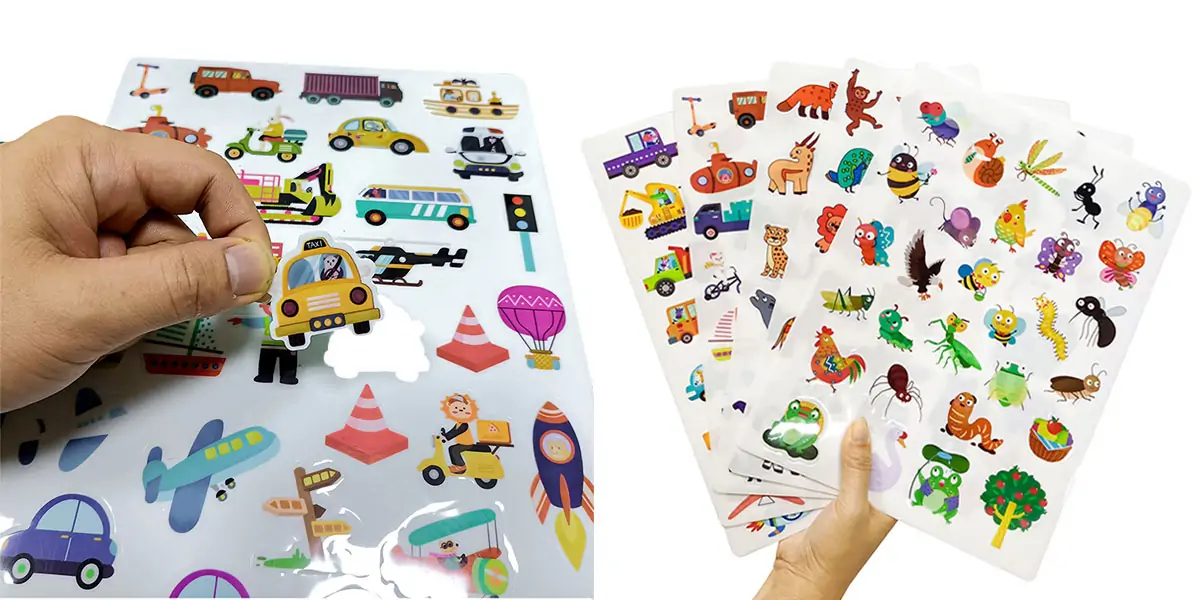
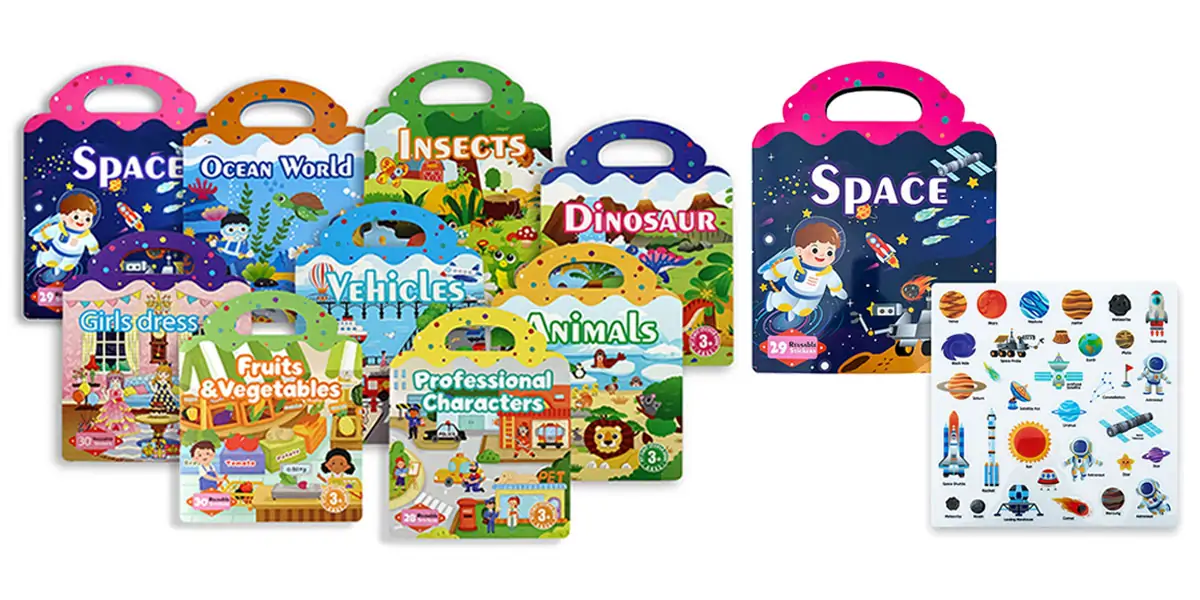
Pricing in OEM sticker manufacturing depends on multiple variables. Pricing Factors:
Note: 3D puffy and epoxy dome stickers typically cost 2–4x more than standard vinyl due to specialized materials and processes.
When working with an OEM sticker factory, your design files, brand assets, and proprietary artwork are valuable. Protect them.
Sign an NDA: Before sharing detailed artwork or branding materials, execute a non-disclosure agreement.
Verify trademark ownership: Ensure your brand is registered in the markets where you sell. In OEM arrangements, the factory produces based on your provided design. But you must confirm you have the legal right to use all elements.
Clarify tooling ownership: If you pay for custom dies or molds, confirm in writing that you own them and can transfer them to another factory if needed.
Limit file access: Provide print-ready files only to the factory you've selected, not to every supplier you're comparing.
After sample approval, review the proforma invoice carefully. Check unit pricing, tiered volume discounts, MOQ, sampling fees, tooling cost, bulk production lead time and shipping terms such as FOB, CIF or DDP. Most OEM sticker factories require a deposit to start production, with the balance due before shipment.
Clarify the full timeline: digital proof turnaround, sample lead time, bulk printing schedule and estimated delivery window. Add clauses for quality inspection, defect allowance and remedies for non-conforming goods, which protects your brand from unexpected losses.
Once your sample is approved and your order is placed, production typically takes 3–7 business days for standard stickers, with rush options available. Complex projects (3D doming, multi-layer, specialty finishes) may take longer.
A reliable sticker factory will implement multi-stage QC. Ask about these checkpoints:
| Stage |
What to Verify |
| Pre-production |
Ink viscosity, material batch, color standard (ΔE ≤2.0) |
| During production |
Print registration, die-cut alignment, laminate uniformity |
| Post-production |
Edge cleanliness, adhesive strength, peel test, visual inspection |
During mass production, ask your OEM sticker factory to share progress photos or short videos at key stages: printing, die cutting, surface finishing and packaging. Before shipment, complete pre-shipment inspection. Check print sharpness, die-cut registration, lamination quality and adhesive performance. You can arrange third-party inspection if your order volume is large.
Common sticker defects to watch: color deviation, die-cut misalignment, air bubbles under epoxy dome, peeling lamination and weak adhesive. Address these issues while goods stay at the factory instead of waiting until delivery.
Top suppliers provide batch traceability and defect reporting systems. For food-contact, children's products, or EU-bound goods, request FDA, RoHS, or REACH compliance documentation.
When your shipment arrives, cross-check bulk stickers against your approved sample. Record defect rates, packaging condition and delivery performance. Save your artwork files, material specs and QC standards for future reorders. A trusted OEM sticker factory can quickly repeat the same quality for your next custom logo sticker bulk order and support product upgrades such as new finishes or revised sizes.
Working with an OEM sticker factory for the first time takes preparation, but it delivers greater flexibility for private label branding, better pricing for large bulk orders and stable quality for ongoing product lines.
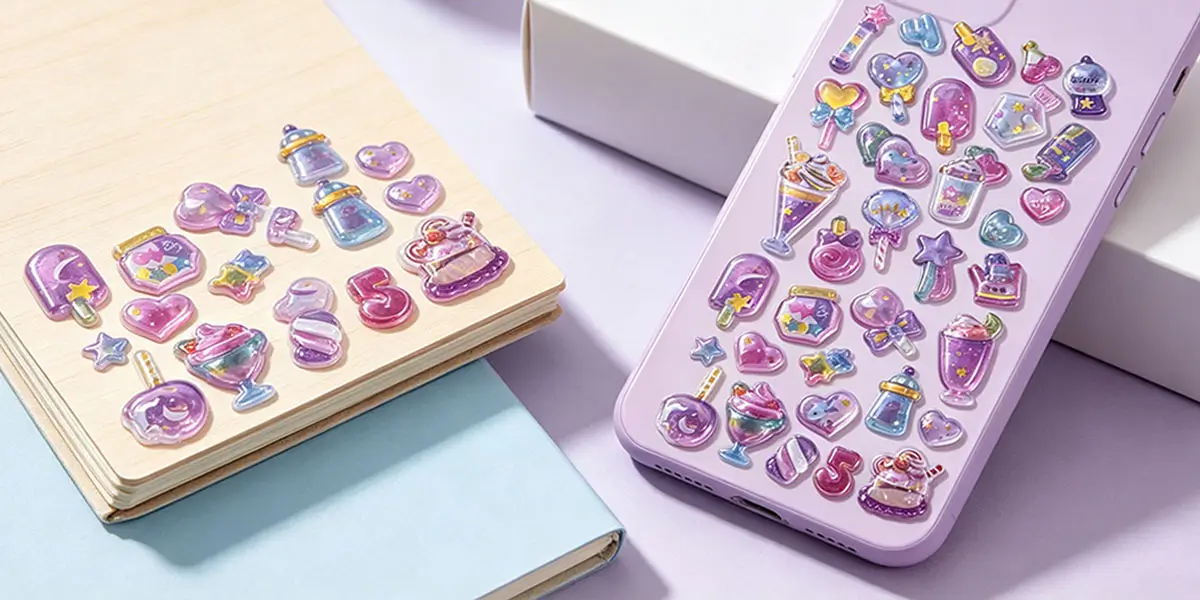
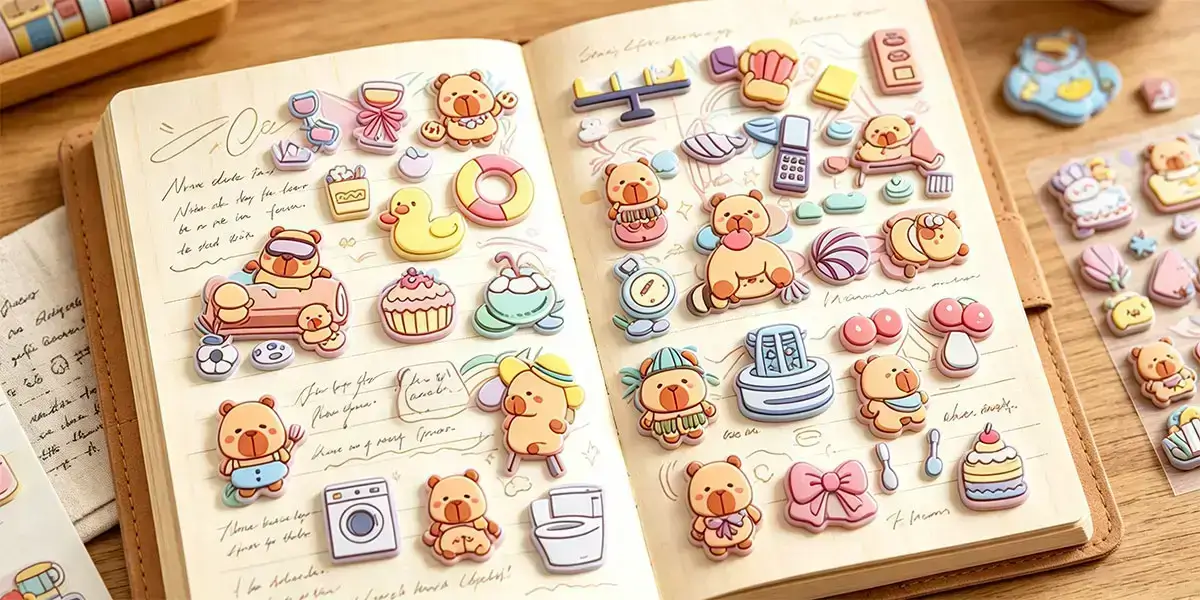
If you want to receive a useful quotation quickly, you can use the following checklist.
Providing this information gives a custom sticker manufacturer enough context to prepare a much more meaningful quotation.
At Mastickers, we specialize in helping brands of all sizes navigate the custom sticker manufacturing process. From 3D epoxy dome stickers to puffy stickers and custom vinyl decals, our team provides:
A first OEM project is easier when the manufacturer can support more than just printing. For specialty sticker projects, MaStickers supports customization including:
Its published OEM/ODM information also describes customization of artwork, size, shape, material, adhesive and packaging.
For a first project, the objective should not simply be to find "the cheapest sticker factory." The objective is to find a manufacturing partner that can take your idea and turn it into a repeatable production specification.
Whether you're launching your first product line or scaling an established brand, we're here to make your custom sticker project a success. Ready to start your first project? Contact Mastickers today for a free quote and sample.
Working with an OEM sticker factory for the first time does not have to be complicated. The most important thing is to establish a clear process:
For specialty products such as 3D Puffy Stickers, Domed Epoxy Stickers, silicone stickers and other custom dimensional stickers, the factory's manufacturing capability is particularly important because the final product depends on more than printed artwork.
A reliable custom sticker manufacturer should be able to discuss the construction, materials, tooling, artwork, adhesive, finishing, quality requirements and packaging with you before production begins.
And for your first order, remember one simple rule: Don't just approve a price. Approve the product specification, sample and production process.
That approach gives both the buyer and the OEM sticker manufacturer a much clearer basis for producing consistent results.
 You May Also Like
No 410, Laoyi Village, Niuhu Community, Guanlan Street, Longhua District, Shenzhen City
MaStickers
Custom Stickers Manufacturer

No 410, Laoyi Village, Niuhu Community, Guanlan Street, Longhua District, Shenzhen City
Product
Get in touch and find out how we canmake your next shipment easier.


Copyright © 2026 Shenzhen Xinyin Environment Rubber Product Co., Ltd



 Home
Home