Custom Stickers Factory for Your Brand – Guides, Materials & Customization Hacks

Custom Stickers Factory for Your Brand – Guides, Materials & Customization Hacks
 Xinyin
 Oct 17,2026

When sourcing custom stickers from a manufacturer, one of the first questions buyers ask is: How long does custom sticker production take? For brands, wholesalers, toy companies, and stationery businesses, production lead time directly affects inventory planning, product launches, and delivery schedules.
The answer depends on the sticker material, design complexity, order quantity, tooling requirements, and approval process. Standard flat stickers may follow a simpler production workflow, while custom 3D stickers, silicone stickers, epoxy dome stickers, and liquid-filled shaker stickers may require additional development and quality checks.
Many B2B buyers ask: how many business days does custom sticker printing take from artwork approval to shipment? At Mastickers (Xinyin), we break down the full manufacturing timeline, factors that change turnaround, and what you can do to speed up your OEM custom sticker order as a professional custom sticker company and factory supplier.
Custom sticker production moves through four distinct phases. Only one of them is "press time" in the narrow sense. All custom sticker orders follow a standardized production sequence, and the clock officially starts after you approve the digital proof, not from the day you send inquiry or artwork.
The process begins with the buyer's artwork, design reference, or product concept. The manufacturer reviews key details, including:
For specialty stickers, the review may also cover raised structures, liquid-filled cavities, resin finishes, or other manufacturing requirements. Providing complete artwork and clear specifications early helps reduce repeated revisions.
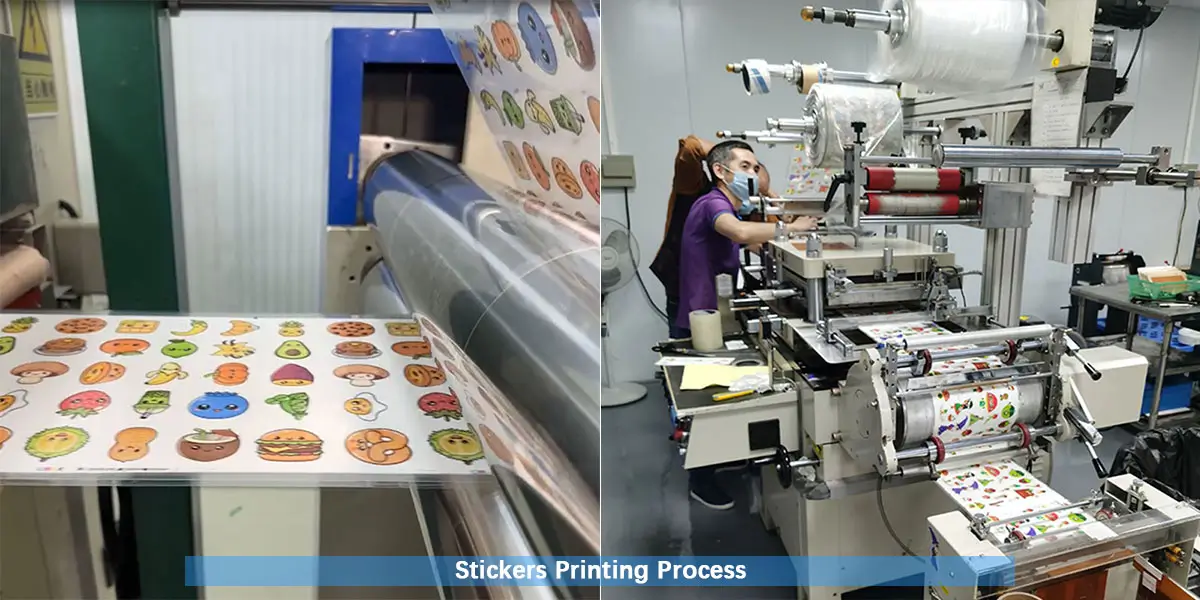
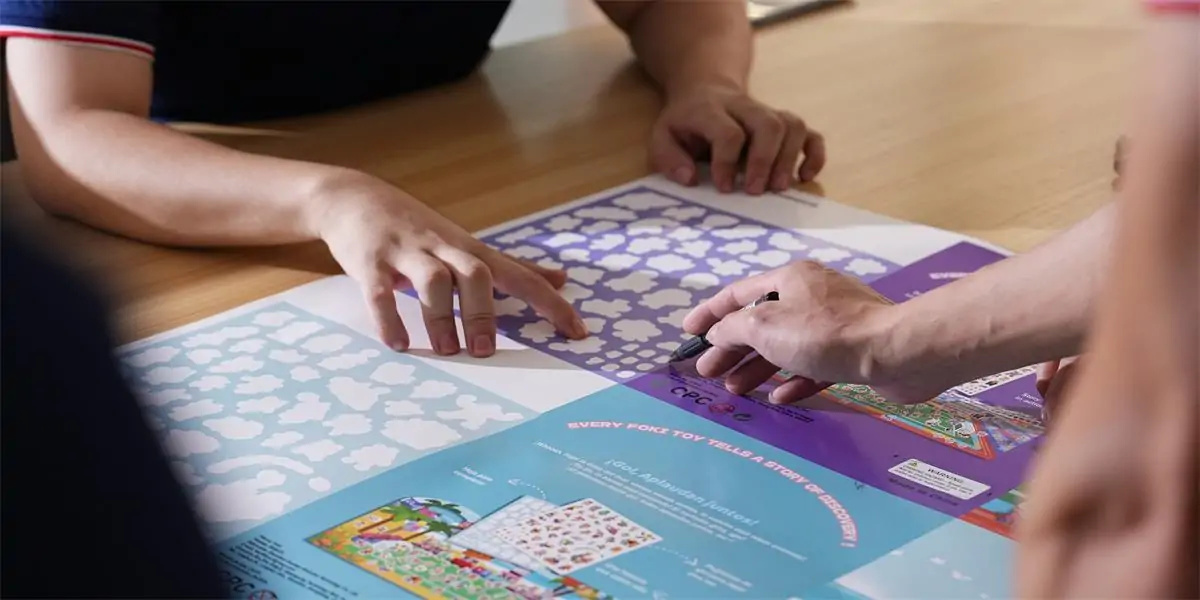
Your artwork is inspected for resolution, bleed, color mode, and cut-line accuracy. Most proofs are returned within 1–2 business days of order submission. A print-ready file moves through in minutes; a file with low-resolution images, incorrect color formats, or incompatible software triggers a revision cycle that pushes everything back.
Multiple rounds of artwork revisions will extend this phase, so ready-to-print vector files help save waiting time. This stage applies to custom die cut stickers, roll sticker labels, waterproof vinyl stickers, and 3D stickers (Bonbon Drop Style Stickers, Foam Puffy Stickers, Dome Stickers, Liquid-filled Shaker Stickers).
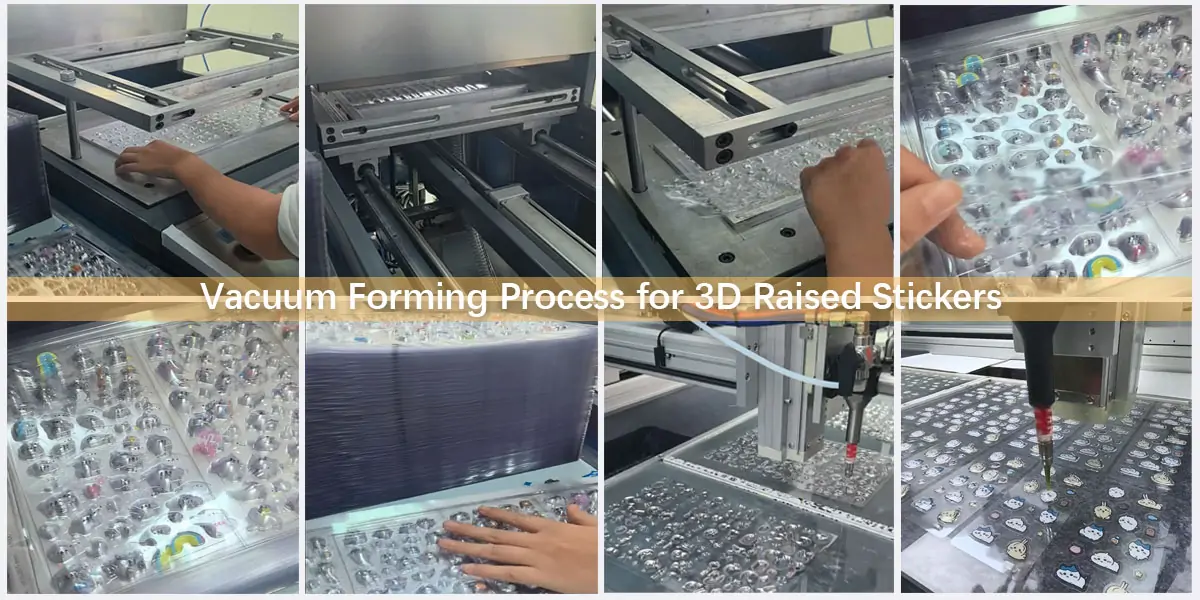
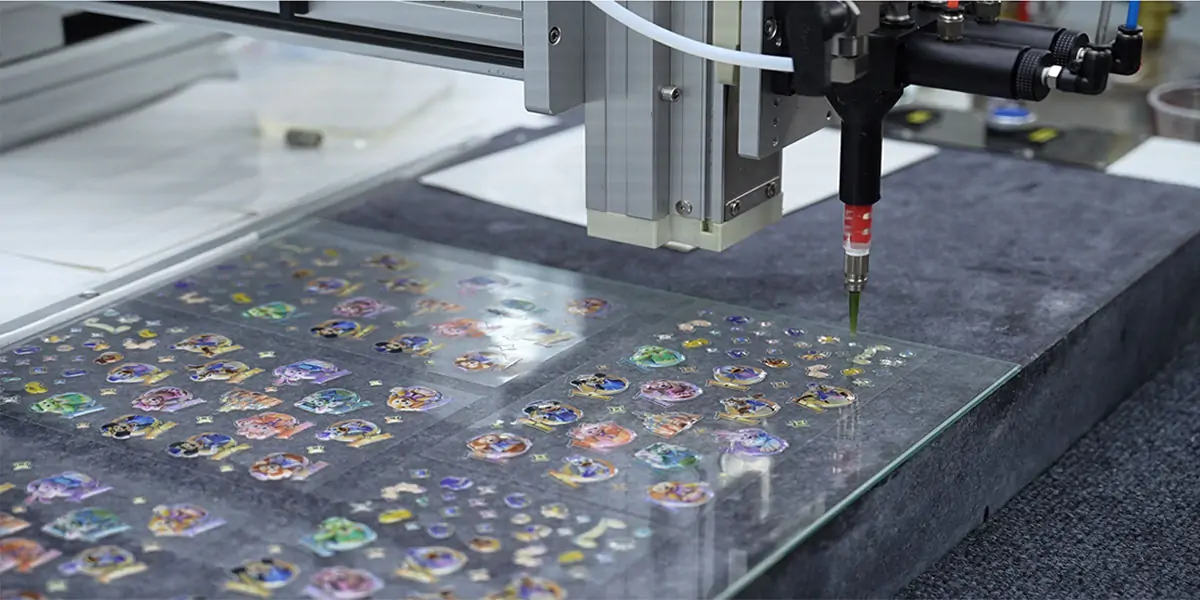
Some custom sticker projects require dedicated tooling before production can begin. For example, custom 3D puffy stickers may require a forming mold to create the raised structure. A separate cutting tool or cutting system is then used to produce the final sticker contour.
These tools serve different purposes: the forming tool creates the three-dimensional structure, while the cutting process defines the final outline.
Tooling development can add time to the initial order, particularly when the design is complex or requires several revisions. Buyers should confirm whether new tooling is required and whether its development is included in the quoted schedule.
For a new custom sticker design, sampling allows the buyer to evaluate the actual product before mass production. Depending on the product, the sample review may cover:
MaStickers publishes a sample production reference of approximately 2-3 business days for its custom sticker services. Actual timing depends on the product and the work required.
Sample approval is especially important for custom silicone stickers, 3D puffy stickers, epoxy dome stickers, and liquid-filled shaker stickers, where the physical structure cannot be evaluated fully from artwork alone.
Before mass production begins, the factory prepares the required materials and completes the printing setup. This stage includes selecting and checking the sticker materials, preparing inks and other production supplies, matching colors to the approved artwork or sample, setting up the printing machine, and adjusting equipment parameters. Test printing may be carried out to check color accuracy, print quality, and alignment before the production run is approved.
Proper material preparation and printing setup help reduce avoidable production errors, minimize material waste, and improve consistency across bulk orders. For custom sticker projects involving different materials, special finishes, or multiple designs, the preparation process may require additional adjustments before full-scale production can begin.
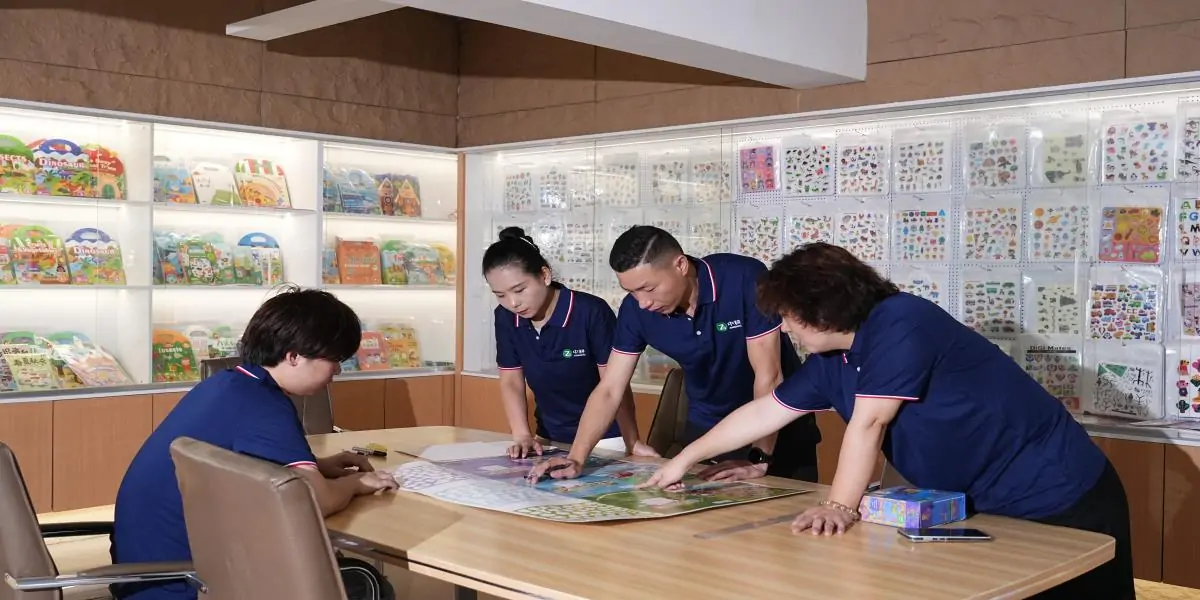
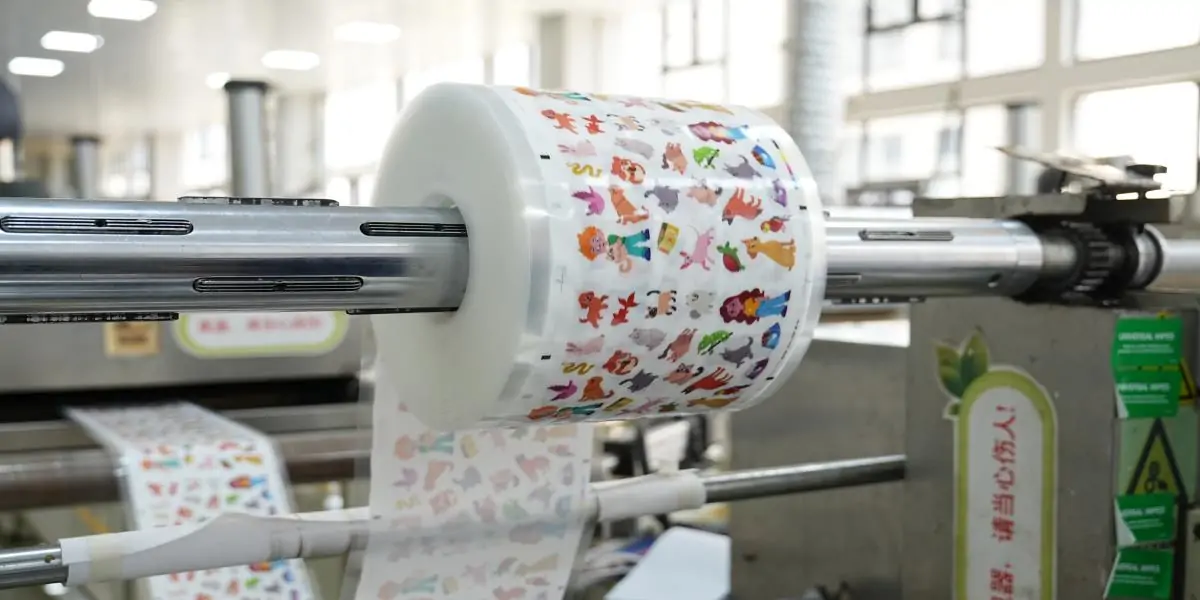
Once the proof is locked, the press runs, ink dries, and the job moves to cutting, waste-stripping, or die-cutting. Depending on the product, manufacturing may include material preparation, printing, forming, lamination, resin processing, filling, sealing, die-cutting, and finishing. Lamination adds scratch and water for outdoor custom vinyl decals.
Not every sticker uses every process. The production route depends on the specific product construction.
The order quantity also matters. Larger orders may require more machine time, material preparation, production scheduling, or packaging work. Multiple designs and customized packaging can add further coordination.
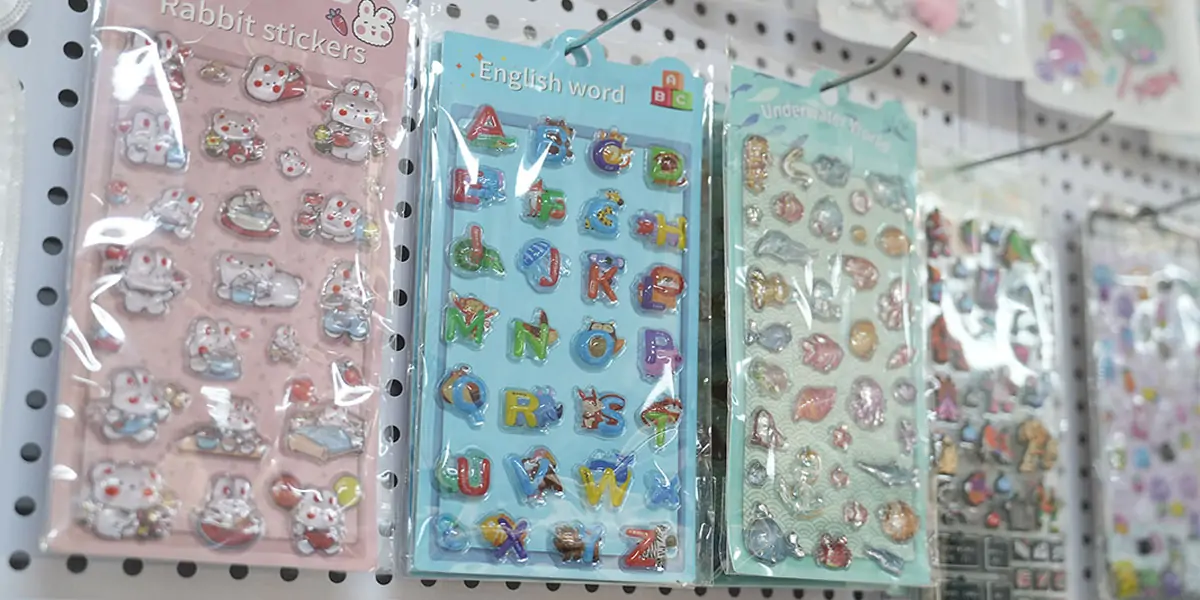
Additional surface effects can also increase production complexity. Depending on the product, brands may choose finishes such as: Glossy 3D surfaces, Matte finishes, Flocked surfaces, Glitter effects, Special textures, Transparent or crystal-like effects. For example, a 3D flocked puffy sticker adds a soft, fuzzy surface treatment to a raised 3D structure. This creates a different appearance and tactile experience from a conventional smooth 3D sticker.
Similarly, 3D shaker stickers require a raised structure, liquid filling and decorative fillers such as glitter or sequins, creating a different manufacturing process from standard puffy stickers. Therefore, specialty effects should be specified before requesting a final quotation.
The adhesive is easy to overlook when comparing sticker quotations. Different applications may require different adhesive characteristics. The suitable adhesive can depend on the intended application surface, sticker construction and expected use conditions.
A quotation should therefore clearly identify the adhesive specification rather than simply stating "self-adhesive." For B2B buyers, it is useful to discuss:
These details can help the manufacturer recommend a suitable construction rather than simply selecting the lowest-cost adhesive.
The final sticker shape can also affect manufacturing complexity. A simple geometric shape is generally easier to process than a highly irregular character outline containing narrow sections, sharp corners or small internal details.
For custom die-cut 3D stickers, the cutting process needs to match the finished 3D structure and artwork accurately. This is particularly important for character stickers and collectible sticker sheets where the contour is part of the visual design.
Our cutting machines follow custom contour shapes. Complex irregular stickers or small intricate details need extra waste stripping time.
After die-cutting, sticker sheets require a waste-stripping process, also known as weeding. The die-cutting process creates the individual sticker outlines, but the excess material surrounding and between the stickers must still be removed. During manual waste stripping, workers carefully peel away the unwanted material while keeping the stickers and the bottom release liner intact. Only the finished stickers and the release liner remain on the sheet.
This step is especially important for custom sticker sheets with intricate shapes or closely spaced designs. Careful waste removal helps maintain clean sticker edges, prevent accidental lifting or damage, and prepare the sheets for final inspection and packaging.
Every batch passes quality control for color matching, adhesive performance and cut accuracy before packaging for export shipment.
Packaging is another cost component that B2B buyers should consider. A bulk shipment packed in standard protective packaging will have different costs from retail-ready products requiring:
For stationery brands, packaging can be developed together with the sticker collection so that the finished product is ready for wholesale or retail distribution. MaStickers' current 3D puffy sticker offering includes customized packaging options as part of its OEM/ODM service.
Shipping sits on top of production and is quoted separately. A fixed delivery date requires adding carrier transit days to the production window, not folding them into a single "turnaround" number.
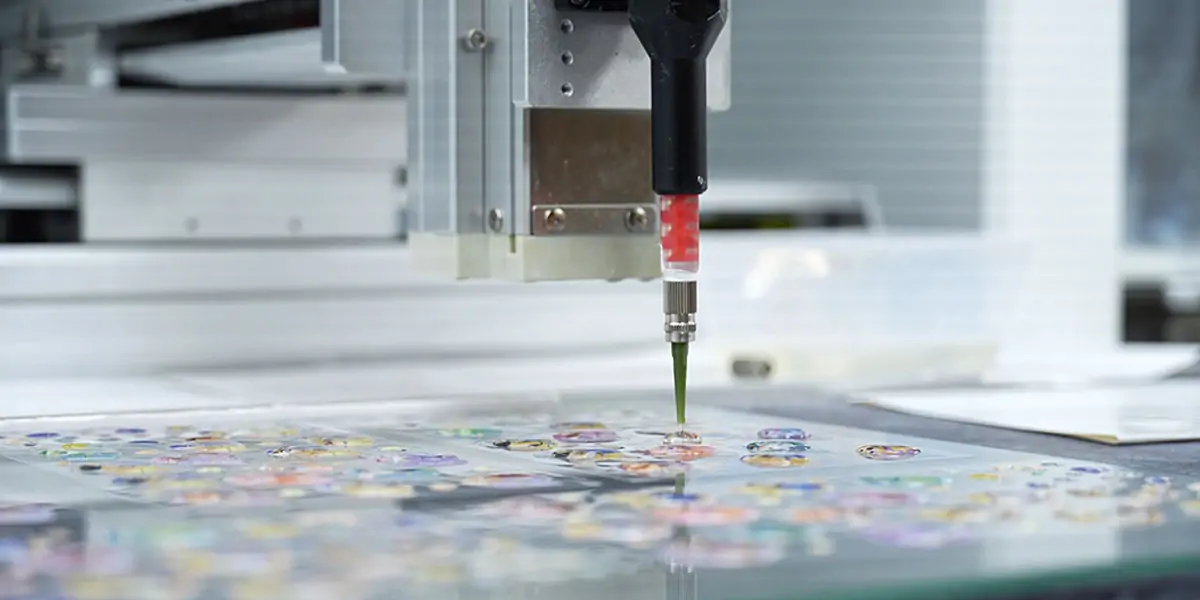
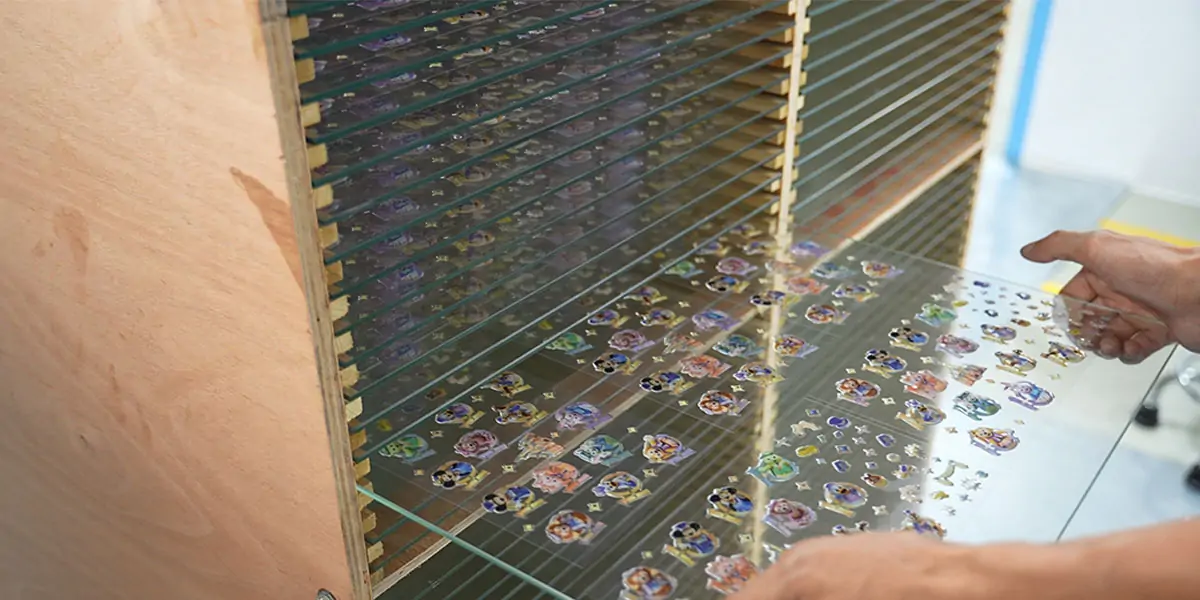
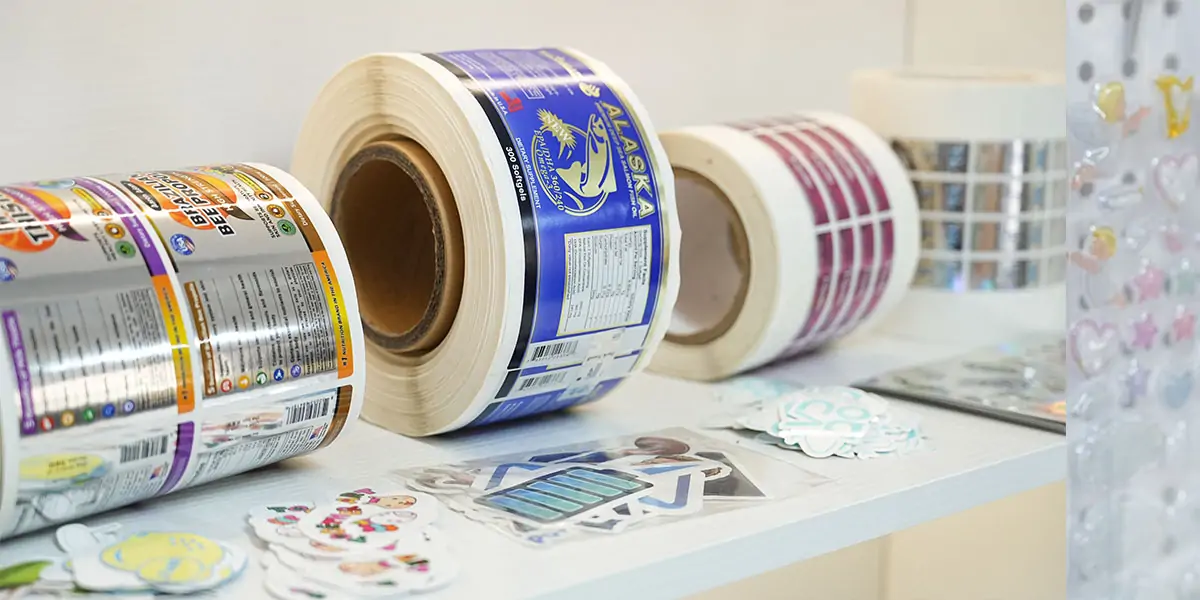
Die-cutting cuts through both the sticker layer and the backing paper, producing a fully separated sticker with a clean edge. Because a custom die must be made before the job runs, die-cut jobs carry an upfront tooling step (especially for irregular or one-off shapes) that adds cost and time before production begins. Standard die-cut stickers from StickerGiant still move in the 2–5 business day band after proof approval, but the die itself is part of why shaped formats sit at the slower end of that range.
Kiss-cutting cuts only through the top sticker layer, leaving the backing sheet intact. It skips the custom-die step for multi-design sheets: several designs can share one sheet and be cut together, which is typically the faster and cheaper route when you are not committed to a single custom outline. The trade-off is that kiss-cutting depends on tighter depth control across the run, which makes it more sensitive to material thickness variation. But for sheet-based products like planner sticker packs or variety sets, it is usually the production-speed winner.
If your order is a single branded sticker meant to stand alone, die-cutting is the functional choice despite the tooling step. If you are producing a sheet of multiple designs or a sample set, kiss-cutting will generally return your order sooner.
Not all custom stickers are created at the same speed. The high-heat long-tail searches in this space ("glow-in-the-dark sticker production time," "backprinted sticker turnaround," "holographic sticker lead time") exist because specialty formats break the standard 2–5 business day expectation.
Holographic films, metallic foils, and biodegradable specialty stocks can also introduce specialized coating or curing steps that extend the production window beyond the standard lane.
Several factors can influence the time required for custom sticker manufacturing.
Artwork readiness. Incomplete artwork, unclear dimensions, missing cut lines, or repeated design changes can delay the start of production.
Tooling requirements. New forming molds or cutting dies may add development time. The impact depends on the product structure and the complexity of the design.
Material availability. Specialty materials, custom colors, and unusual finishes may require additional sourcing or preparation.
Order quantity. A larger order may require more production time, particularly when the project includes several designs or complex finishing processes.
Sample revisions. If the first sample does not meet the agreed specifications, additional adjustments and sample approval may be necessary.
Packaging requirements. Individual packaging, customized backing paper, barcodes, inserts, and retail-ready sets may add work beyond basic sticker production.
Quality requirements. Additional testing, inspection, or documentation may need to be included in the production plan.
For a reliable estimate, buyers should provide the complete requirements rather than requesting a lead time based on quantity alone.
Although some manufacturing steps cannot be eliminated, buyers can help prevent unnecessary delays.
Prepare Complete Artwork. Provide the final design, dimensions, colors, and required cutting contours. If you have technical drawings or reference samples, share them with the manufacturer.
Confirm the Product Structure Early. For 3D, silicone, epoxy dome, and shaker stickers, discuss the required construction before approving the production plan. This helps the factory determine whether tooling, special materials, or additional sample validation will be needed.
Consolidate Feedback. When reviewing a sample, collect comments from all relevant stakeholders before submitting revisions. This reduces repeated approval cycles.
Approve Samples Promptly. Production cannot follow the intended schedule if sample approval is delayed. Confirm who is responsible for approving the sample and how feedback will be provided.
Finalize Packaging Requirements in Advance. Confirm packaging format, labels, barcodes, backing paper, and carton requirements before mass production begins.
Share Your Required Delivery Date. Tell the manufacturer when the products need to arrive, not just when you want production to start.
This allows the factory and logistics provider to work backward from the target date and determine a suitable production and shipping plan.
If your stickers are intended for a product launch, seasonal campaign, retail promotion, trade show, or holiday collection, start planning before the required delivery date.
A practical approach is to work backward through the following stages:
Confirm the required arrival date and destination.
Allow time for international shipping and customs procedures where applicable.
Confirm the factory's production lead time.
Allow for sample development and approval if needed.
Finalize artwork, materials, tooling, and packaging.
Keep contingency time for revisions or unexpected delays.
The exact buffer depends on the product, destination, and shipping method. Complex 3D stickers or liquid-filled products generally need more careful planning than repeat orders of an already approved design.
For repeat orders with confirmed artwork and established production specifications, some development steps may be reduced. However, material availability, factory scheduling, and quality requirements can still affect the delivery date.
MaStickers provides customized sticker manufacturing solutions for brands, wholesalers, stationery companies, toy businesses, and other B2B buyers.
Our product range includes:
Our published OEM/ODM workflow covers consultation, prototyping and sampling, mass production, quality control, and packaging. Manufacturing capabilities include mold making, material sourcing, printing, die-cutting, and packaging. By discussing the product structure, artwork, quantity, and delivery requirements at the beginning of a project, buyers can receive a more realistic production estimate and prepare for the full order cycle.
If you are looking for a custom sticker manufacturer in China for wholesale orders, MaStickers (Xinyin) can review your requirements and help determine the appropriate production process and schedule.
So, how long does custom sticker production take? The answer depends on the product and the order requirements. From approximately 3–7 business days for sampling to 10–15 business days for general OEM bulk production after artwork approval, with some specialty products and other order workflows requiring different schedules.
The most important steps are to finalize the artwork, confirm the manufacturing process, approve samples where needed, and agree on the production and shipping timeline before placing the order.
Looking for a reliable OEM/ODM sticker manufacturer for your next bulk order?
Contact MaStickers with your artwork, sticker type, quantity, packaging requirements, and target delivery date. Our team can review your project and help establish a suitable production plan for your custom stickers.
 You May Also Like

No 410, Laoyi Village, Niuhu Community, Guanlan Street, Longhua District, Shenzhen City

MaStickers
Custom Stickers Manufacturer

No 410, Laoyi Village, Niuhu Community, Guanlan Street, Longhua District, Shenzhen City
Product
Get in touch and find out how we canmake your next shipment easier.


Copyright © 2026 Shenzhen Xinyin Environment Rubber Product Co., Ltd


 Home