Custom Stickers Factory for Your Brand – Guides, Materials & Customization Hacks

Custom Stickers Factory for Your Brand – Guides, Materials & Customization Hacks
 Xinyin
 Sep 19,2026

The sticker industry is moving beyond flat printed designs. In 2026, 3D, puffy, glossy, tactile, and collectible stickers are attracting growing attention, particularly in markets where stickers are used for collecting, decorating, trading, and character merchandising. Many B2B buyers actively searching for custom 3D bubble stickers, puffy foam stickers, 3D domed epoxy stickers and raised silicone logo stickers to add physical texture to packaging, merchandise and consumer goods.
For brands and wholesale buyers, this shift creates new opportunities to develop more distinctive custom stickers rather than relying only on traditional flat sticker formats. A raised, touchable sticker creates instant sensory engagement during unboxing, boosts perceived product value and encourages social media sharing.
Marketing and packaging studies confirm tactile elements extend consumer dwell time with products and support premium price positioning, a major reason custom 3D puffy stickers have become one of the fastest-growing sticker categories this year.
The sticker industry has spent decades optimizing for print quality, color accuracy, adhesion, durability. A sticker is no longer judged only by its printed artwork.
The physical experience of a product can also influence how consumers interact with it. Raised surfaces, embossed details, glossy finishes, soft textures, and dimensional effects can make stickers more visually noticeable and more interesting to touch. For decorative stickers, these techniques can create additional product differentiation without changing the basic purpose of the sticker.
This direction is also visible in the broader label and packaging industry. Recent industry coverage highlights growing interest in tactile and visual embellishments such as embossing, textured varnishes, high-build effects, foiling, and specialty coatings.
A 3D puffy sticker delivers a tactile payoff at a price point that most consumers can repeat without hesitation. That combination of low cost and high sensory return is driving the category's expansion.
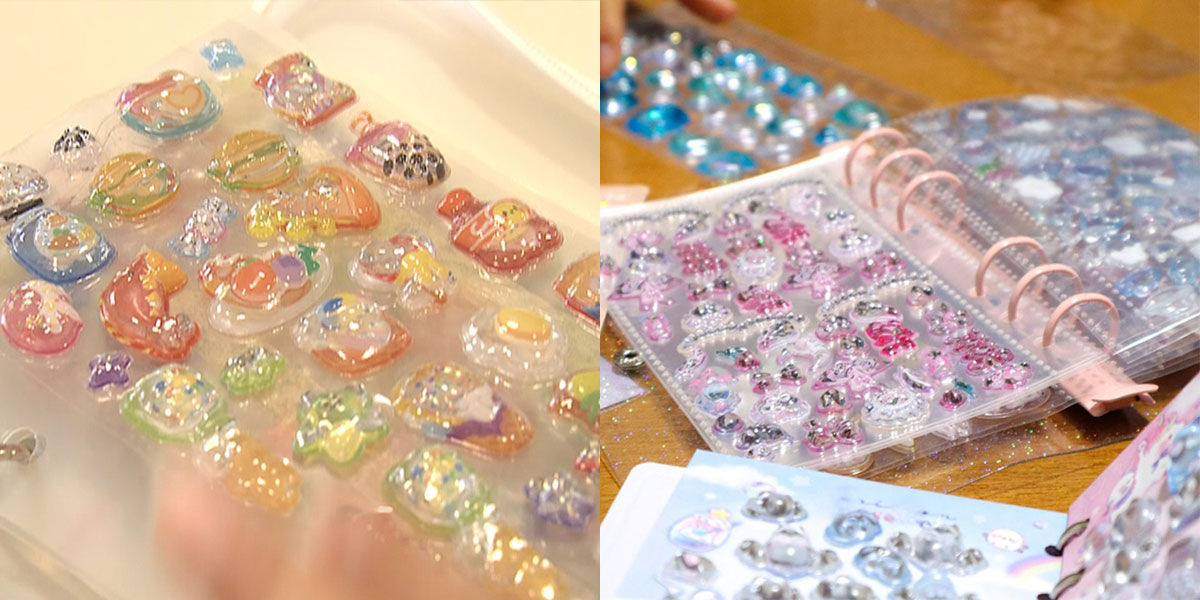
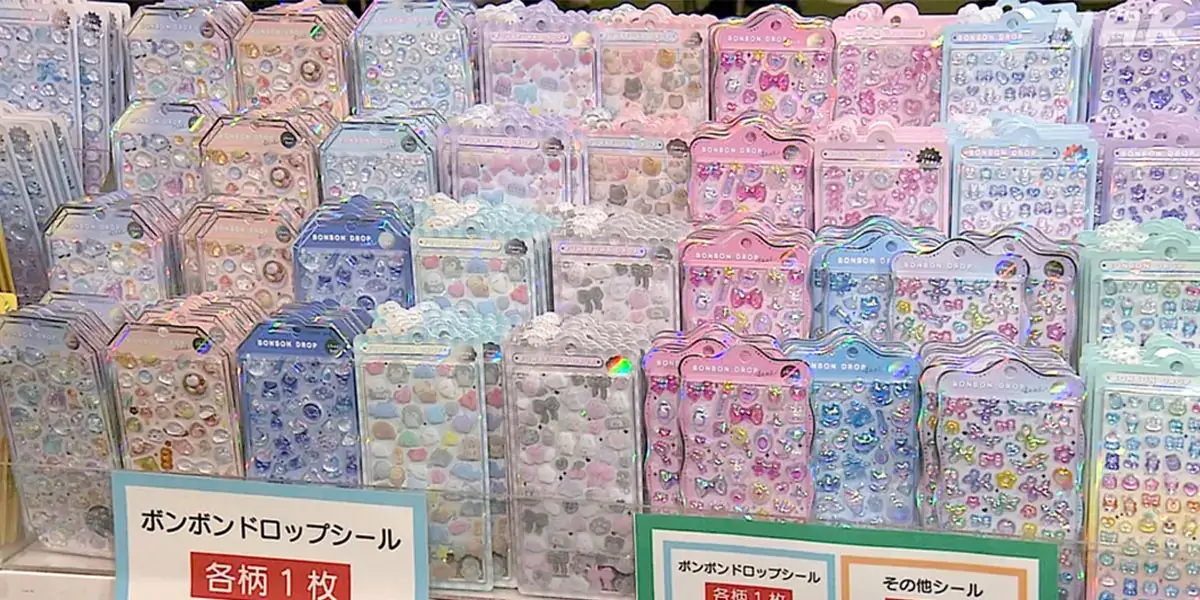
No market illustrates the trend more clearly than Japan. The catalyst was Bonbon Drop stickers, released by Osaka-based stationery maker Q-Lia. The product features a plump, glossy, resin-like surface that invites touch, essentially a tactile sticker designed to be handled, not just displayed.
Cumulative shipments surged from 4 million sheets in April 2025 to 34 million sheets by the end of June 2026, according to Kyodo News reporting. A survey by Nifty found that 77.5% of elementary school students and 47.8% of junior high school students described themselves as "hooked" on collecting stickers, with 94.9% of respondents naming drop stickers as their preferred type.
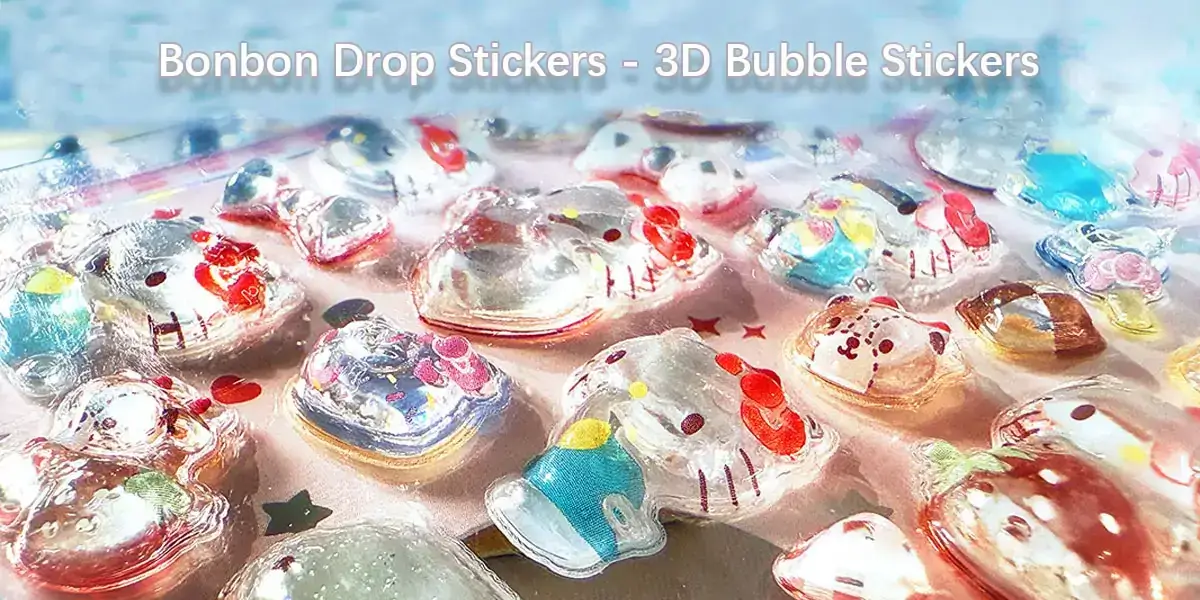
This trend is closely associated with Bonbon Drop Stickers, which have helped drive renewed interest in collectible stickers in Japan. The Japan Times reported that their raised, glossy texture and detailed finish have contributed to a broader sticker boom, with products frequently selling out in stores and online.
For sticker brands, this shows how adding depth, surface effects, and tactile elements can turn a simple printed sticker into a more distinctive product.
The demand has overwhelmed supply chains. Retailers introduced lottery systems for purchase access. Some stores limited buyers to a handful of sheets. Resale prices for scarce designs reached six times the official retail price on secondary markets.
While Bonbon Drop stickers initially targeted elementary school students, the actual consumer base has proven to be much broader.
A development manager at Q-Lia noted that around the spring of 2025, the fan base expanded to include adult women as social media users began posting photos of smartphone cases and cosmetic containers adorned with these stickers. Women in their twenties and thirties are now freely purchasing products that evoke a sense of nostalgia.
In July 2026, the Japanese cat café chain Cat Cafe MOCHA launched its own line of 3D stickers, explicitly positioning them as a form of art for personalizing everyday items such as smartphone cases, planners, and stationery; this trend reflects a desire for self-expression and unique, customized styles.
For businesses considering using custom 3D stickers for branding, these stickers serve as a tactile brand touchpoint. When applied to laptop lids, water bottles, or notebook covers, they generate continuous brand exposure with a low barrier to entry.
Another important development is the growing connection between stickers and collecting. Japan's current sticker boom includes children, young adults, and parents, with consumers collecting, exchanging, and organizing stickers in sticker books. Japan Today reports that the current trend is partly connected to nostalgia, character culture, and the tactile nature of physical stickers.
This creates opportunities for brands to develop:
For OEM buyers, the focus is therefore shifting from producing one attractive sticker to developing a complete sticker collection with consistent characters, colors, shapes, and finishes.
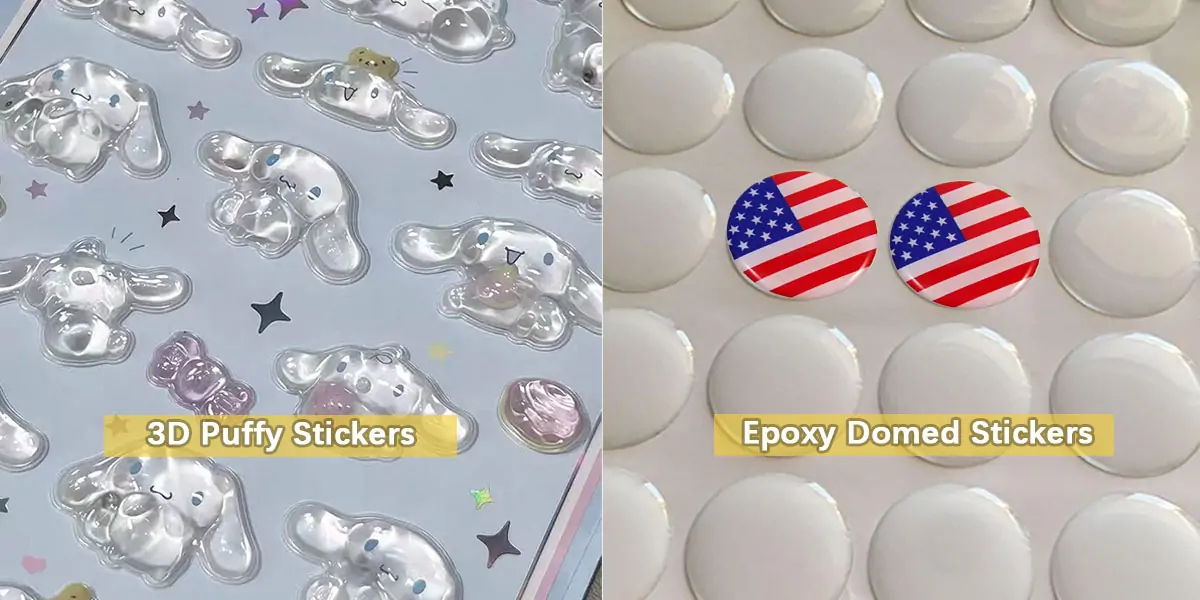
The current trend does not mean that traditional flat stickers are disappearing. Instead, it creates more product choices for brands.
A basic printed sticker can remain suitable for applications where cost, simple graphics, or large-volume production are the main priorities. For products positioned around character appeal, collectibility, premium presentation, or tactile interaction, dimensional effects can provide additional differentiation.
Flat Stickers. Suitable for simple graphics, promotional applications, packaging, and cost-sensitive projects.
3D Puffy Stickers. Combine a raised structure with a dimensional finish to create a more pronounced 3D appearance.
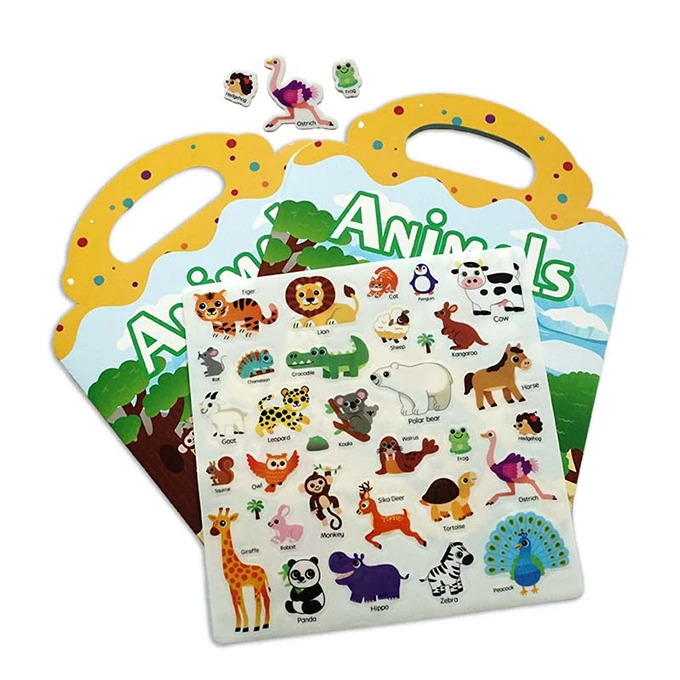
EVA/PU Puffy Foam Stickers. Lightweight puffy foam stickers deliver a soft, bubbly texture. EVA foam puffy stickers are flexible and safe for children's lines, and our factory offers non-toxic, low-VOC material options for toy and juvenile product buyers. Unlike rigid epoxy domes, foam puffy stickers compress slightly to maintain adhesion on curved surfaces.
Epoxy dome stickers. Use a clear, glossy resin layer to create a dimensional appearance and enhance the printed artwork.
Custom Silicone Stickers. Custom silicone stickers are emerging as a high-growth premium segment. Silicone decals are soft, flexible, reusable and waterproof. They fit well for reusable packaging, apparel heat-transfer logos and silicone sticker book projects. Critically, silicone sticker constructions support PFAS-free adhesive requirements, which becomes a major advantage for European importers navigating EU packaging regulations.
Special-effect Stickers. Can incorporate finishes such as gloss, texture, metallic effects, or other visual details depending on the application.
For brands sourcing custom puffy stickers wholesale, that extended dwell time is the real value. A flat sticker may be applied once and forgotten. A tactile puffy sticker invites the user to touch it, reposition it, and show it to others. It turns a passive branded item into an active one.
Wholesale brands, independent DTC stores and POD sellers no longer only place massive bulk sticker orders. In 2026, buyers prioritize flexible MOQ custom tactile stickers, fast digital proofs and quick turn sampling cycles. Digital printing and improved die-cutting technology reduce setup costs, so small-batch custom puffy stickers and 3D domed labels are commercially viable even for startup brands and limited-edition product runs.
Before starting an OEM sticker project, buyers should define several key specifications:
Sticker structure. Decide whether the product should be flat, embossed, domed, puffy, or another dimensional construction.
Surface finish. Glossy, matte, textured, and other finishes can create very different visual and tactile effects.
Material. The substrate and dimensional materials should match the intended application, appearance, flexibility, and durability requirements.
Artwork and 3D details. Complex artwork may require careful consideration of raised areas, fine details, color separation, and production tolerances.
Adhesive performance. The adhesive should be selected according to the target surface and intended use.
Production consistency. For bulk custom stickers, maintaining consistent dimensions, color, shape, surface finish, and adhesion across production batches is critical.
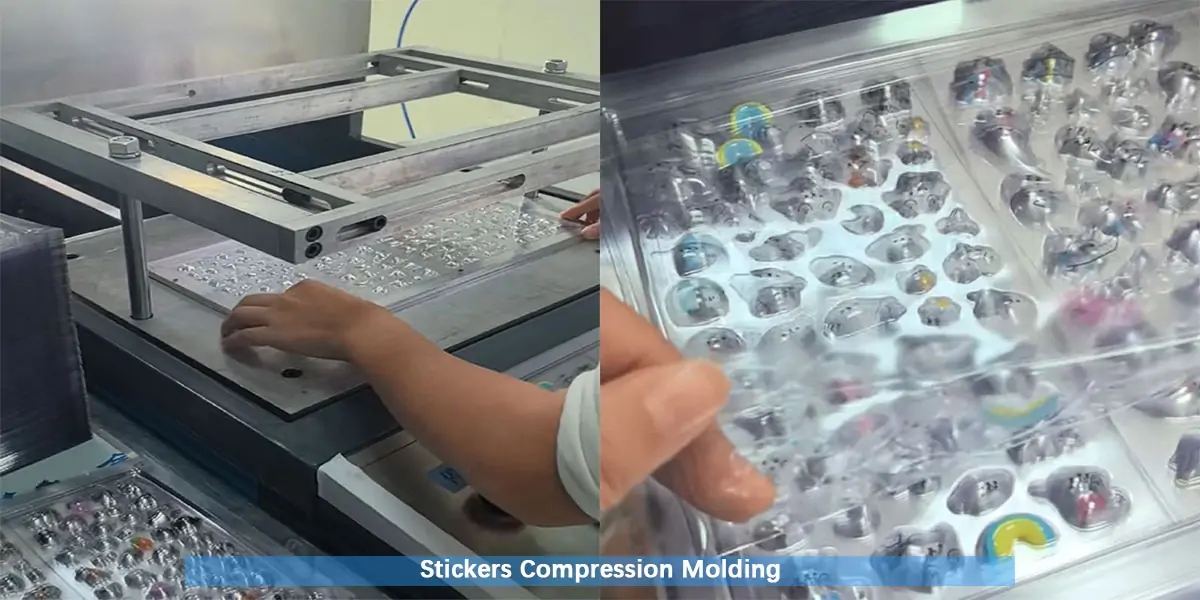
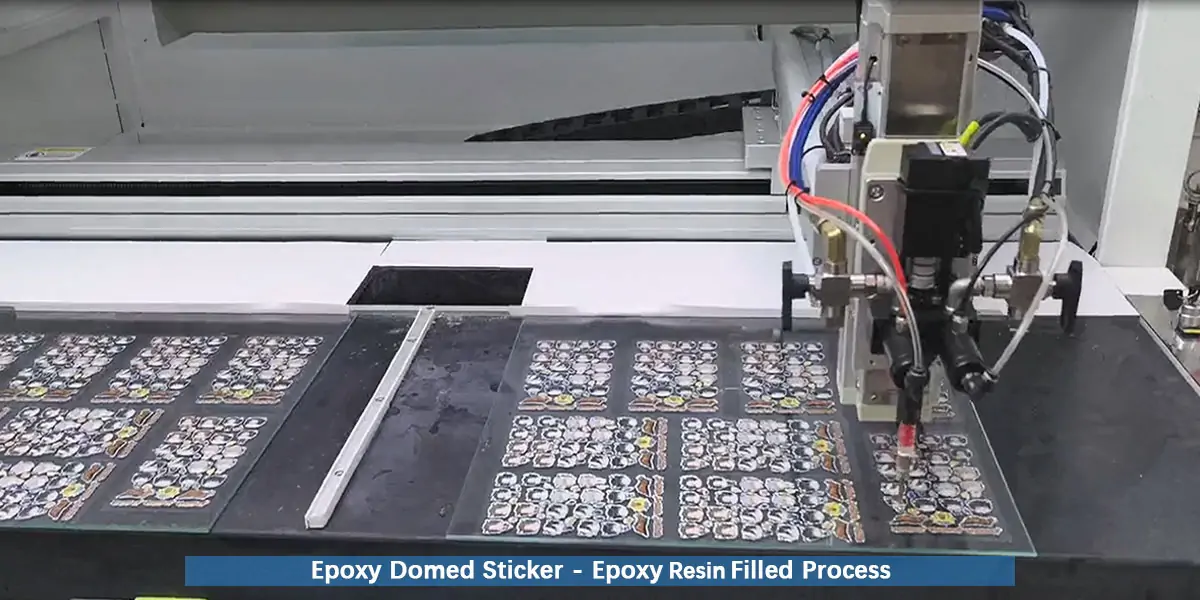
The 2026 sticker trend suggests that product differentiation is moving toward dimension, texture, visual effects, and collectibility.
Japan's current sticker boom provides a useful example. The popularity of puffy and glossy drop stickers, combined with collecting and trading behavior, demonstrates how physical product characteristics can become part of the consumer experience. At the same time, developments in the wider label and packaging sector show continued interest in tactile and specialty finishes.
For brands planning new sticker collections, this creates an opportunity to move beyond conventional flat designs and explore 3D puffy stickers, foam stickers, epoxy dome stickers, tactile stickers, and collectible sticker formats.
Developing a successful dimensional sticker requires coordination between artwork, materials, tooling, forming, printing, finishing, adhesive selection, and quality control.
MaStickers (Xinyin) provides custom OEM sticker manufacturing for brands, wholesalers, and product developers, with experience in dimensional and specialty sticker production.
From 3D puffy stickers and epoxy dome stickers to silicone, foam, and other custom sticker formats, manufacturers and wholesale buyers can develop products according to their required designs, materials, dimensions, and packaging specifications.
If you are planning a new custom sticker collection or bulk OEM sticker project, choosing the right construction at the product-development stage can help turn a standard sticker concept into a more distinctive physical product.
 You May Also Like
No 410, Laoyi Village, Niuhu Community, Guanlan Street, Longhua District, Shenzhen City

MaStickers
Custom Stickers Manufacturer

No 410, Laoyi Village, Niuhu Community, Guanlan Street, Longhua District, Shenzhen City
Product
Get in touch and find out how we canmake your next shipment easier.


Copyright © 2026 Shenzhen Xinyin Environment Rubber Product Co., Ltd



 Home
Home