Custom Stickers Factory for Your Brand – Guides, Materials & Customization Hacks

Custom Stickers Factory for Your Brand – Guides, Materials & Customization Hacks
 Xinyin
 Jul 09,2026

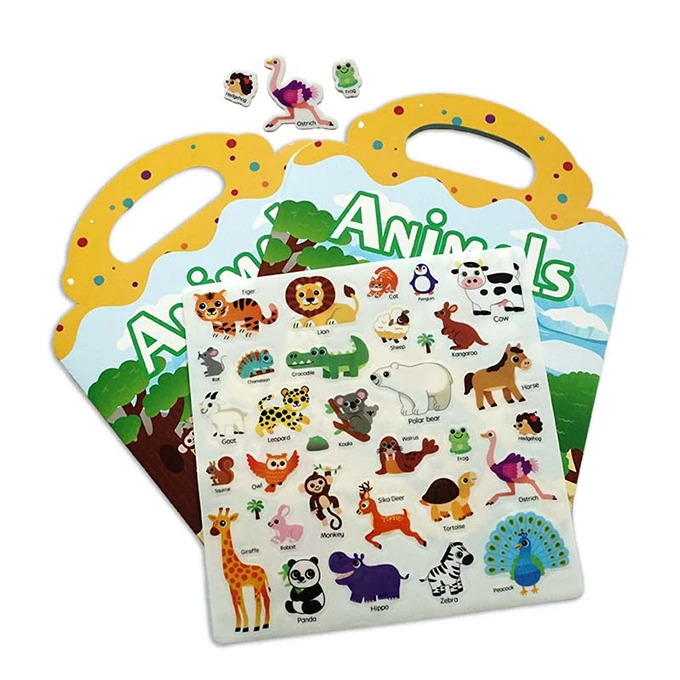
Educational stickers have become a staple tool for early childhood education, blending fun interactive gameplay with cognitive skill training for toddlers and preschoolers. Among all kid's sticker products, silicone sticker items stand out for their superior safety, durability and tactile experience, becoming the top choice for global parents, kindergartens and educational institutions.
When it comes to educational stickers for kids, safety is never an afterthought, it's the foundation. Whether you're a retailer, educator, or brand owner looking to launch your own line of children's sticker products, understanding the regulatory landscape, choosing the right materials, and partnering with a reliable manufacturer are essential steps to success.
As a professional custom silicone jelly stickers manufacturer, MaStickers delivers compliant, high-quality and customizable educational silicone sticker solutions, including exclusive custom silicone jelly stickers or silicone first stickers book tailored for kids' early learning scenarios.
In this guide, we'll walk you through the key safety standards governing children's stickers, explain why material selection matters, and share what to look for when working with a custom silicone jelly stickers manufacturer for your OEM projects.
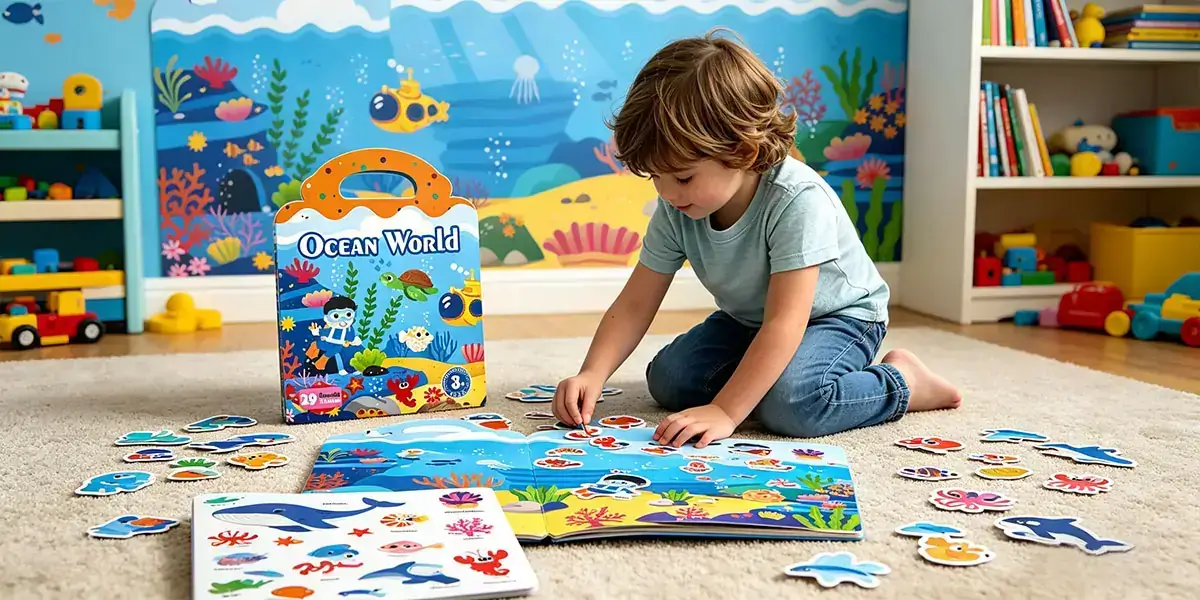
Safety is the primary benchmark for all children's educational toy products, and kids' silicone educational stickers must comply with unified global toy safety regulations to avoid chemical hazards and physical injury risks. Children's products are subject to some of the strictest safety regulations in the world. For stickers intended for kids, compliance isn't optional. It's mandatory.
Reputable custom stickers manufacturers adhere to strict global standards:
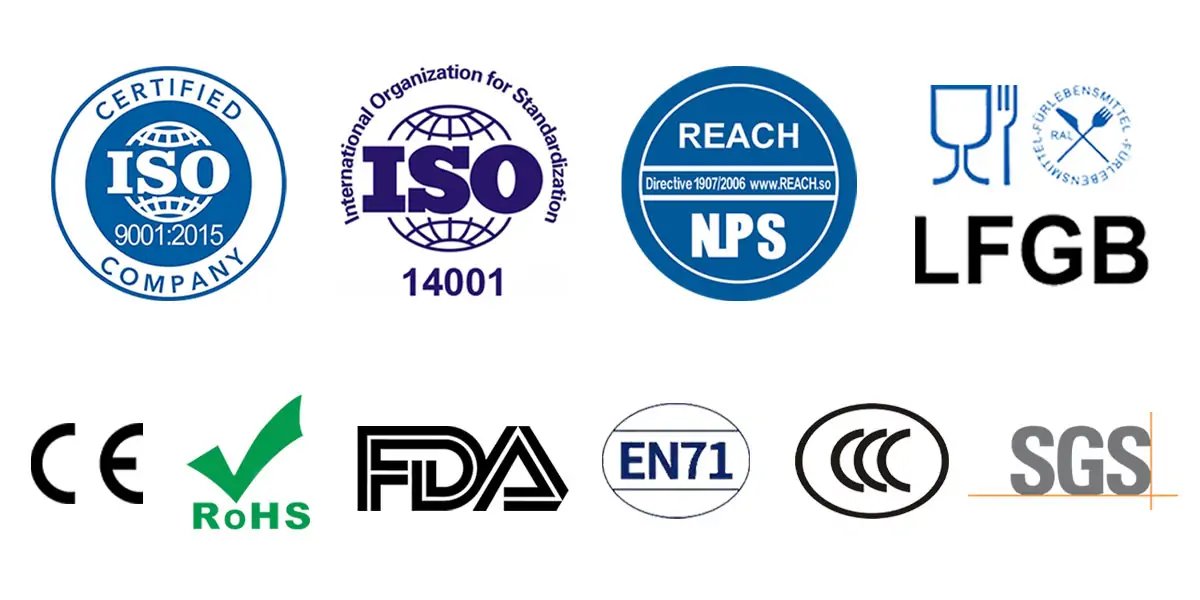
ASTM F963 (U.S.): Tests for sharp edges, small parts, and toxic materials.
EN 71 (EU): Ensures compliance with chemical safety, flammability, and physical hazard requirements.
CPSIA (U.S.): Mandates lead and phthalate limits to protect children from harmful substances.
CE Mark (EU): Certifies products meet EU health, safety, and environmental standards.
For products sold in the European Union, the EN71 series of standards is the benchmark for toy safety. EN71 is composed of multiple parts, with the most relevant for stickers being:
EN71-1: Mechanical and physical properties. This covers potential hazards like small parts that could pose a choking risk, sharp edges, and other physical safety concerns. A new updated version, EN 71-1:2026, was published on January 28, 2026, introducing refined requirements for toys intended for children under 36 months.
EN71-2: Flammability. Ensures that toy materials do not pose an unacceptable fire risk.
EN71-3: Migration of certain elements. This is particularly critical for stickers. It specifies test methods and limits for the migration of 19 elements (including lead, cadmium, mercury, arsenic, and chromium) from toy materials. Since young children frequently put objects in their mouths, stickers must pass these migration tests to ensure that no harmful substances can be ingested.
Beyond EN71, the European Union has published Regulation (EU) 2025/2509 on December 12, 2025, which will repeal the old Toy Safety Directive 2009/48/EC and become applicable from August 1, 2030. This new regulation introduces stricter chemical restrictions, including bans on certain endocrine disruptors and expanded limits on bisphenols and PFAS. It also introduces the Digital Product Passport (DPP) to replace the traditional Declaration of Conformity, enhancing transparency and traceability.
For the United States, the mandatory toy safety standard is ASTM F963, as mandated by the Consumer Product Safety Improvement Act (CPSIA).
ASTM F963 covers a wide range of safety requirements, including:
Physical and mechanical properties (Section 4 of the standard)
Flammability (Section 4.2)
Chemical substance limits, including heavy metals and phthalates
The CPSIA itself is the overarching federal law governing all children's products (for children under 12). It places strict limits on lead content and phthalates, and requires that all children's products be tested by a CPSC-accredited laboratory and carry a Children's Product Certificate (CPC).
Effective March 12, 2026, the CPSC has also issued new rules for toys containing water-absorbing materials. A reminder that safety regulations continue to evolve.
When sourcing or manufacturing educational stickers for kids, you must ensure that your products comply with both the relevant regional standards (EN71 for EU, ASTM F963 + CPSIA for US) and that your manufacturer can provide verifiable test reports from accredited third-party labs such as SGS or Intertek.
Not all sticker materials are created equal. Especially when it comes to children's safety. Traditional paper stickers, PVC stickers, or those using solvent-based adhesives can contain phthalates, heavy metals, or other harmful substances. This is where silicone stickers stand out. When it comes to durability, safety, and interactivity, silicone sticker materials are unmatched for educational use.
High-quality silicone sticker products are made from food-grade silicone. A material that is:
Non-toxic and BPA-free. Safe even if a child puts it in their mouth.
Odorless and tasteless. No chemical smells.
Heat-resistant. Withstands temperatures from -40°C to 230°C.
Durable and tear-resistant. Built to last through repeated use.
Easy to clean. Perfect for teething toddlers or messy play.
Soft & Flexible. Gentle on little hands and designed to withstand repeated sticking and peeling.
Vibrant & Engaging. Silicone can be molded into 3D shapes, letters, or numbers, making learning tactile and fun.
Eco-Friendly. Reusable and recyclable, aligning with sustainable manufacturing practices.
Compare this to traditional PVC stickers, which may contain harmful phthalates or degrade quickly with use. Silicone is the clear choice for long-lasting, safe educational tools.
In China, food-contact silicone is now governed by GB 4806.16-2025, a dedicated national food safety standard for silicone rubber materials, which was released on September 25, 2025. This standard introduces stricter requirements, including a new "volatile substances" indicator to further control the release of small-molecule organics during long-term use.
For global markets, look for silicone materials that are FDA-approved (US) and LFGB-certified (EU). They are the gold standards for food-contact safety.
Beyond safety, silicone offers unique benefits for educational stickers or silicone sticker books:
Reusable and washable. Silicone stickers can be peeled off, reapplied, and even rinsed with water, making them perfect for repeat play.
No residue. They stick to smooth surfaces without leaving marks.
3D tactile experience. The puffy, textured surface stimulates sensory development in young children.
Waterproof and durable. Ideal for little hands that aren't always gentle.
These qualities make silicone the material of choice for products like the silicone sticker or silicone first stickers book. The popular educational toy that helps children learn letters, numbers, animals, and more through hands-on, screen-free play.
Material quality directly determines the safety, durability and application effect of kids' educational stickers. High-quality silicone sticker for early education must select food-grade liquid silicone as the core raw material, which features tear resistance, wear resistance, high temperature resistance and soft tactile texture. This material will not deform or break after repeated kneading, pasting and cleaning, solving the pain points of easy damage and short service life of traditional paper educational stickers .
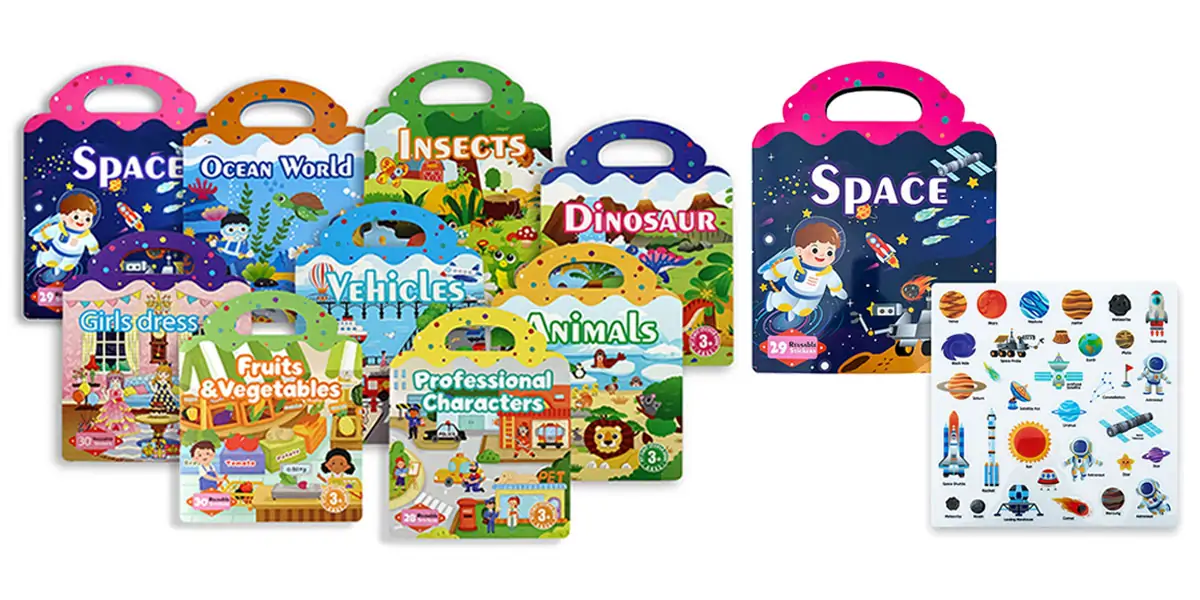
Bringing a custom sticker product to market requires more than just a great design. You need a manufacturing partner who understands safety, quality, and scalability.
Before placing any order, confirm that your manufacturer holds:
ISO 9001 (Quality Management System)
BSCI or similar social compliance audits
CPC (Children's Product Certificate) for US-bound products
Third-party test reports from accredited labs like SGS or Intertek
Ask for specific test reports showing compliance with EN71-1, -2, -3 and ASTM F963 for the exact materials and products you plan to order.
A reliable custom silicone jelly stickers manufacturer should demonstrate:
In-house core processes. Screen printing, 3D dome application, mold making, and quality control should be controlled internally, not outsourced.
Strict quality control. Look for a four-stage inspection process: incoming material inspection (IQC), in-process control (IPQC), final inspection, and packing verification.
First-piece inspection. Before mass production begins, samples should be tested for cross-cutting, wear resistance, and temperature tolerance.
A typical OEM silicone sticker production process includes:
Design & mold creation. Based on your approved artwork.
Mass production. Using compression molding or liquid silicone injection.
Quality control. Inspecting for consistency, color accuracy, edge finishing, and adhesion.
Finishing. Trimming, polishing, and packaging.
Ensure your manufacturer uses 100% food-grade silicone that is:
Free from BPA, lead, phthalates, latex, and PVC
Sourced from traceable, certified suppliers
Tested for volatile substances and migration limits
For US markets, your manufacturer should assist you in obtaining:
CPSC-accepted lab test reports
Children's Product Certificate (CPC)
ASTM F963 compliance documentation
For EU markets, you'll need:
EN71 test reports (Parts 1, 2, and 3)
CE marking (indicating compliance with all relevant EU directives)
Declaration of Conformity (or, eventually, the Digital Product Passport)
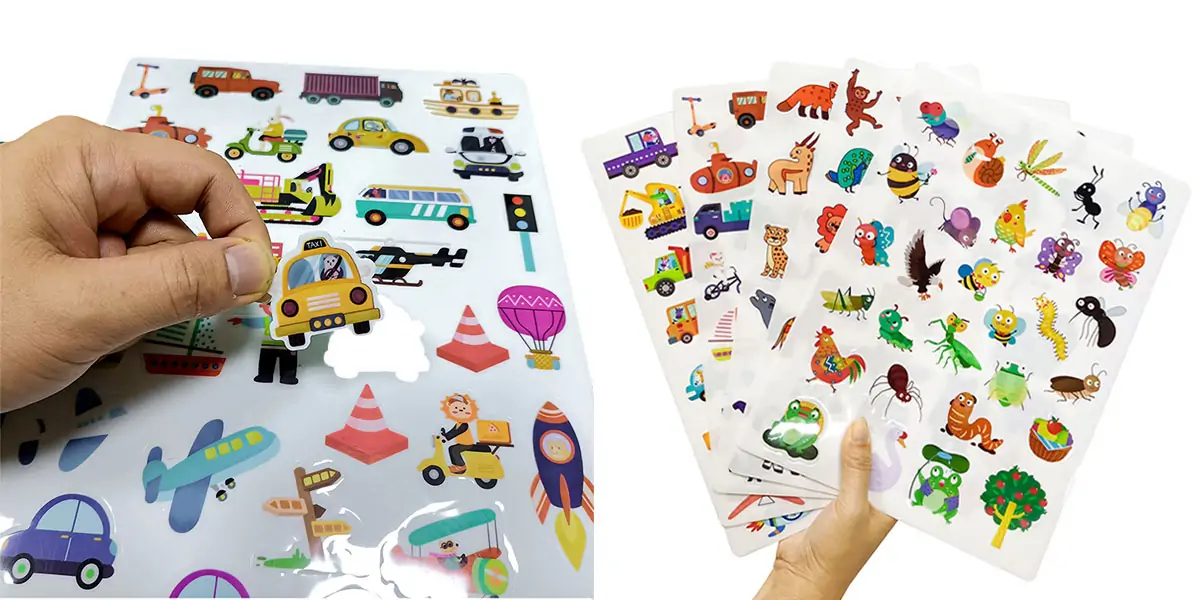
Request Certifications: Always ask manufacturers for safety test reports and compliance documentation.
Prioritize Durability: Choose materials like silicone that can withstand daily use in classrooms or homes.
Collaborate with Experts: Partner with a factory that understands educational pedagogy to ensure your stickers align with learning goals.
Whether you're launching a new line of custom silicone first stickers book or need bulk educational silicone stickers for your brand, MaStickers has the expertise to deliver safe, engaging, and compliant products.
Personalized customization has become the mainstream demand of the global children's educational sticker market. Focusing on the R&D and production of children's educational silicone stickers for years, MaStickers is a professional custom silicone jelly stickers manufacturer integrating design, customization and mass production.
MaStickers provides full-process OEM/ODM manufacturing services for global brands, distributors and educational institutions, covering customized silicone sticker products of various styles, themes and specifications. Relying on professional production lines and strict quality control systems, we support exclusive customization of educational themes (alphabet, number, animal, color cognition), sizes, textures, colors and packaging.
Our core customized products, the custom silicone jelly stickers, making early education gameplay more vivid and interesting. For the customized custom silicone first stickers book for early education, we optimize edge rounding treatment to eliminate sharp edges, fully adapting to toddlers' daily playful use and oral exploration habits.
The tailor-madecustom silicone first stickers book can be customized in whole-book theme classification, page layout design and sticker matching according to customer brand positioning and age group orientation, helping customers create differentiated early education sticker products. All OEM products follow unified safety production standards, with complete certification documents, supporting global cross-border sales and supermarket shelf entry.
Whether you're looking to develop a custom silicone first stickers book for early childhood learning, or you need a reliable custom silicone jelly stickers manufacturer for your next OEM project, we're here to bring your vision to life.
Ready to start your project? Contact MaStickers today to discuss your custom silicone sticker needs.

 You May Also Like
No 410, Laoyi Village, Niuhu Community, Guanlan Street, Longhua District, Shenzhen City

MaStickers
Custom Stickers Manufacturer

No 410, Laoyi Village, Niuhu Community, Guanlan Street, Longhua District, Shenzhen City
Product
Get in touch and find out how we canmake your next shipment easier.


Copyright © 2026 Shenzhen Xinyin Environment Rubber Product Co., Ltd



 Home
Home